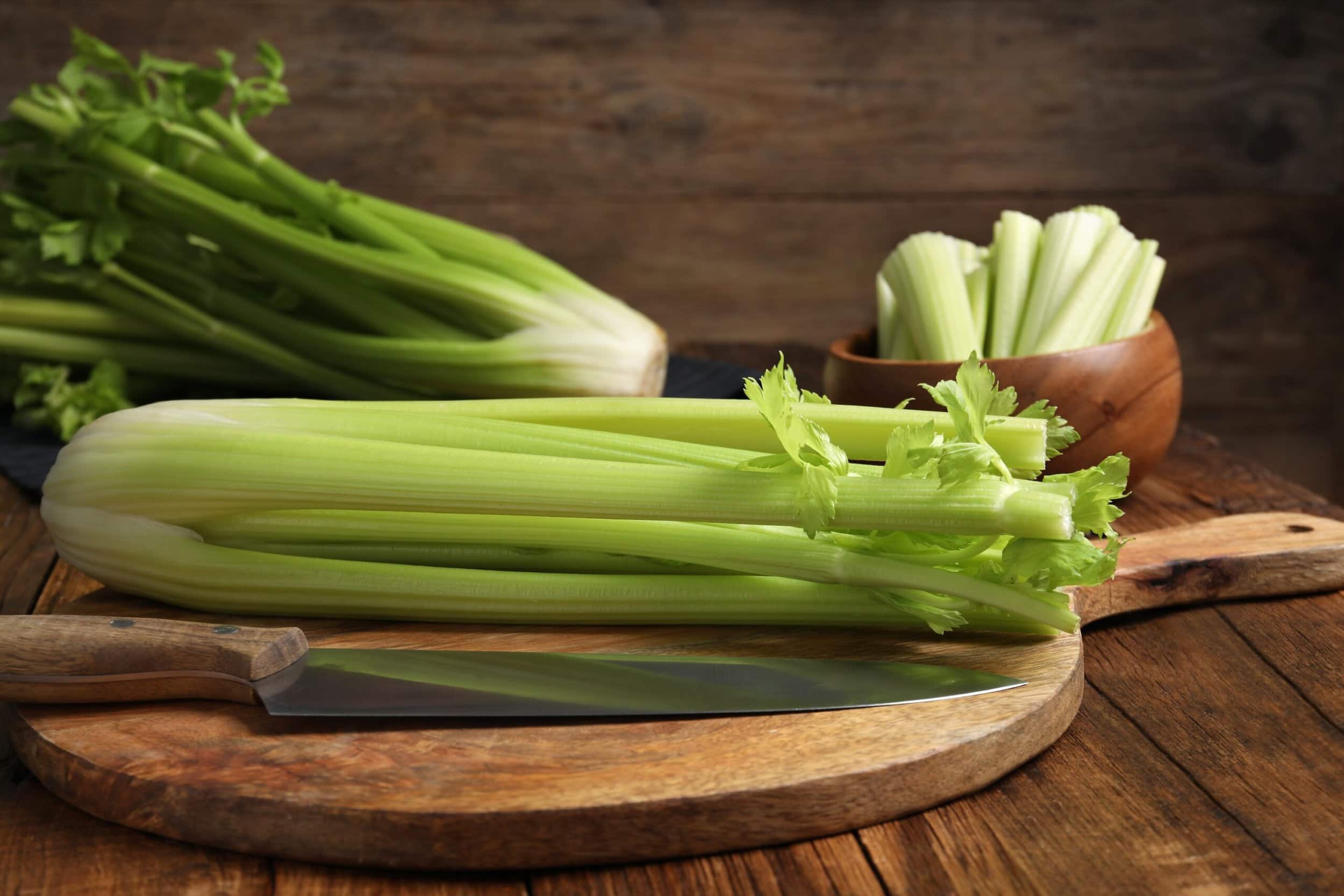
You might have heard that celery is a “negative-calorie” food, while not exactly true, it’s still a good food to turn to when weight loss is your goal. This crunchy green vegetable has become a diet staple for good reason—it’s one of the lowest-calorie foods you can find, packed with water and fiber to help you feel full. But there’s more to it than just its minimal calorie count.
The nutrients in celery also give eating it some surprising health benefits, from supporting heart health to fighting inflammation. Whether you’re looking to lose weight, eat healthier, or simply want a crunchy snack, celery can be a great choice.
✅ Quick answer
Yes, celery is an excellent food for weight loss. Its extremely low calorie count and high water content make it a filling, hydrating snack.
✅ Why celery can support your goals:
- It’s very low in calories – At just 7 calories per serving, celery is one of the lowest-calorie vegetables, allowing you to eat a satisfying volume without impacting your daily calorie budget.
- It’s packed with water and has some fiber – With 95% water content and nearly 1 gram of fiber per serving, celery can help you feel satisfied while naturally curbing appetite.
- It’s rich in beneficial nutrients – Celery provides essential vitamins and minerals, including vitamin K for bone health, potassium for blood pressure regulation, and antioxidants that protect your cells from damage.
⚠️ Things to be mindful of:
- It’s not high in macronutrients – Celery provides almost no protein, fat, or carbohydrates, meaning it won’t give you sustained energy on its own.
- Some people are allergic to it – For some, celery can trigger reactions ranging from mild oral itching to severe anaphylaxis in sensitive individuals, particularly those with birch or mugwort pollen allergies.
- It can be contaminated with pesticides – Celery consistently ranks on the Environmental Working Group’s “Dirty Dozen” list for pesticide contamination. If you eat celery frequently, consider choosing organic to minimize chemical exposure.
🥗 Nutrients in celery (per 2 medium stalks / 50g)
| Nutrient | Amount | % RDA* |
|---|---|---|
| Calories | 7 calories | 0.4% |
| Protein | 0.3 g | 0.6% |
| Total carbs | 1.5 g | 0.5% |
| Fiber | 0.8 g | 2.9% |
| Sugars | 0.7 g | — |
| Total fat | 0.1 g | 0.1% |
| – Saturated fat | 0.02 g | 0.1% |
| – Monounsaturated fat | 0.02 g | — |
| – Polyunsaturated fat | 0.04 g | — |
Celery isn’t a significant source of fat, protein, or carbs. Two medium stalks contain just 7 calories, making it a food that adds bulk and crunch to meals without derailing your diet. Nearly half of the carbohydrate content comes from fiber, which, combined with celery’s high water content, creates its signature filling effect.
This extremely low-calorie, high-volume profile is exactly why celery shines for weight loss. You can munch on several stalks to satisfy the psychological need to chew and feel full, while contributing practically nothing to your daily energy intake. It’s a hunger management tool that helps you maintain a calorie deficit more comfortably.
Noom’s Most Powerful Program
A dual-pathway GLP-1 and behavior change for lasting results.
*Recommended dietary allowance (RDA) is defined as the average daily amount of nutrients needed to meet the requirements of nearly all healthy people in a specific group.
💊 Vitamins & minerals in celery (per 2 medium stalks / 50g)
| Vitamin/Mineral | Amount | % RDA* |
|---|---|---|
| Vitamin K | 14.7 μg | 12% |
| Folate (B9) | 18 μg | 5% |
| Potassium | 130 mg | 3% |
| Pantothenic Acid (B5) | 0.12 mg | 2% |
| Vitamin B6 | 0.04 mg | 2% |
| Riboflavin (B2) | 0.03 mg | 2% |
| Calcium | 20 mg | 2% |
| Vitamin C | 1.6 mg | 2% |
| Niacin (B3) | 0.16 mg | 1% |
| Vitamin A | 11 μg | 1% |
| Manganese | 0.05 mg | 2% |
| Magnesium | 5.5 mg | 1% |
| Phosphorus | 12 mg | 1% |
Despite being low in calories, celery contains several important nutrients. Its standout contribution is vitamin K, with two stalks providing 12% of your daily needs. This essential vitamin supports proper blood clotting and plays a vital role in maintaining strong bones.
Celery also delivers meaningful amounts of folate (crucial for cell growth) and potassium (important for heart health and blood pressure regulation). While not a primary source of any single nutrient, celery contributes a broad spectrum of vitamins and minerals that support everything from energy metabolism to antioxidant defense—all without adding calories to your day.
🔍 Nutrient breakdown
Glycemic index (GI) of celery
Glycemic index: 15 (Low)
💡 Tip: Low-GI foods are digested slowly, leading to gradual rises in blood sugar and insulin levels, which helps control hunger and reduce fat storage.
Is celery high in protein?
❌ No – Celery contains only 0.3 g of protein per serving. This amount won’t contribute meaningfully to your daily protein needs for muscle repair or satiety. Pair celery with protein-rich foods to create a balanced snack.
Better protein alternatives: Greek yogurt | Hummus | Cottage cheese
Is celery high in fiber?
❌ No – Celery provides 0.8 g of fiber per serving. While not considered high-fiber compared to legumes or whole grains, it delivers decent fiber for such an incredibly low-calorie food. The fiber, combined with high water volume, creates its filling effect.
💡 Tip: Boost fiber intake by dipping celery sticks in bean-based hummus or adding chopped celery to lentil soup.
Is celery low in carbs?
✔️ Yes – With just 1.5 g of total carbs and 0.7 g of net carbs per serving, celery is exceptionally low-carb. This makes it perfect for ketogenic and other low-carb diets, letting you enjoy it freely without worrying about your carb intake.

The Easy Way
to lose weight and get healthy.
💡 Tip: Use celery sticks instead of crackers for dips to keep snacks low-carb while adding satisfying crunch.
Is celery gluten-free?
✔️ Yes – Celery is a vegetable and naturally 100% gluten-free. It’s a safe, healthy choice for people with celiac disease or non-celiac gluten sensitivity. Just ensure no cross-contamination occurs during preparation, especially with dips or soups.
Is celery good for fat loss?
✔️ Yes – Due to its low-calorie, high-water profile, celery supports fat loss effectively. It helps you stay in a calorie deficit by providing high-volume, low-energy food that promotes fullness. This makes managing hunger and reducing overall calorie consumption easier, which is key to fat loss.
💡 Tip: Drink a glass of water before eating celery sticks to maximize fullness and enhance hydration.
🍽️ Diet compatibility: Which diets include celery?
| Diet | ✅Yes/❌No | Why |
|---|---|---|
| Keto | ✅ | With only 0.7 g of net carbs per serving, celery is an excellent keto choice. It provides a satisfying crunch and serves as a great vehicle for high-fat dips like cream cheese or nut butter. It also helps replenish electrolytes like potassium that can be lost during ketosis. |
| Paleo | ✅ | As a natural, unprocessed vegetable, celery fits perfectly within the Paleo framework. It’s versatile and would have been available to our ancestors. Eat it raw, cook it in stews, or use it to add texture to salads. |
| Mediterranean | ✅ | Celery is a staple in Mediterranean cuisine, frequently used as a base for soups, sauces, and stews (in soffritto with onions and carrots). Its nutrient profile and high water content align perfectly with this heart-healthy eating pattern’s focus on fresh, whole foods. |
| Vegan | ✅ | Celery is completely plant-based and fully compatible with vegan diets. It’s a versatile vegetable that adds flavor and texture to countless plant-based dishes, from salads and juices to stir-fries and soups. |
| Gluten-free | ✅ | Celery is naturally gluten-free, making it a safe, healthy option for anyone following a gluten-free diet. It provides a crunchy snack alternative to gluten-containing crackers. Just ensure any dips or dishes served with it are also certified gluten-free. |
Celery can be a part of most popular diets. Its extremely low carbohydrate content makes it a keto superstar where every gram of carbs counts. For lifestyle-based diets like Paleo and Mediterranean, celery is a natural fit as a whole, unprocessed food that plays a starring role in traditional healthy cooking.
Its plant-based, gluten-free nature means universal acceptance in vegan and gluten-free eating plans. Celery poses no dietary restrictions and serves as a reliable ingredient for adding bulk, nutrients, and satisfying texture to virtually any meal plan. It’s truly a dietary chameleon that fits almost anywhere.
🌟 Is celery healthy? What are the health benefits
Metabolic health: Is celery good for your metabolism?
- Boosts metabolism? ❌ No – The “negative-calorie” food myth isn’t true. The thermic effect of food (TEF) for celery is very small. While it won’t rev up your metabolism, its low calorie count supports the calorie deficit needed for weight loss.
- Improves insulin sensitivity? ✔️ Yes – Celery contains flavonoids like apigenin and luteolin that have been studied for their potential to improve glucose uptake and reduce insulin resistance. While more human research is needed, these plant compounds may contribute to better blood sugar control and stable energy levels.
- Effect on fat storage? Helps prevent – By being high-volume and low-calorie, celery helps prevent fat storage by displacing more calorie-dense foods from your diet. Its fiber and water promote satiety, helping you manage overall calorie intake and stay in a deficit or at maintenance to prevent excess body fat accumulation.
Cholesterol impact: Does celery affect cholesterol levels?
- Does it lower LDL (bad) cholesterol? ✔️ Yes – Animal studies show celery extract can help lower LDL cholesterol, triglycerides, and total cholesterol. This effect is attributed to compounds called phthalides that may increase bile acid secretion. While more robust human trials are needed, initial findings are promising for cardiovascular health.
- Does it raise HDL (good) cholesterol? ❔ Data limited – There isn’t enough scientific evidence to conclude that celery directly raises HDL cholesterol levels in humans. Most research has focused on lowering LDL cholesterol. However, its overall heart-healthy profile supports a balanced cholesterol ratio.
- Overall impact on heart health? Celery has a favorable impact on heart health. Its high potassium and low sodium content help regulate blood pressure, while fiber and antioxidants like phthalides support healthy cholesterol levels and reduce blood vessel inflammation. Including celery in a balanced diet contributes to a healthier cardiovascular system.
💡 Tip: Use celery as a salt-free way to add savory flavor and crunch to soups and salads, supporting healthy blood pressure.
Can I eat celery for a calorie deficit?
✔️ Yes, with confidence – Celery is ideal for a calorie deficit. Its extremely low calorie density means you can eat a large quantity to feel full without consuming many calories. This helps manage hunger—a common challenge when restricting energy intake—making your weight loss journey more sustainable.
💡 Tip: Start main meals with a few celery sticks to take the edge off hunger and prevent overeating.
Is celery rich in antioxidants?
✔️ Yes – Celery is a rich source of antioxidants, including apigenin, luteolin, caffeic acid, and ferulic acid. These potent phytonutrients help protect cells from free radical damage, reducing oxidative stress. This protective effect is linked to a lower risk of chronic diseases and supports overall health.
Does celery support gut health?
✔️ Yes – The fiber in celery acts as a prebiotic, feeding beneficial gut bacteria. A healthy gut microbiome is linked to improved immunity, better mood, and efficient digestion. The variety of plant compounds in celery also contributes to a diverse, thriving gut environment.
Does celery support digestion?
Positive – Celery’s combination of insoluble fiber and high water content promotes regular bowel movements. The fiber adds bulk to stool while water ensures smooth passage through the digestive tract, helping prevent constipation.
⚠️ Sensitive tummy? For some people, particularly those with IBS, celery can cause issues. It contains mannitol, a polyol that falls under the “P” in FODMAPs. Mannitol can draw excess water into the gut and ferment, leading to gas, bloating, and discomfort in sensitive individuals.
Does celery help you feel satiated and less hungry?
Moderate – The combination of high water content, dietary fiber, and physical chewing makes celery moderately satiating. Chewing signals your brain that you’re eating, while water and fiber fill your stomach, helping you feel fuller for longer on very few calories.
Satiety Level: Moderate
💡 Tip: Pair celery with protein and fat sources like peanut butter or hummus to dramatically increase satiety and keep you full for hours.
Does celery help with nighttime cravings?
✔️ Yes – Celery is excellent for late-night cravings. It satisfies the desire for crunchy snacks without the calories, sugar, or processed carbs found in chips or crackers. Its low-calorie nature means you can snack without disrupting weight loss progress.
💡 Tip: Keep pre-cut celery sticks in your fridge for easy access when evening cravings strike.
Does celery help reduce inflammation?
✔️ Yes – Celery contains over a dozen anti-inflammatory compounds, including the powerful flavonoid apigenin. Chronic inflammation is a root cause of many diseases, and regular consumption of antioxidant-rich foods like celery can help mitigate this process by inhibiting enzymes involved in inflammatory responses.
Is celery beneficial for brain health?
✔️ Yes, limited benefits – The antioxidant apigenin found in celery has shown neuroprotective properties in studies. It may help reduce brain inflammation and support neuron generation and connectivity. While not a cure, a diet rich in these compounds may help protect against age-related cognitive decline.
Access GLP-1 Weight Loss with Noom
Explore a wide range of prescription medications supported by Noom’s program.
Microdose GLP-1rx
Noom GLP-1rx
Noom GLP-1rx Plus
Wegovy®

Ozempic®
Metformin

Zepbound®
Mounjaro®
Liraglutide

Can celery improve skin and hair health?
✔️ Yes, minor benefits – Celery’s high water content is fantastic for hydrating the body from the inside out, essential for plump, healthy skin. Additionally, its antioxidants help protect skin cells from oxidative stress, a major contributor to aging. Various minerals also support healthy hair follicles.
Can celery help balance hormones?
❌ No, limited evidence – Some plant compounds in celery, like apigenin, have phytoestrogenic properties, meaning they can weakly mimic estrogen in the body. However, evidence isn’t strong enough to claim that eating celery significantly impacts hormonal balance. Its primary benefits lie elsewhere.
💡 Tip: For hormone health, focus on overall diet quality, adequate sleep, stress management, and regular exercise rather than relying on individual foods.
🍽️ Best ways to eat celery for weight loss
- Raw as a snack – The simplest and most effective way to enjoy celery for weight loss is to eat it raw. Cut it into sticks and pair with a small portion of healthy, protein-rich dips like hummus, low-fat Greek yogurt, or low-fat cottage cheese. This creates a balanced, low-calorie, highly satiating snack.
- In soups and salads – Adding chopped celery to soups, stews, and salads is fantastic for increasing meal volume and nutrient content without adding calories. It provides satisfying texture and mild, savory flavor. A big vegetable soup with a celery base can be incredibly filling yet low in energy.
- Avoid high-calorie toppings – Celery’s weight-loss benefits can be lowered by pairing it with higher-calorie dips. Avoid filling it with high-fat cream cheese, drenching it in ranch dressing, and be sure to measure any nut butter carefully.
🍏 Best alternatives & comparisons (per 50g serving)
| Food | Calories | Carbs | Fiber | Protein | Fat |
|---|---|---|---|---|---|
| Celery | 7 | 1.5 g | 0.8 g | 0.3 g | 0.1 g |
| Cucumber (with peel) | 8 | 1.8 g | 0.3 g | 0.3 g | 0.1 g |
| Bell pepper | 10 | 2.3 g | 0.9 g | 0.5 g | 0.1 g |
| Zucchini | 9 | 1.6 g | 0.5 g | 0.6 g | 0.2 g |
| Jicama | 19 | 4.4 g | 2.5 g | 0.4 g | 0.1 g |
| Carrots | 21 | 4.8 g | 1.4 g | 0.5 g | 0.1 g |
This table showcases other crunchy, low-calorie vegetables that serve as excellent alternatives or companions to celery. Cucumber is nearly identical in calories and water content but has less fiber. Bell peppers and zucchini are also very low in calories and offer different flavor profiles, plus a wider range of vitamins, particularly vitamin C in red bell peppers.
Jicama stands out for its significantly higher fiber content, making it another fantastic option for a crunchy, filling, gut-healthy snack, though slightly higher in calories and carbs. Carrots are the most calorie-dense on this list, but they’re also an excellent source of vitamin A. Variety is key—while celery is top-tier for weight loss, rotating through these vegetables provides a broader range of nutrients and flavors while maintaining the high-volume, low-calorie principle that helps you feel full and satisfied in a calorie deficit.
Frequently asked questions about celery and weight loss
Does celery have zero calories or “negative calories”?
No, celery is not a zero-calorie or negative-calorie food. Two medium stalks contain about 7 calories. While the thermic effect of food (the energy used to digest it) does burn some calories, it only accounts for about 8% of the food’s energy content. This means you net about 6-7 calories from eating celery, not zero or negative. The myth persists because celery is so incredibly low in calories that it’s almost negligible, but your body doesn’t actually burn more calories digesting it than it provides.
Is celery juice good for weight loss?
Celery juice can support weight loss, but it isn’t superior to eating whole celery. Juicing removes most of the fiber, which is key to celery’s filling effect. While you’ll still get vitamins, minerals, and antioxidants, you’ll miss out on the satiety benefits of fiber and the mindful chewing process that helps control appetite. Also, it’s easier to consume more calories through juice than by eating whole stalks. If you enjoy celery juice, drink it alongside whole foods rather than as a meal replacement, and consider eating some of the pulp to retain fiber.
How much celery should I eat per day for weight loss?
There’s no magic number, but 4-8 medium stalks daily can be a helpful addition to a weight loss plan. The key is using celery strategically—as a low-calorie snack between meals, added to soups and salads for volume, or as a pre-meal snack. However, celery alone won’t cause weight loss. It should be part of a balanced, calorie-controlled diet that includes adequate protein, healthy fats, and other vegetables. Don’t rely on celery as a primary food source, as it lacks essential macronutrients needed for energy and health.
Can eating too much celery be harmful?
Yes, eating excessive amounts of celery can have downsides. Very large quantities might cause digestive issues like bloating or diarrhea, especially in people sensitive to FODMAPs. Celery also contains natural compounds called psoralens that can increase sun sensitivity when consumed in extreme amounts. The biggest risk, however, is nutritional imbalance—relying too heavily on celery means missing out on essential proteins, fats, and other nutrients your body needs. Moderation is key, and celery should complement, not replace, other nutritious foods in your diet.
Does cooking celery reduce its weight loss benefits?
Cooking celery doesn’t significantly reduce its weight loss benefits in terms of calories, but it may slightly decrease some nutrients and change its texture. Cooked celery still provides the same minimal calories and most of its fiber, though it becomes less crunchy and may feel less filling since you won’t chew as much. Some antioxidants, like vitamin C, decrease with heat, but others remain stable. For weight loss, both raw and cooked celery work well—raw is great for snacking and maximizing crunch, while cooked celery adds volume to meals like soups and stews without added calories.
Is celery better than other vegetables for weight loss?
Celery is among the best vegetables for weight loss due to its exceptionally low calorie content, but it’s not necessarily “better” than all others. Vegetables like cucumber, zucchini, and lettuce offer similar low-calorie benefits. The “best” vegetable depends on your needs—bell peppers provide more vitamin C, spinach offers more iron, and cauliflower has more versatility. The real key to weight loss success is eating a variety of non-starchy vegetables to ensure you get diverse nutrients while keeping calories low. Celery is an excellent choice, but it works best as part of a colorful vegetable rotation.
Can celery help with bloating and water retention?
Yes, celery may help with bloating and water retention due to its natural diuretic properties and high potassium content. The potassium helps balance sodium levels, which can reduce water retention. Celery also contains compounds that may have mild diuretic effects, promoting urine production. But, for people with IBS or FODMAP sensitivities, celery might actually cause bloating due to its mannitol content. If you’re prone to digestive issues, start with small amounts. For most people, celery’s high water and fiber content support healthy digestion and can help reduce uncomfortable bloating.
🧠The bottom line: Celery is excellent for weight loss
Celery is a perfect snack for those trying to lower calories and lose weight. With just 7 calories per serving, combined with high water content and satisfying fiber, it supports hydration and keeps you full. While the “negative calorie” myth isn’t true, the reality is just as impressive: celery is great for managing hunger and maintaining a calorie deficit comfortably.
Beyond weight management, celery delivers a surprising array of micronutrients and antioxidants. It’s high in vitamin K and contains anti-inflammatory compounds like apigenin, which contribute to bone health, heart health, and reduced oxidative stress. It’s versatile and easy to incorporate into any eating plan, whether you’re following keto, Paleo, vegan, or simply trying to eat healthier.
The key is to include celery as part of a balanced approach. Aim for about 4 to 6 medium stalks, paired with protein-rich foods like hummus or nut butter to create satisfying, nutrient-complete snacks. Add it to soups and salads for volume, or munch on it before meals to curb appetite.
Noom’s Most Powerful Program
A dual-pathway GLP-1 and behavior change for lasting results.
📖 Scientific evidence
- Celery may help protect your cells (Journal of Evidence-Based Integrative Medicine, 2017). Celery is rich in phenolic compounds and antioxidants that fight free radicals and could play a role in lowering the risk of long-term health issues tied to oxidative stress.
- A compound in celery may have several health benefits (Roczniki Państwowego Zakładu Higieny, 2021). Apigenin, a flavonoid found abundantly in celery, has shown anti-inflammatory, antioxidant, and anti-cancer effects in multiple studies.
- Celery might protect brain health (Molecules, 2023). A review found that celery extracts show promise in animal and lab studies for helping with Alzheimer’s, stroke, Parkinson’s, and other neurological issues by reducing inflammation, oxidative stress, and cell damage.
- Celery may help with blood pressure, blood sugar, and triglycerides (Journal of Advanced Research, 2023). In several large trials using celery or celery seed supplements, researchers found modest but significant reductions in systolic and diastolic blood pressure, fasting glucose, and triglycerides; effects on cholesterol levels were less consistent.
Editorial standards
At Noom, we’re committed to providing health information that’s grounded in reliable science and expert review. Our content is created with the support of qualified professionals and based on well-established research from trusted medical and scientific organizations. Learn more about the experts behind our content on our Health Expert Team page.