
What you’ll learn:
- You don’t need exactly 10,000 steps a day to lose weight—what matters more is your pace, intensity, and other lifestyle habits like your diet.
- Studies show that moderate-to-vigorous walking has a bigger impact on weight loss than just racking up slower steps.
- Walking works best as part of a bigger lifestyle plan that includes healthy eating, variety in exercise, and consistency over time.
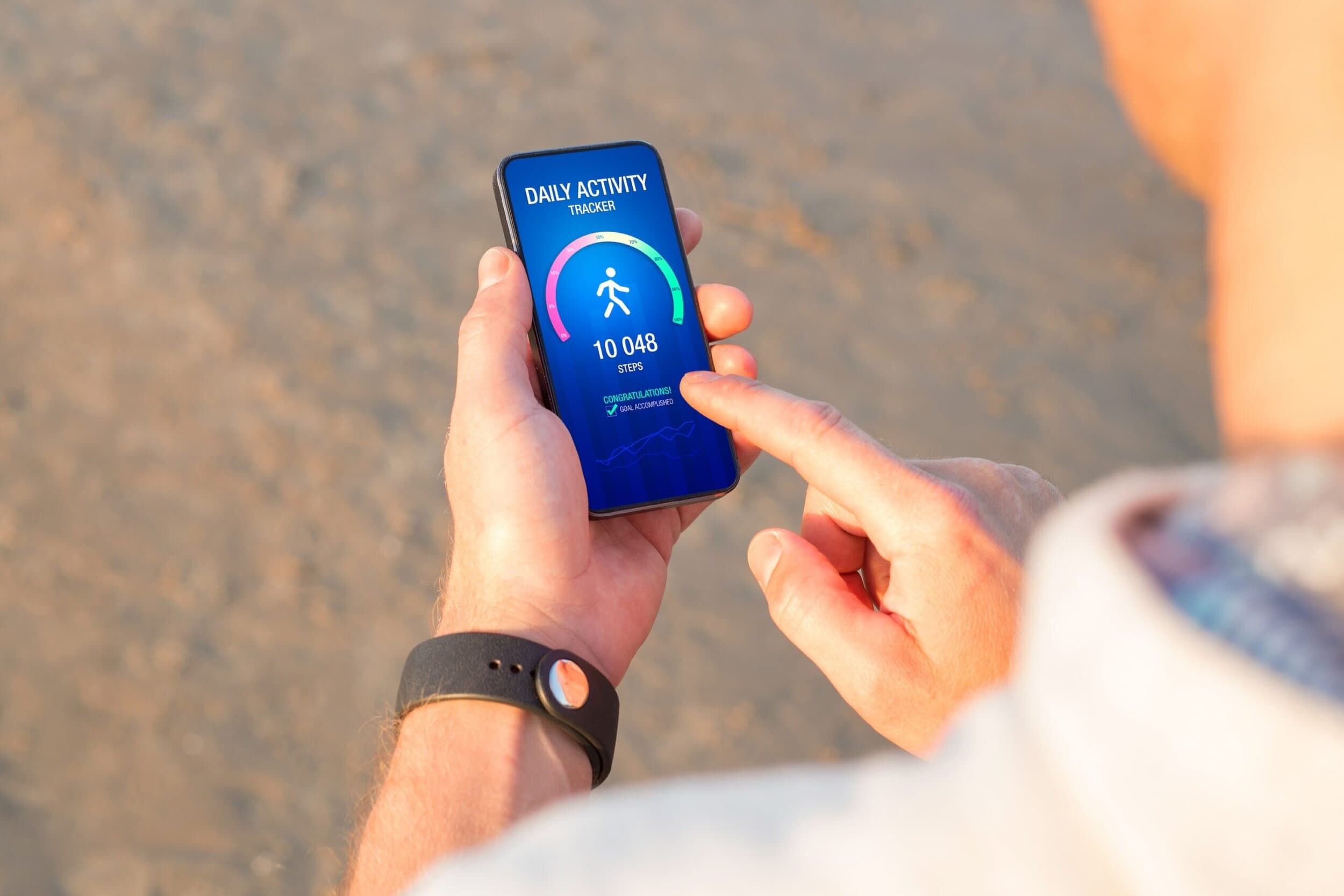
It seems like everyone is talking about walking for health these days—especially when it comes to hitting that “magical” 10,000-step mark. Fitness trackers, social feeds, and even casual conversations often circle back to step counts as a measure of how active (or healthy) we are. But here’s the catch: that 10,000 number didn’t come from science—it came from a 1960s pedometer marketing campaign.
So, do you really need to hit 10,000 steps to see results? Not exactly. For overall health, research suggests you can benefit from fewer steps. But for weight loss, things get more nuanced. It’s less about one universal number and more about how you walk based on your speed, intensity, and duration. There’s no single step count that guarantees weight loss.
But don’t let that discourage you from walking! Walking is still a powerful and effective way to improve your health. It’s a low-impact cardio option that’s easy to fit into your day, boosting mood and energy while lowering chronic disease risk.
Let’s get to the bottom of the best way to get your steps in for weight loss, the health benefits, and how to figure out the number of steps you really need to lose weight.
How many steps should you walk each day to lose weight?
Walking remains one of the most straightforward ways to increase your activity levels and boost your overall health.

The Easy Way
to lose weight and get healthy.

Kayla Reynolds, MS, NASM Certified Professional Trainer, Noom’s Director of Knowledge, Learning, & Behavior Change Curricula, is a big fan of walking. “The simplicity and accessibility of walking make it a powerful tool for increasing activity level,” she says. “It’s a form of movement that many people can integrate into their daily lives and make a habit.”
But, how many steps you need to lose weight isn’t just about the number on your fitness tracker. How fast you walk, how long you walk, and how often you pick up the pace all matter. And so does your diet, which usually has the biggest influence on whether the scale moves.
Aiming for 10,000 is a good place to start. One study found that people who lost at least 10% of their body weight averaged close to 10,000 steps a day, with about one third (or about 3,500 steps) of those steps at a moderate-to-vigorous pace. And in another walking study, aiming for 10,000 steps daily was tied to noticeable drops in weight, BMI, waist size, and body fat.
But that doesn’t mean that 10,000 steps will magically guarantee weight loss. Instead, think of walking as a tool you can shape to fit your lifestyle. When you pair regular walks with mindful eating and other healthy habits, you’ll make more progress than by chasing one number.
What is step count?
Step count is the estimated measure of the number of steps a person takes, typically tracked by a pedometer, fitness tracker, or smartphone. It can help people see their progress by putting a number to their physical activity and potentially encouraging a more active lifestyle.
For an average person, there are roughly 2,000 steps in one mile. This means that 10,000 steps is equal to about 5 miles. On average, it takes a person approximately 1 hour and 40 minutes to complete 10,000 steps if they walk all at once.
The intensity of walking has a significant impact on calorie burn. The faster and longer you walk, the more calories you will burn. One study in the British Journal of Sports Medicine recommends 100 steps or more per minute.
How to lose weight by walking
Walking burns calories, which can help you create the calorie deficit needed to lose weight. But how many calories you burn walking in 30 minutes depends on your body weight and how fast you walk. Here’s an example of how that can look:
| Body weight (lbs) | Walking 2.0 mph | Walking 3.0 mph | Walking 3.5 mph | Walking 4.0 mph | Walking 5.0 mph |
|---|---|---|---|---|---|
| 150 | 136 | 224 | 258 | 340 | 612 |
| 180 | 164 | 270 | 311 | 410 | 738 |
| 210 | 190 | 314 | 361 | 476 | 857 |
| 240 | 217 | 359 | 413 | 544 | 979 |
| 300 | 272 | 449 | 517 | 680 | 1224 |
Reynolds adds, “When you walk, your body burns calories, and the more you move, the more you burn, which is helpful in the context of weight loss. But walking at any speed is good for movement, especially if you are starting from a more sedentary lifestyle and building up from there.”
How each pace feels in real life
A study in the British Journal of Medicine categorized walking speeds at five different paces. Although it can vary for everyone, this overview can help you understand how you’ll feel at different paces:
- 2.0 mph (easy stroll): A relaxed pace where you can chat comfortably and barely notice you’re exercising.
- 3.0 mph (brisk walk): You can still hold a conversation, but you’ll feel like you’re moving with purpose.
- 3.5 mph (fast walk): Talking becomes shorter sentences—you’ll notice your breath quickening.
- 4.0 mph (very brisk): You’ll be slightly breathless, able to say just a few words at a time, not full conversations.
- 5.0 mph (jog/run): This is challenging—your heart rate is up, you’re likely sweating, and it’s tough to talk more than a word or two at a time.
“If you’re curious about your intensity, the Talk Test is a great method,” says Reynolds. “With moderate-intensity exercise, you can speak in short sentences, but your breathing is more labored. With a more vigorous intensity, you can only say a word or two at a time before you need to catch your breath.”
Tips for losing weight with walking
Pushing for 10,000 steps (or more) can help you burn extra calories, but if you want walking to really contribute to weight loss, it’s not just about the total—you need to think about how you walk.
The Easy Way
to lose weight and get healthy.
The key factors are:
- How fast (speed/intensity): Walking faster burns more calories per minute. One moderate-intensity walking program showed reductions in BMI, body fat, and inflammatory markers compared to lower-intensity walking. And in another 18-month study, people who lost at least 10% of their body weight averaged about 3,500 steps per day at a moderate-to-vigorous pace—not just slow, easy steps. Raising your pace (even occasionally) helps each minute of walking boost your calorie burn
- How long (duration): The more you walk, the more likely you are to lose weight, especially if that includes more intense periods. Adults lost more weight over 18 months if they hit 10,000 steps a day, especially when they included brisk walking in sessions of 10 minutes or longer for about 3,500 of those steps. Research also shows that simply taking more steps each day significantly reduces your overall risk of death. If you’re under 60, the optimal range is 8,000 to 10,000 steps daily. If you are 60 or older, the best range is 6,000 to 8,000.
- How often (consistency): Walking regularly over days and weeks compounds the benefits. A study found that step-count programs led to modest but significant weight loss over time. Another review showed that longer, sustained step-count increases were linked to better long-term outcomes. Consistency is what turns walking into a true weight-loss tool, since small daily burns add up over time.
Other benefits of walking
Of course, walking isn’t just about burning calories—it delivers wide-ranging benefits for your body and mind. Research continues to show that increasing your daily step count supports better health in ways that go far beyond weight loss. Here are some of the top science-backed benefits:
- Low-impact movement: Walking is gentle on your joints, making it an excellent entry point if you’re new to exercise or dealing with joint issues. Unlike high-impact workouts, you can do it consistently with a lower risk of injury.
- Boosts mental health: Regular walking has been shown to reduce symptoms of stress, depression, and anxiety. One study found that walking interventions significantly improved mood and reduced psychological distress.
- Curbs cravings: A study found that a short, 15-minute brisk walk reduced cravings for chocolate among habitual chocolate eaters.
- Supports long-term health: A large study found that walking close to 7,000 steps a day was associated with a significantly lower risk of death and chronic conditions—including cardiovascular disease, dementia, and type 2 diabetes—compared to walking only 2,000 steps.
Pair walking with other methods to lose weight
Walking can be a solid foundation for movement, but if your goal is weight loss, pairing it with strength training and smarter eating will give you the best results.
- Build muscle to boost metabolism: Resistance training helps preserve (or build) lean muscle, which raises your resting metabolic rate so you burn more calories all day—even when you’re not walking.
- Mix cardio and strength for balance: Incorporating both cardio and strength training is essential to a comprehensive approach to fitness. Cardio improves cardiovascular health and endurance, while strength training builds muscle.
- Nutrition drives the change: At the end of the day, it’s much easier to achieve a caloric deficit through dietary changes, so this should be prioritized alongside exercise. Noom emphasizes sustainable, mindful eating over restrictive dieting—helping you make long-term changes that stick:
- Use walking as part of a well-rounded wellness plan: A balanced routine of walking, resistance training, and better nutrition can also improve insulin resistance, making your body more efficient at using the calories you eat.
Frequently asked questions (FAQ) about how many steps a day are needed to lose weight
Is walking or running better for weight loss?
Running definitely burns more calories in a shorter amount of time, which is great if you’re short on time. But here’s the cool part: walking is a gentle, low-impact cardio exercise that’s much easier on your joints and less likely to cause injury. The most important thing is to choose an activity you’ll actually do consistently!
How many calories does walking burn?
The number of calories you burn from walking depends on a few things: your body weight, your pace, and whether you’re walking uphill or on a flat surface. On average, walking 10,000 steps burns between 300 and 500 calories for most adults. Think of it this way: a quick 30-minute walk can burn about 100-150 calories.
It’s important to remember that it’s way easier to eat calories than to burn them. One dessert can equal the same number of calories you burned on a long walk. That’s why pairing your walking routine with healthy eating is the ideal combination for long-term weight loss. You can get a more personalized estimate of your calorie burn with a steps-to-calories calculator.
Does walking increase hunger?
A lot of people are extra hungry after exercising, but the good news is that walking doesn’t typically have this effect.
Walking can help with weight loss in a unique way: it burns calories without making you feel extra hungry afterward. Research shows that walking doesn’t usually make people feel hungrier than usual.
This is a big advantage because when you aren’t eating as much, you can maintain a calorie deficit, making it a very effective and sustainable tool for managing your weight over time.
How many miles is 10,000 steps?
On average, most people have a stride of about 2.1 to 2.5 feet, which means it takes around 2,000 steps to walk a mile. This means that 10,000 steps is about 5 miles.
Is there a step calculator for weight loss?
If you’re wondering about how many calories you burn, here is a helpful step calculator that takes into account your height, weight, and walking speed. However, it is only an estimate and should be used as a general guide, not as a definitive answer, to help with weight loss.
Noom’s Most Powerful Program
A dual-pathway GLP-1 and behavior change for lasting results.

Bottom line: The number of steps needed to lose weight depends on intensity and other factors
Walking may seem simple, but it’s one of the most effective ways to stay active—and it can absolutely support weight loss when you use it strategically.
The key is to move beyond chasing one “magic” number and instead focus on what your steps look like and how they fit into your life. Research shows that while some people can lose weight at 10,000 steps a day, adding in bouts of brisk or fast walking makes those steps work harder for you. Translation: you’ll burn more calories in less time.
If your goal is weight loss, remember these takeaways:
- Think long term: While other exercises may burn more calories in less time, walking is low-impact and easier to stick with compared to high-intensity exercise.
- Make it consistent: Daily movement adds up, whether you’re walking to work, running errands, or taking a dedicated walk.
- Pair with nutrition: Combining mindful eating with walking makes it easier to create the calorie deficit you need to see results.
- Start where you are: If 10,000 steps feels overwhelming, aim for smaller, achievable increases. Even adding 1,000 to 2,000 steps to your day can make a difference.
Use your step count as a guide, not a rulebook. Every step counts toward better health, and the best number is the one that fits your lifestyle and keeps you moving forward.
If you want to see the rewards for getting your steps, the Noom app allows you to earn Seeds (Noom’s virtual currency to promote healthy habits) as you take steps. Sync your health app or step tracker to earn bonuses if you meet your step goal for the day.
Editorial standards
At Noom, we’re committed to providing health information that’s grounded in reliable science and expert review. Our content is created with the support of qualified professionals and based on well-established research from trusted medical and scientific organizations. Learn more about the experts behind our content on our Health Expert Team page.