What you’ll learn:
- No alcoholic drink is truly “healthy,” but some choices may be more aligned with your health or weight loss goals.
- Choosing lighter options can help you celebrate with balance while keeping calories, sugar, and ABV in check.
- Mindful drinking can help you enjoy yourself and feel better about your choices.
When the holidays roll around, alcohol often becomes part of the celebration—whether it’s a work party, family tradition, or gathering with friends. And if you’re focused on goals like improving your health, losing weight, or just being more intentional with your choices, you might wonder what the “healthiest” drink looks like—or if such a thing exists at all.
Here’s the thing: no amount of alcohol is truly considered healthy. Even red wine—often praised for antioxidants like resveratrol—doesn’t earn a free pass. Those same antioxidants are also found in everyday foods like grapes, berries, cocoa, or peanuts, without the downsides that come with alcohol.
Still, alcohol is part of many traditions, and you can enjoy a drink in a way that supports your goals when you approach it with Noom’s focus on mindfulness and moderation. Choosing drinks that are lower in calories, sugar, and alcohol, yet still festive, can make a big difference in how you feel the next day. And mindful drinking—pausing to notice what you want, how much you’re drinking, and how you’re feeling—can help you stay aligned with your goals without feeling restricted.
“Improving your health doesn’t have to mean giving up alcohol entirely. Moderation is key,” says Kayla Reynolds, MS, NASM-CPT, Noom’s Director of Knowledge, Learning & Behavior. “And when you understand what’s in your glass, it’s easier to make choices that support your goals.”
This guide breaks down which drinks are typically lower in calories, sugar, and alcohol. You’ll also get easy pacing strategies so you can enjoy the celebration and still feel good the next morning.

The Easy Way
to lose weight and get healthy.
The healthiest alcohol to drink
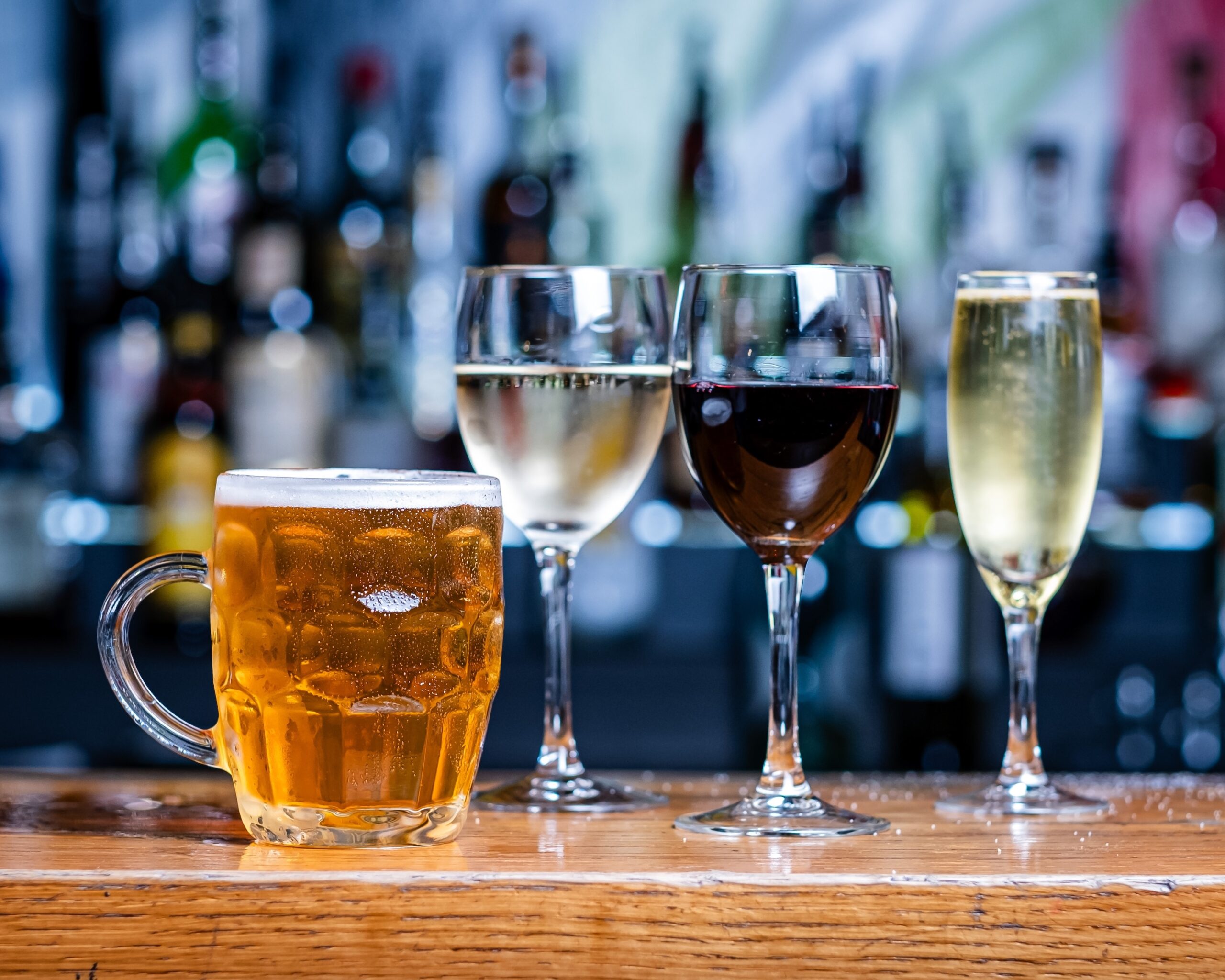
When it comes to choosing the healthiest drink, it’s not about cutting alcohol out altogether—it’s about balance. Drinks that are lower in calories, sugar, and alcohol by volume (ABV) tend to be easier to enjoy mindfully and fit better into your wellness goals, because they have less of an impact on blood sugar, hydration, and overall calorie intake.
Mixed drinks and cocktails can vary widely depending on what’s added. Sweeter drinks like margaritas and those with higher-fat ingredients like mudslides can be well over 300 calories, with the mixers and add-ins contributing as many or more calories than the alcohol. Beer can also range quite a bit, with higher-ABV styles like IPAs and strong ales often at 200 or more calories per pint.
Your best bet is to go for wines, spirits, beers, and cocktails that contain both moderate alcohol and minimal added sugar. These make it easier to enjoy a drink without taking in more calories than you intend.
Here are some options to consider:
1. 5-ounce glass of dry red or white wine
- 12-14% ABV (24-28 proof)
- 110-130 calories
- 0.9 grams of sugar
Why it’s a healthier choice:
Calories in dry wine come mostly from alcohol, with only a little coming from natural grape sugars. Because dry wines have less residual sugar and often a lower ABV, they’re usually lower in calories. But even small bumps in ABV can raise the calorie count, since alcohol is calorie-dense. In general, the higher the ABV, the higher the calories.
- Dry white wines tend to sit on the lighter end thanks to their crisp style and lower alcohol. These include sauvignon blanc, pinot grigio, and chardonnay.
- For a closer look at how they stack up, here’s more on white wine and weight loss.
- Dry reds often contain slightly more alcohol, which nudges the calorie count up a bit, but they’re still reasonable choices when you’re aiming for balance. Think pinot noir, merlot, and cabernet sauvignon.
- You can see how different reds compare in this overview of red wine and weight loss if you want more detail.
What to look for:
Look for varieties that are naturally dry, and aim for an ABV in the 11 to 13% range.
If you’re curious about how sweetness levels, alcohol content, and serving sizes all play together, this deeper look at wine calories breaks it down.
2. A flute of Champagne or dry sparkling wine (5 ounces)
- 12% ABV
- 90-120 calories
- 1-2 grams of sugar
Why it’s a healthier choice: Dry sparkling wines, like Champagne, prosecco, and cava, tend to be naturally lower in calories and sugar compared with many mixed drinks. They’re also usually served in smaller glasses, which helps with moderation. With most options around 12% ABV, they’re lighter than many cocktails and offer similar or slightly fewer calories than still white or red wine. Champagne’s calorie content is comparable to (or slightly lower than) still wines of the same alcohol level due to lower residual sugar in brut and extra-brut styles.
Is Champagne healthier than other wines? Some research claims that certain polyphenols in sparkling wine may support healthy blood vessel function, but the research is limited and doesn’t show that sparkling wine is healthier than other wines.
The Easy Way
to lose weight and get healthy.
What to look for: Choose labels like brut, extra brut, brut nature, or cuvée for lower sugar and fewer carbs.
3. 1.5 ounces of an 80-proof clear spirit with soda water and citrus
- 40% ABV (80 proof)
- 95-110 calories
- 0 grams of sugar
Why it’s a healthier choice:
Clear and light-color spirits like vodka, gin, and tequila contain no added sugar (or carbs), so all the calories come from alcohol. Pair your spirit with unsweetened soda water and a squeeze of citrus (instead of juices or syrups) to get a low-calorie drink. Clear spirits also contain fewer “congeners” than darker liquors (like whiskey, rum, and brandy), which some research suggests may contribute to fewer headache-related symptoms the next day.
What to look for:
Choose soda water (not sweetened mixers or tonic, which is also sweetened, unless you use zero-calorie tonic), add fresh citrus for flavor, and keep portions to a standard 1.5-ounce pour to stay mindful of alcohol content.
4. 12-ounce light beer
- 3-4% ABV (6–8 proof)
- 90-110 calories
- 0.3 grams of sugar
Why it’s a healthier choice:
Light beer typically has fewer calories, less sugar, and a lower ABV than regular beer. Since alcohol supplies most of the calories in many beer styles—with carbs contributing the rest—choosing a lighter option naturally brings the calorie count down. The lower ABV can also make it easier to practice moderation.
What to look for:
Choose brands that share calorie and carb counts when they can—especially helpful if you’re comparing similar styles. For light craft beers, nutrition info isn’t always available. If calorie and sugar info is available, opt for options that are lower in calories and sugar. Otherwise, ABV can be a tool to estimate calories, with lower ABV beers being lower in calories. This guide on how many calories are in beer can help you make a quick, informed guess based on ABV alone.
5. 12-ounce hard seltzer
- 4-5% ABV (8-10 proof)
- 90-100 calories
- 1-2 grams of sugar
Many people assume hard seltzer is just sparkling water mixed with vodka, but it actually starts with fermented cane sugar. Most of that sugar is used up during fermentation, which helps keep the final drink relatively low in calories and sugar. But many brands do add small amounts of sugar, fruit concentrates, or natural flavors for taste. These typically don’t add much to the overall calorie count, but it’s worth checking. With an ABV around 4 to 5%, hard seltzers are generally a lighter option compared to most cocktails.
What to look for:
Pick varieties without added sugars or heavy flavor syrups. Most major brands, like White Claw or Truly, offer consistently low-calorie, low-carb options.
Smart swaps for lighter cocktails
Small shifts can make a big difference when it comes to cocktails. Drinks made with sweet mixers like soda, juice, or simple syrup can be high in sugar and calories. Choosing lighter mixers, smaller pours of wine or liquor, or lower-ABV options can help you enjoy the celebration while still supporting your goals. Read some tips about making and ordering healthier cocktails.
| Swap | Why it helps | Example | Saves |
|---|---|---|---|
| Choose fresh fruit over syrup | Syrups and premade mixers add a good amount of sugar to cocktails. Choose fresh citrus or muddled fruit for flavor without added calories. | Replace 1 oz simple syrup with fresh lemon juice or orange zest. | About 50 calories per drink |
| Use sparkling water instead of tonic or soda | Tonic, cola, and regular soda add surprising sugar, even when drinks don’t taste sweet. Seltzer keeps flavor bright and calorie-free. | Swap tonic or soda for club soda or seltzer in tonic beverages, spritzes, and whiskey sodas. | 100-125 calories, depending on the mixer |
| Downsize your glass | Glass size directly influences how much alcohol and mixer get poured. Smaller glasses naturally reduce portions. | Beer: Choose a 12-oz bottle over a 16-oz pint. Mixed drinks: Use a short rocks glass instead of a tall highball.Wine: Use a 4-ounce glass instead of a 6-ounce glass. | 30-50 calories |
| Flavor with herbs and spices instead of sugary syrups | Herbs, spices, and citrus add aroma and depth without the added sugar in syrups. | Try mint, rosemary, cinnamon, or fresh ginger instead of sugary syrups. | About 50 calories, depending on the syrup replaced |
| Reduce the amount of alcohol used | Cutting the pour slightly lowers both calories and ABV while keeping the overall flavor more or less the same. | Reduce liquor from 1.5 oz to 1 oz and top with extra ice or seltzer. | 30–40 calories per drink |
How to drink more mindfully
Mindful drinking is about staying present and making intentional choices before and during a celebration. Instead of slipping into automatic habits, you pause and consider what you want from the experience. That can start with a simple intention, like deciding how you want to feel by the end of the night and letting that guide your pace.
You might begin with a non-alcoholic drink to ground yourself, or alternate each alcoholic drink with water to stay hydrated and aware. As you sip, focus on actually tasting your drink, which often helps you slow down and enjoy it more fully. And throughout the event, check in with yourself: Do you truly want another drink, or is it just being offered? These small shifts help you make choices that support your goals, so you can enjoy the moment and still feel good the next day.
Mocktails for a healthier cheers
Going alcohol-free doesn’t mean skipping the fun. Mocktails can be a great choice if you’re looking to make healthier choices this New Year and beyond. Fresh juices, herbs, tea bases, and seltzer can create drinks that feel just as celebratory as a cocktail—without the next-day slump.
These mocktails lean on bright citrus, antioxidant-rich ingredients like pomegranate and green tea, and hydrating sparkling water to keep each sip light, refreshing, and naturally low in calories (most land around 40–50 calories per serving). If you wanted, you could add a shot of liquor to these, but they taste great on their own.
Tips for the healthiest mocktails
- Use fruit for flavor, not sugar. Citrus, pomegranate, watermelon, and fresh herbs add depth and brightness without sending calories sky-high.
- Make sparkling water your base. It adds body and fizz for almost no calories—perfect for stretching flavors.
- Add sweetness mindfully. Even small amounts of maple syrup or honey add up. Start with ½ teaspoon and adjust only if needed.
- Lean on tea for complexity. Green tea, hibiscus, and herbal blends offer antioxidants and a “grown-up” flavor without alcohol.
- Garnish generously. Tajín rims, lime slices, pomegranate seeds, or fresh basil make the drink feel special and festive without adding many calories.
Citrus Ginger Refresher
40 calories
Optional alcohol: +1.5 oz rum (≈ +97 calories)
Ingredients:
- 1/4 orange, juiced
- 1/4 lemon, juiced
- 1/4 tsp fresh ginger, grated
- 1/2 tsp maple syrup
- 1/2 cup sparkling water
- Ice cubes
- Tajín (rim)
Instructions:
- Blend ginger, maple syrup, lemon juice, and orange juice until smooth.
- (Optional) Stir in rum.
- Strain into a Tajín-rimmed glass with ice.
- Top with sparkling water.
Why it works:
Bright citrus, a touch of heat from ginger, and a sparkling finish make this a punchy, low-calorie sip that still feels like a “real” cocktail.
Pomegranate Green Tea Spritz
50 calories
Optional alcohol: +1.5 oz vodka (≈ +96 calories)
Access GLP-1 Weight Loss with Noom
Explore a wide range of prescription medications supported by Noom’s program.
Microdose GLP-1rx
Noom GLP-1rx
Noom GLP-1rx Plus
Wegovy®
Ozempic®
Metformin
Zepbound®
Mounjaro®
Liraglutide
Ingredients:
- 1/4 cup brewed, cooled green tea (unsweetened)
- 2 tbsp unsweetened pomegranate juice
- 1 tbsp pomegranate seeds
- 1/4 lime, juiced
- 1/2 tsp maple syrup
- 1/2 cup sparkling water
- Ice cubes
- Lime slice (garnish)
Instructions:
- Shake green tea, pomegranate juice, lime juice, and maple syrup.
- (Optional) Add vodka and stir.
- Pour over ice.
- Garnish with lime and pomegranate seeds.
Why it works:
Green tea adds an antioxidant boost, while pomegranate brings color and subtle sweetness—no heavy syrups required.
Watermelon Basil Cooler
50 calories
Optional alcohol: +1.5 oz tequila (≈ +97 calories)
Ingredients:
- 1/2 cup seedless watermelon cubes
- 4–5 fresh basil leaves
- 1/2 lime, juiced
- 1/2 cup sparkling water
- Ice
- Basil + lime (garnish)
Instructions:
- Blend watermelon, basil, and lime juice until smooth.
- (Optional) Mix in tequila.
- Strain into a glass over ice.
- Top with sparkling water and garnish.
Why it works:
Naturally sweet watermelon keeps calories low while basil adds a refreshing herbal twist that feels high-end.
Healthy tips if you plan to drink
Your habits before and during a celebration can make a big difference in how you feel the next day. Alcohol naturally pulls fluid from your system, which is why even a couple of drinks can leave you feeling dehydrated and sluggish.
“Staying hydrated and pacing yourself are key if you plan to drink,” says Reynolds.
Focus on these habits to feel your best:
- Hydrate: First things first—grab some water. Drink a full glass before your first sip of alcohol and keep a water nearby throughout the event.
- Fuel your body: Eat a balanced meal or snack with protein, fiber, and healthy fats to help slow alcohol absorption and keep your energy steady.
- Pace yourself: Sip slowly, avoid back-to-back drinks, and give yourself time between beverages to check in with how you’re feeling.
- Choose what you truly want: Pick drinks you enjoy and skip the ones you’d only take out of habit or pressure.
- Stay aware of your cues: Notice if you’re drinking because you want the taste or experience, or simply because another round is happening. Pausing helps you stay in control.
Noom’s Most Powerful Program
A dual-pathway GLP-1 and behavior change for lasting results.
The bottom line: The healthiest alcohol to drink is one you can enjoy in moderation
While there’s no truly “healthy” alcohol, that doesn’t mean you need to avoid it entirely if it’s something you enjoy. Instead, think of the healthiest option as the option that aligns best with your health or weight loss goals. Think: lower in calories or sugar, lower in alcohol content, easier to moderate.
“The key to enjoying celebrations like New Year’s Eve is moderation,” says Reynolds. “Go in with a plan for what you’ll drink—and how much—and stick to it.”
Choosing lighter drinks, drinking lots of water, and having a nourishing meal before you celebrate can help you feel good in the moment and the next day.
At Noom, we don’t label foods or drinks as “good” or “bad.” Our focus is on helping you understand your choices, how they affect your body, and how to make ones that support your short- and long-term health goals.
Ready to make 2026 your healthiest year yet?
Download the Noom app today on iOS & Android. You’ll get personalized guidance, daily tips, and more to help you reach your goals and feel your best.
Editorial standards
At Noom, we’re committed to providing health information that’s grounded in reliable science and expert review. Our content is created with the support of qualified professionals and based on well-established research from trusted medical and scientific organizations. Learn more about the experts behind our content on our Health Expert Team page.