
What you’ll learn:
- Biological age reflects how your body’s cells, tissues, and organs are aging, not just how many years you’ve lived.
- It can be a stronger predictor of disease risk and longevity than chronological age, revealing how your lifestyle, environment, and daily habits shape your well-being.
- You can use science-backed tools, including Noom’s Face Scan and Future Me, to calculate your biological age and learn how to improve it.
Imagine if your body could tell you how old it really feels, not just how many years it’s been around. That’s the difference between biological age and chronological age. Your biological age reflects the actual condition of your body based on your habits, stress levels, sleep, and environment—making it a much more accurate snapshot of your functional health than the number on your birth certificate.
Researchers are finding that how your cells function and work together to keep you healthy may be a stronger predictor of longevity than simply how long you’ve lived. In other words, how well your body is holding up on the inside seems to matter more than how many birthdays you’ve celebrated.
The best part? Biological age can change. You don’t need sweeping lifestyle overhauls—small, consistent microhabits that support healthier living can lower your biological age over time.
Measuring it is easier (and cheaper) than you might expect. Some online biological age calculators only need basic health information and lifestyle details. For more advanced insights, Noom Face Scan can estimate your biological age, heart health, and metabolic health from a simple 30-second video. You can also try a Future Me selfie, which shows two potential versions of your future self: one shaped by healthy habits and one that isn’t.
Let’s dive deeper into what biological age reveals about your health, explore tools like Noom’s Face Scan and Future Me, and share practical, science-backed ways—guided by Dr. Karen Mann, Noom’s Medical Director—to help you turn that information into meaningful, lasting change.
What is biological age?
Your biological age reflects how your body’s cells, tissues, and organs are aging. That’s different from chronological age, which is the number of years you have been alive.
“Think of biological age as your internal clock, which can run faster or slower depending on your lifestyle, stress, and environment,” says Dr. Mann. “Two people might both be 40 years old on paper, yet their bodies could tell completely different stories.”
These differences between chronological age and biological age come down to everyday choices like how you eat, move, manage stress, and sleep. Each of these habits plays a role in shaping your biological age.
Research in Frontiers in Aging found that biological age, calculated through markers like inflammation, oxidative stress, and DNA methylation, is a far better predictor of chronic disease and longevity than how many years you’ve lived. In other words, it’s not how long you’ve lived, but how well your body has adapted that matters.
How is biological age calculated?
There are several ways to calculate biological age, from blood-based biomarker tests to simple digital assessments.
1. Biological age calculators
These estimate your body’s “true age” using chosen health data. There isn’t a standard, so all the calculators vary, but they often use a mix of:
- Physical metrics: weight, height, BMI, waist circumference
- Vital signs: blood pressure, resting heart rate
- Lifestyle habits: diet quality, exercise frequency, sleep duration, and stress levels
- Health biomarkers: cholesterol, blood sugar, or inflammation levels (if available)
It’s also common for people to calculate their heart age to learn about their cardiovascular health.
These different calculators can give you information about:
- Which factors are raising or lowering your biological age
- Specific health measures to improve on, like lowering cholesterol or BMI
- Helping you focus on what matters most — improving sleep, eating more whole foods, or managing stress.
2. Face scan technology
Noom’s Face Scan estimates your biological age visually through facial signals and cardiovascular biomarkers. It uses remote photoplethysmography (rPPG) to detect subtle changes in your face’s blood flow, which measures:
- Heart rate and heart rate variability (HRV)
- Breathing rate
- Stress patterns from tiny color changes in the skin
Noom’s Future Me brings this biological age number to life with a selfie that shows how your aging will progress based on your current habits.
These two options give you information about:
- Your estimated biological age
- Heart and metabolic health insights
- Guidance to help you take meaningful steps toward better health
3. DNA methylation and genetic methylation tests
These are among the most advanced ways to calculate biological age using blood or saliva.
They can measure:
- Chemical tags (called methyl groups) that attach to your DNA and influence how your genes are expressed
- How your body is aging at the cellular level
This gives you information about:
- How your genes respond to aging and lifestyle factors
- Whether your body’s repair and regeneration systems are keeping up
Why does biological age matter?
Your biological age provides a roadmap to better health that you can influence every day.
By tracking your biological age, you can:
- Catch early warning signs of potential health issues to slow or reverse aging
- See real progress as you improve your habits
- Stay motivated to make lasting lifestyle changes
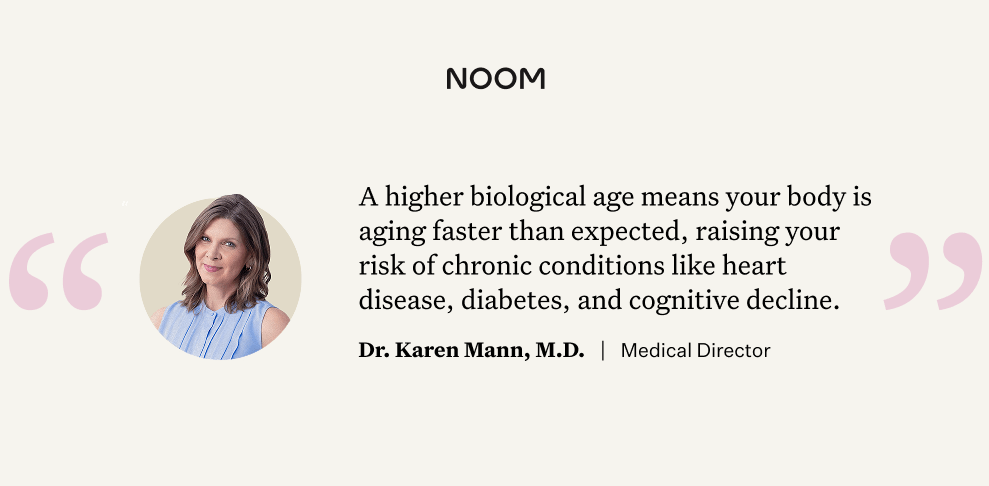
Dr Mann explains, “A higher biological age means your body is aging faster than expected, raising your risk of chronic conditions like heart disease, diabetes, and cognitive decline. A lower biological age, on the other hand, reflects greater resilience, vitality, and longevity. It’s not just about the number; while you can add years to your life, the goal is to add life to your years.”
How to reverse biological age: Science-backed tips
You can’t change the day you were born, but you can reverse your biological age. A study found that lifestyle interventions like improved diet, regular physical activity, stress management, and better sleep reduced biological age by up to three years in just eight weeks.
Here are some ideas to get started:
1. Quit smoking
This one probably isn’t a surprise. Tobacco, through smoking and vaping, accelerates cellular aging. Within weeks of quitting, your blood oxygen improves, inflammation drops, and your skin and lungs begin to heal, turning back your body’s biological clock.
2. Limit alcohol
Alcohol stresses the liver and impairs detoxification. Cutting back, even by a few drinks per week, improves sleep, metabolism, and immunity. Try replacing alcohol with sparkling water, kombucha, or mocktails for a refreshing upgrade.
3. Eat a nutrient-rich, anti-inflammatory diet
Your plate can influence your biological age. Choose colorful fruits and vegetables rich in antioxidants, high-fiber carbs, healthy fats, and lean protein. In addition:
- Berries and leafy greens fight oxidative stress.
- Fatty fish, chia, and flaxseed boost omega-3 intake for heart and brain health.
- Legumes and oats improve blood sugar regulation and gut health.
4. Exercise regularly
Movement is essential. A study showed that for every additional 1,000 steps taken per day, there was a 15% reduction in risk of death. Those who averaged 11,000 steps daily had a 50 to 70% lower mortality risk than those who were sedentary.
“Lack of movement can contribute to heart disease, stroke, diabetes, some cancers, mental health issues, and cognitive function,” warns Dr Mann.
You need a combination of:
- Cardio, which supports heart and lung health, like walking, dancing, or biking.
- Resistance training to preserve muscle and bone density, like yoga, weight lifting, or calisthenics.
5. Manage stress mindfully
Chronic stress elevates cortisol, accelerating aging and inflammation. Try deep breathing, yoga, mindfulness, or journaling, even for five minutes, which can help. Stress management supports healthier telomeres (the protective ends of your DNA) and slows cellular wear and tear.
6. Prioritize restful sleep
Your body rejuvenates during sleep. Aim for 7 to 9 hours nightly, and maintain a consistent schedule. Deep, restorative rest helps repair DNA damage and regulate key hormones tied to aging.
7. Stay proactive about preventive care
Schedule routine check-ups, cancer screenings, and blood tests. “Preventive care is one of the simplest ways to stay younger. It catches small issues before they turn into big ones,” says Dr. Mann.
8. Prioritize meaningful relationships
People with strong social connections have a 50% greater chance of living longer than those who are socially isolated. Studies suggest that loneliness can be as harmful to your health as smoking 15 cigarettes a day.
Nurturing relationships and building new ones isn’t just good for your social life—it can even prolong your life.
Frequently asked questions about biological age
What is my mental age?
Your mental age measures cognitive function and brain health, not your biological health. It’s shaped by learning, curiosity, and emotional resilience. A professional can use different cognitive assessments to measure neurological function.
How do I calculate biological age?
Use a biological age calculator, face scan, or DNA methylation test to estimate your internal health compared to your chronological age. If you’ve had a recent blood test, you can enter those values into a calculator and get a result.
What is a genetic methylation test?
This is a blood or saliva test that calculate the biological age of your body by analyzing chemical tags on your DNA. You can find these online from different laboratories.
Can you reverse aging?
You can’t stop time, but you can slow, and in some cases, reverse, biological aging through consistent, science-backed lifestyle changes.
Reviews from real Noom users
“My favorite parts of Noom are the care team and other Noomers. Sharing and getting help made me feel like I wasn’t doing it alone. That support made all the difference.”
Desirea N. — Real Noom user
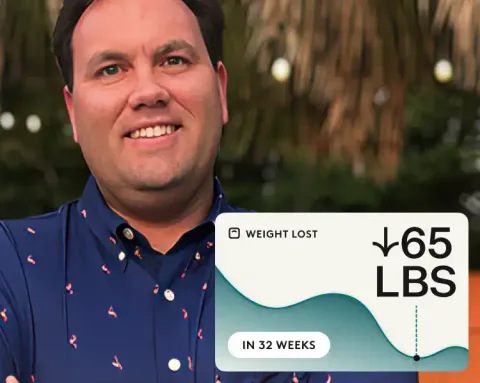
“Noom has taught me that every day is a new chance to make better, healthier choices. It’s taught me how to stop overeating.”
Matthew M. — Real Noom user
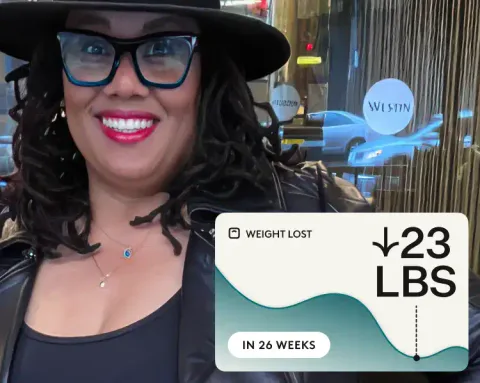
“Clinicians who understand how supportive medication can be is one of the best parts of Noom! I was convinced I wouldn’t have success but I’m down 11 pounds in two months.”
Lila M. — Real Noom user
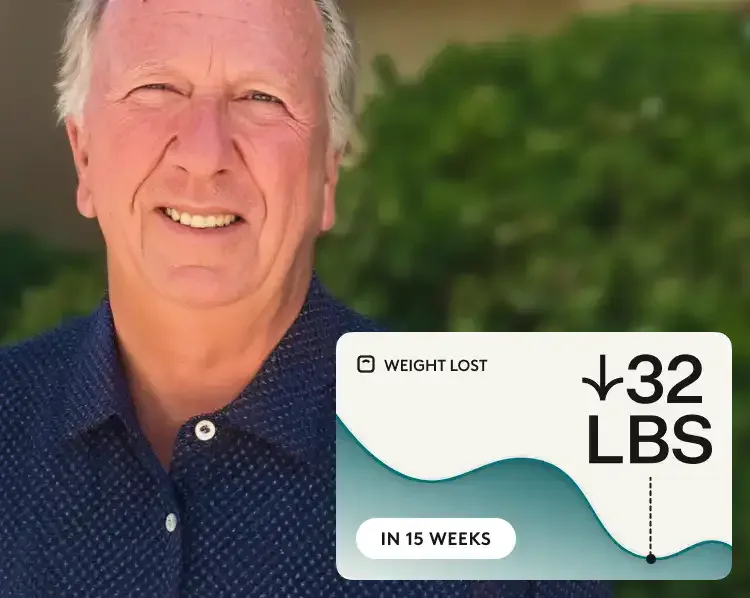
“Noom provided me with the medication which I could not get through Medicare. I have learned the tricks to better eating and life in general.”
Steve M. – Real Noom user
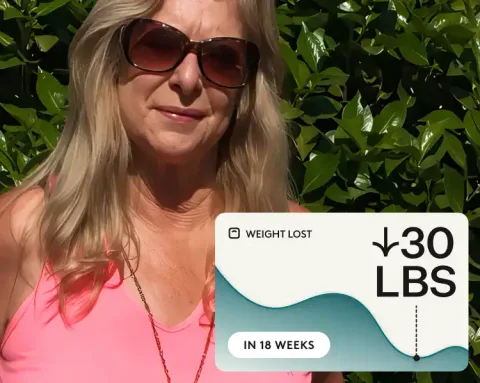
“Noom has changed my life and I’m so thankful, I feel great, have more energy and am no longer prediabetic.”
Daisy R. – Real Noom user
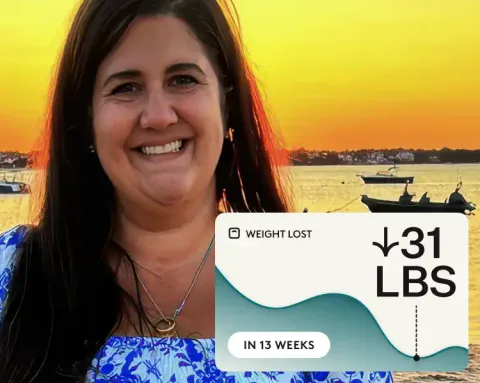
“All of the Noom providers that I’ve met with have been exceptional and prescribed medications that are appropriate for my situation and health.”
Sarah R. – Real Noom user
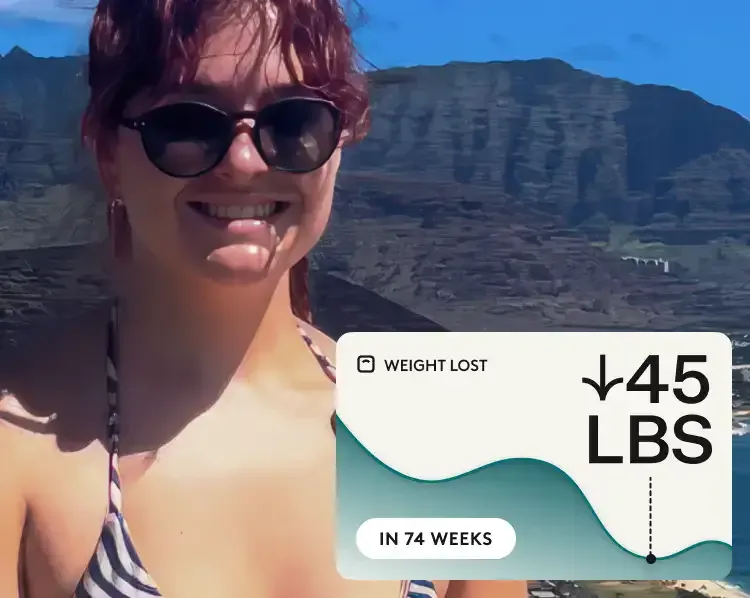
“Noom made the process so simple and now I feel full, free from diet obsession, and at ease in my body again.”
Madison S. – Real Noom user
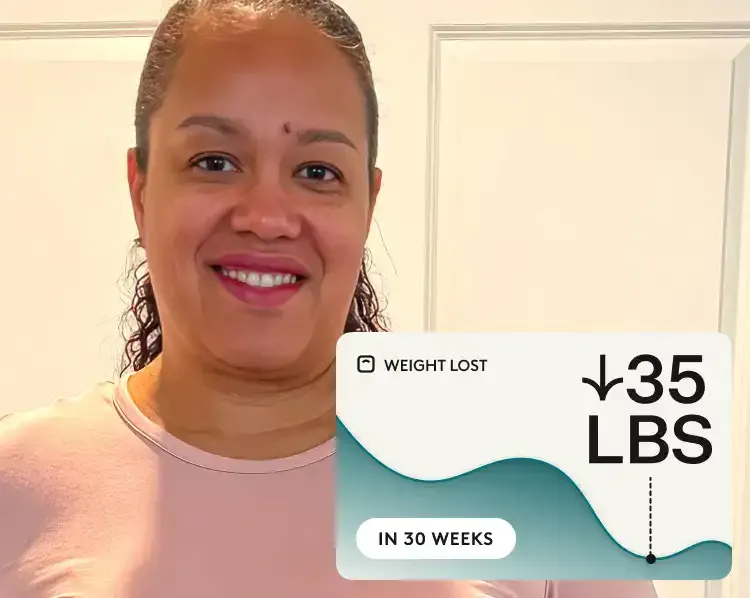
“My doctor recommended Noom after I was frustrated trying to lose weight. The lessons helped change my relationship with food. My body feels lighter & energized.”
Sonday K. – Real Noom user
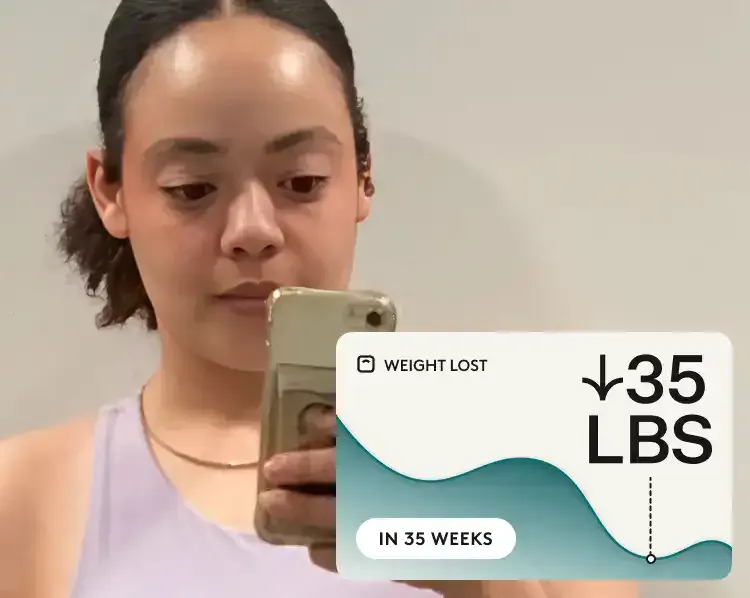
“I built healthy habits with coaching and lessons that make me confident I can maintain my weight loss long term.”
Cam K. – Real Noom user
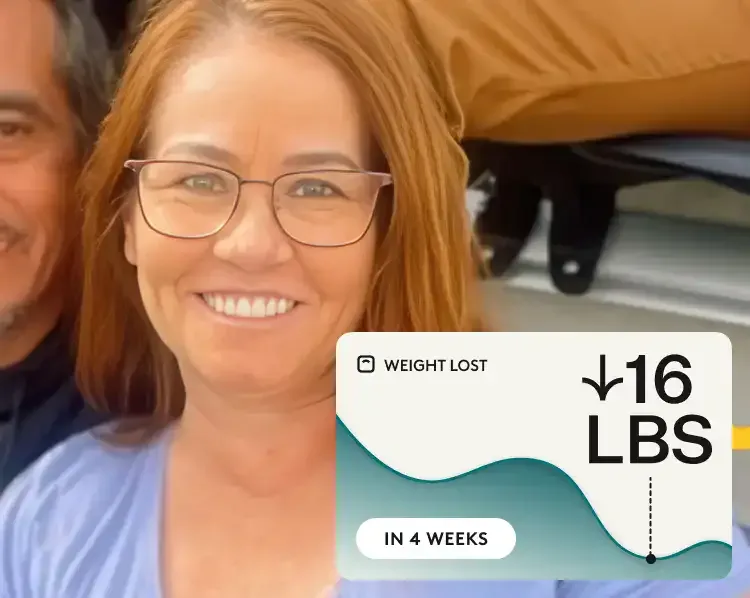
“With the right medication through Noom, hunger and sugar cravings finally quieted and I have the tools to break the cycle.”
Laura TR. – Real Noom user
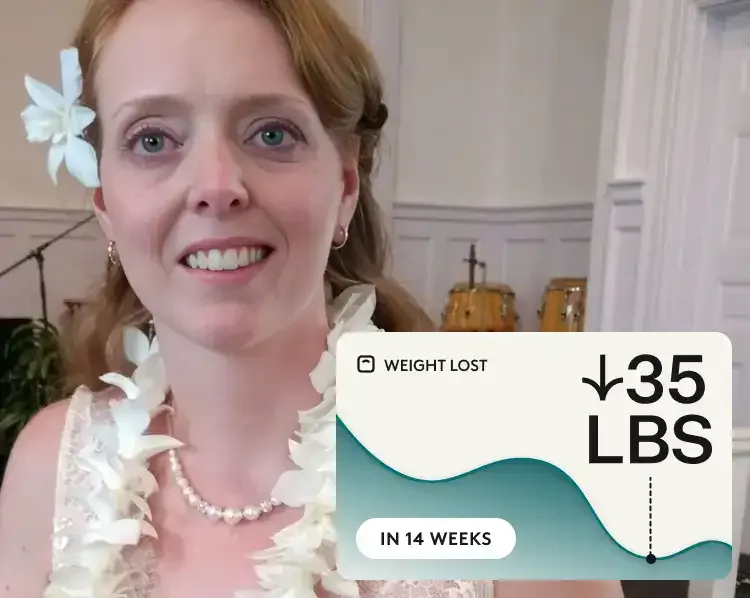
“Cravings and food noise are gone, I finally feel confident in the healthy habits I’ve built to last with Noom.”
Jessica S. – Real Noom user
The bottom line: Knowing your biological age can help you make better choices today
Your biological age is a window into your body’s real health, and unlike your chronological age, it’s one you can change. By adopting small, evidence-based habits and using tools like Noom’s Face Scan and Future Me, you can better understand, improve, and even reverse your aging process.
With this information, you can shift from waiting for symptoms to appear to taking proactive steps to prevent them, accelerating the move from reactive treatment to proactive prevention.At Noom, we’re helping everyone, everywhere live not just longer, but better. Your biological age isn’t your destiny; it’s your opportunity to design a healthier, stronger, and younger-feeling life. Download the Noom app on iOS & Android to get motivated. You can access Face Scan and Future Me to learn more about what changes you can make to improve your health and longevity.
Editorial standards
At Noom, we’re committed to providing health information that’s grounded in reliable science and expert review. Our content is created with the support of qualified professionals and based on well-established research from trusted medical and scientific organizations. Learn more about the experts behind our content on our Health Expert Team page.