


How Mindful Art Break turns awe, beauty, and presence into a daily wellbeing habit — and what we learned when student artists went head-to-head with museum masterpieces
Why art belongs in a health app
It’s a fair question—especially for a company known for weight loss and behavior change: What does art have to do with health?
At Noom, we cultivate a longevity mindset. Not just living longer—but living better today: more energy, more presence, more resilience, more joy in everyday life.
We believe things like art, awe, and beauty contribute to vitality today. So when we began thinking about an art feature for Noom members, we started with a simple litmus test:
- Does art catalyze motivation, increase ability, or produce a felt benefit?
- And if it does—can we design it as a repeatable habit?
That last question became the mission behind Mindful Art Break: a two-minute daily practice that uses art to shift state—toward awe, calm, curiosity, and stress relief.
The brain, the DMN, and “food noise”
To understand how art impacts health and wellbeing, it helps to understand the brain state in which we spend most of our waking moments.
The Default Mode Network (DMN) is often described as the brain’s “background mode”—active when we’re not focused on the outside world. It’s how we spend 50% of our time.
That “default” activity isn’t inherently bad. But it’s where a lot of rumination and intrusive chatter lives—especially around food.
Noom supports healthy behavior change in large part by targeting the DMN. “Food noise” is something that can be a problem for many people – cravings that keep looping, pulling attention back again and again.
That’s why Noom is designed to modulate the DMN – to dampen it. And interestingly, two interventions that are often discussed in completely different worlds—mindfulness and GLP-1 therapy—both show up here:
- Mindfulness reduces DMN activity
- So does GLP-1 medication
Noom’s CEO published a paper last week in a peer-reviewed medical journal looking at the DMN impact of both mindfulness and GLP-1 therapy. He advances a hypothesis that GLP-1s can lower the volume on food noise; mindfulness can teach the brain to stay quiet—together they may make healthy habits easier to build and sustain.
That led to a natural question:
If mindfulness and GLP-1s can quiet mental noise… can art do something similar?
Does art modulate the DMN?
The short answer: yes — art can modulate the DMN, often by pulling attention out of loops and into the present moment. When you’re truly paying attention—really looking—there’s simply less room for the mind to wander.
But art is also unique.
In a deep aesthetic experience, the DMN can become more active. That’s not a contradiction—it’s part of what makes profound art feel profound. Some art doesn’t just distract you from your inner narrative; it rearranges it. It brings you into contact with meaning.
An aesthetic experience relies on what researchers sometimes call the aesthetic triad:
- Sensory
- Reward system
- Knowledge and meaning
It’s an infrequent effect—where someone is deeply moved by art—but when it happens, it shows up in brain scans.
“In rare moments, we can have a change in brain network dynamics. Our work shows that this can happen with aesthetic experiences, and there’s increasing evidence that it may also be important in creativity.”
Edward Vessel
So the problem became practical, not philosophical:
If art can modulate the DMN, can we design a short, accessible, repeatable art “intervention” that reliably helps people feel better—especially in the middle of a normal day?
A simple test: Can brief encounters with art lift wellbeing?
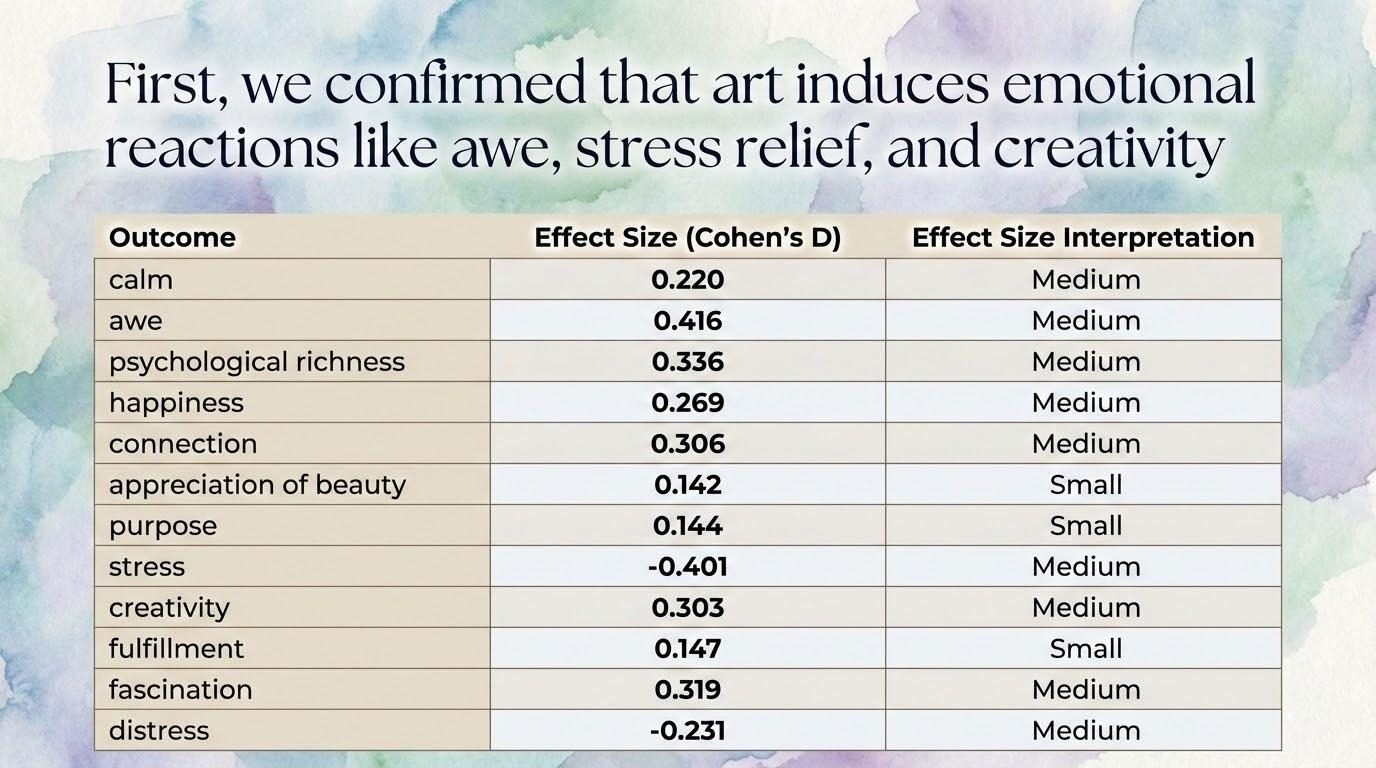
With that research context, we ran a quick, early survey to test whether brief exposure to art could shift how people felt. Several effects stood out most: awe, creativity, connection, and stress relief.
That became the origin story of Mindful Art Break: a small daily practice that uses art to pull you out of mental noise and into a more grounded emotional state.
Building an “art engine” that can scale
To build an art feature that works inside a digital health platform, we needed a way to curate pieces thoughtfully and consistently—grounded in evidence.
So we built an algorithm.
Guided by research in positive psychology, neuroaesthetics, and art therapy, it evaluates paintings for their likelihood to evoke emotions like awe, calm, beauty, and curiosity.
And we built a database to power it: our Art Research Tool (ART), built by our Chief Technology Officer Rich Friedman, is a living database of scored works drawn from leading museums.
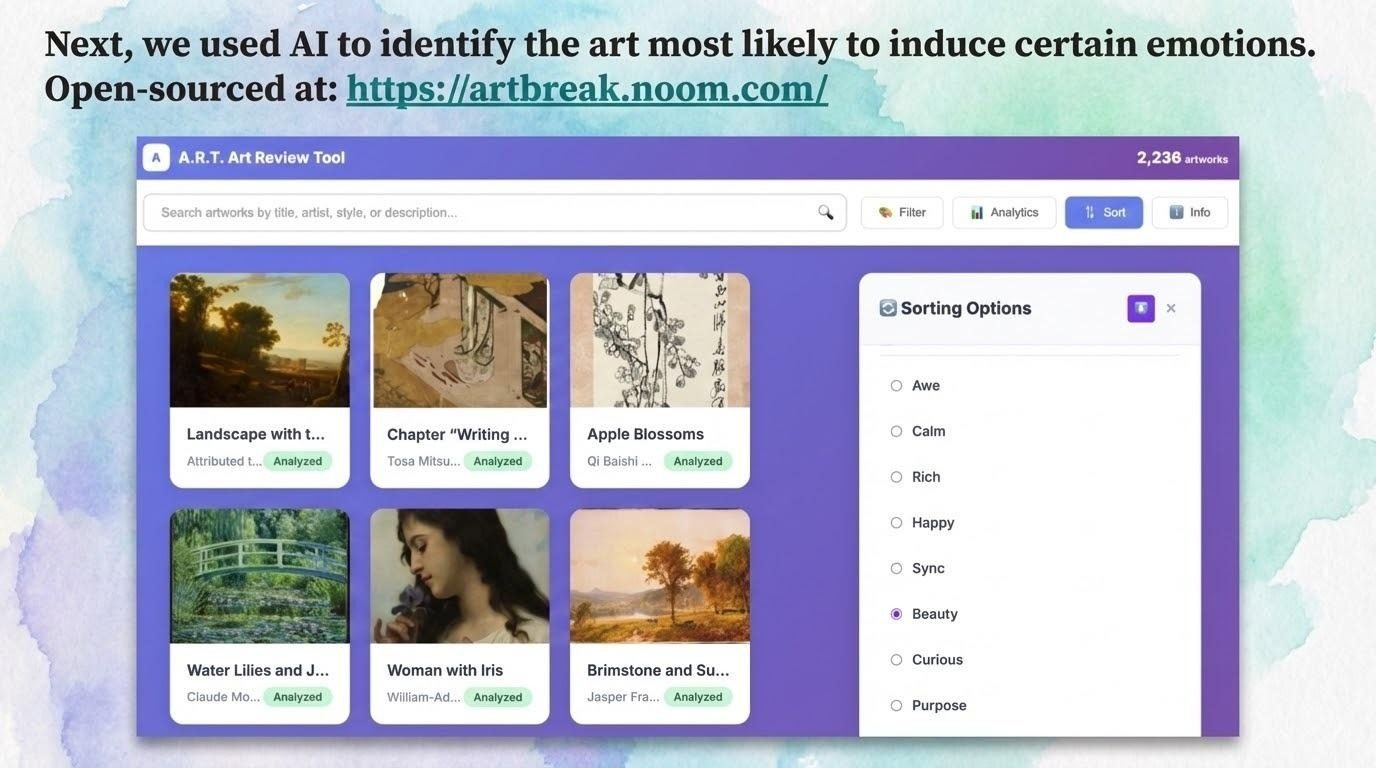
Then we pressure-tested the approach with real people:
- We surveyed 5,000 people to see how flourishing scores vary when exposed to 50 public domain artworks from 1800 to 1920.
- We used those survey results to create a data-informed prompt to feed an LLM, allowing us to AI-score tens of thousands of public domain artworks based on those findings.
The point wasn’t to “replace” human taste. It was to do something very Noom: translate a fuzzy human experience into a repeatable system that can support a habit—while still honoring the mystery and individuality of art.
Turning art into a habit: what Mindful Art Break actually does
Even if art “works,” the question remained: how do you make it a habit?
We made some critical decisions when designing Mindful Art Break:
- We made it a task list item for Noom members.
- We rewarded it with virtual currency (“Seeds”), which helps make it a habit.
- We credited the source museum for each work—and we tied every batch to at least one piece associated with the Princeton University Art Museum, reflecting our roots on Nassau Street and the genesis story for the idea.
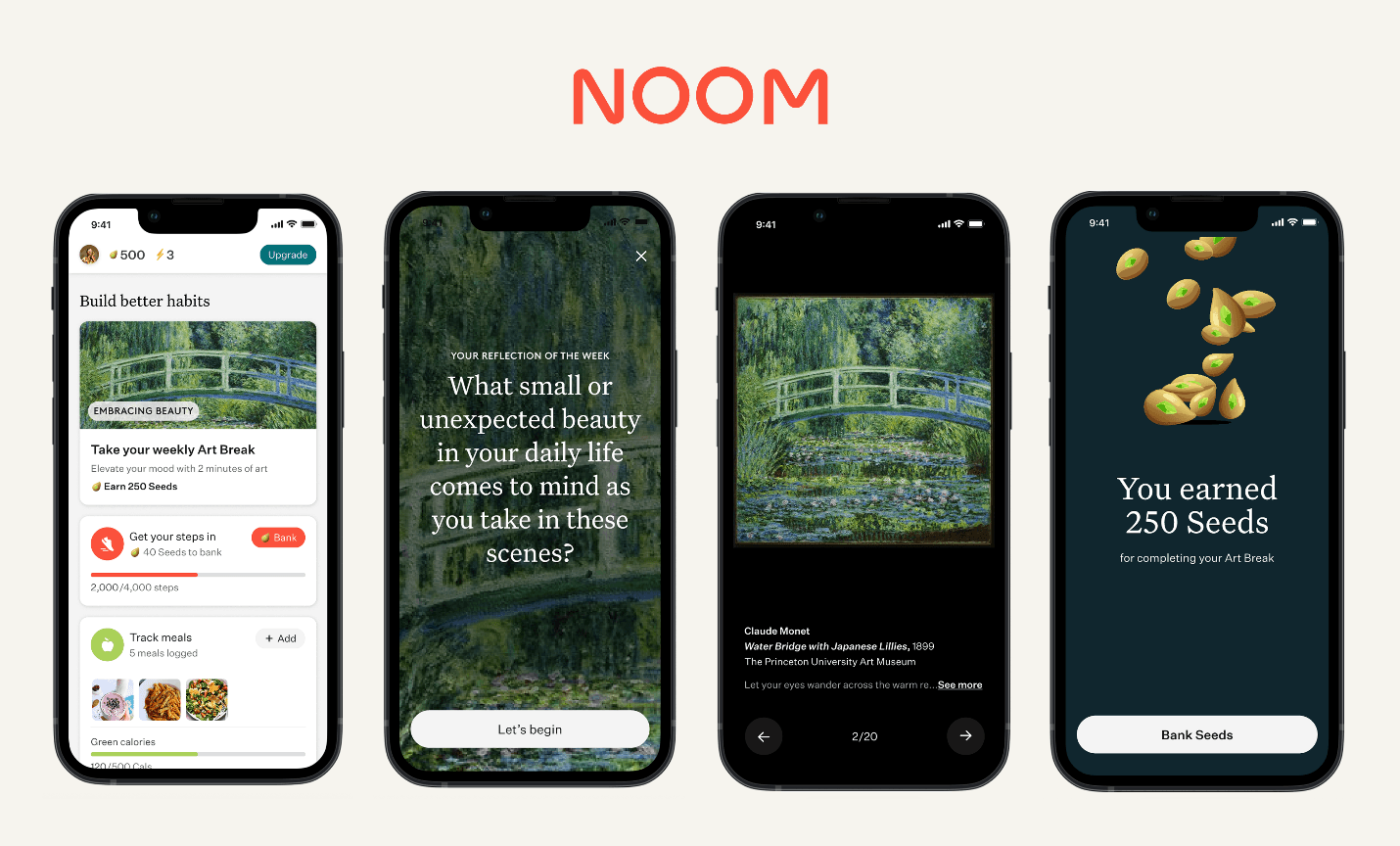
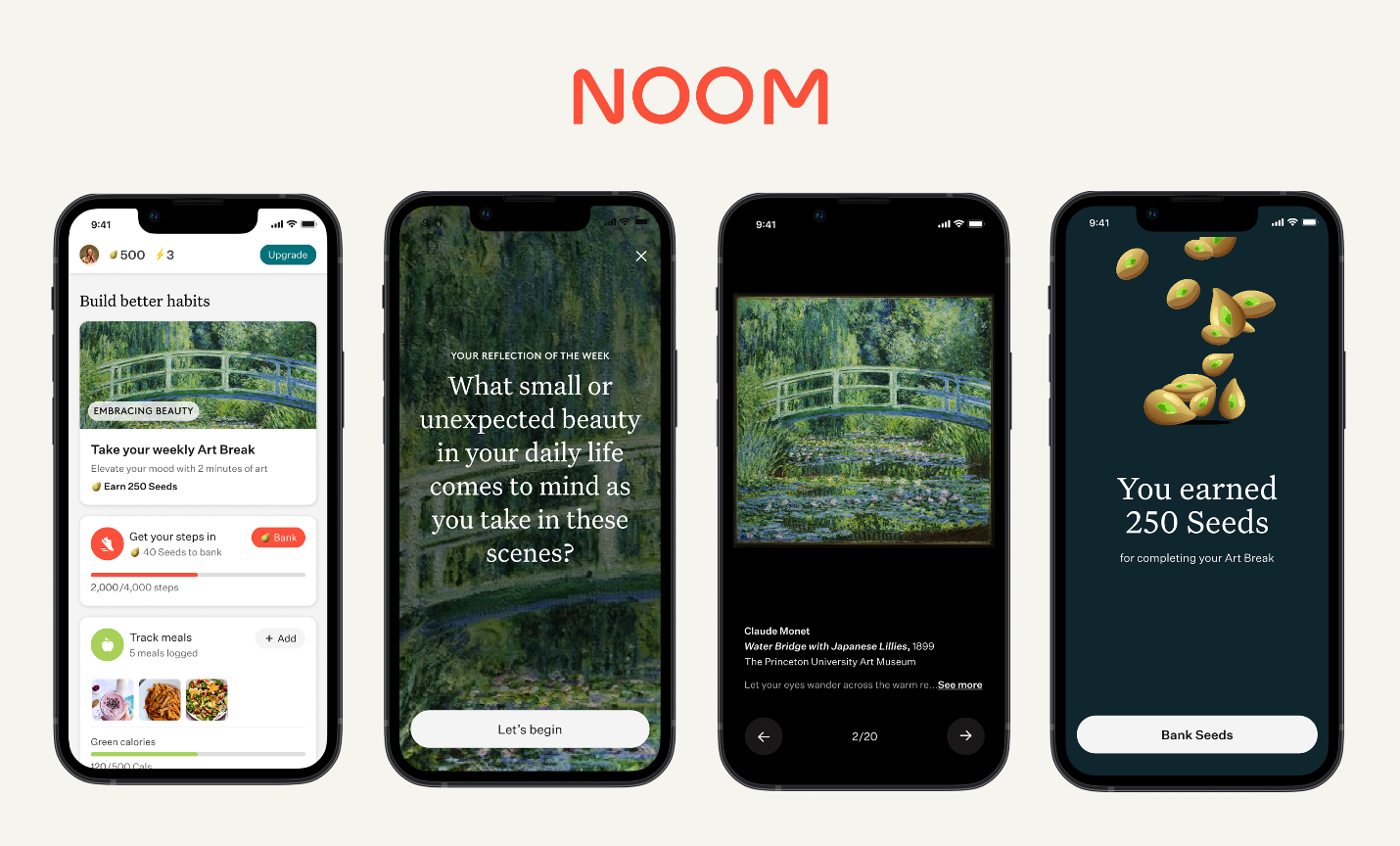
We designed the feature to have 4 key screens:
- Task prompt/entry point: The first screen shows Mindful Art Break as an easy-to-start action in the task list. This placement was deliberate—we wanted to integrate mindset and mood-boosting habits into members’ daily and weekly rituals as seamlessly as counting steps and tracking calories.
- Artwork display with minimal distraction: When a member taps on the feature, a single piece fills the screen. The member is greeted by a mindfulness prompt—a short, grounding reflection that connects that week’s gallery to a positive emotion. While the reflections are short, they do a lot of work to set the experience—and members notice. In a survey of Noom members, 73% agreed that “viewing art in the Mindful Art Breaks feature allowed me to be present and focused in the moment.”
- A short, structured viewing window: Once a member begins to explore the gallery, they spend at least 2 minutes viewing 10 pieces of carefully curated art. We ask members to watch art for 2 minutes—long enough to shift state, short enough to be doable.
- Reflection + reward (and, later, mood logging): As the member closes out the feature, they are rewarded with Noom’s microcurrency, Seeds. This closes the microhabit loop and rewards positive habit behavior and completing the task. Post-launch, we added a mood logging feature that captures how members feel after their Art Break session. Over 95% of mood logs following an Art Break range from neutral to very positive.
The design goal here is not to “teach art history.” It’s to create a repeatable, emotionally meaningful pause—an everyday practice of attention and presence.
What we’re seeing: engagement and emotional impact
So—does anyone actually use an art feature inside a health app?
Yes. And the signals surprised us.
Mindful Art Break has become our most popular mental health feature. About 30% of members have tried it, and 50% repeat the habit weekly—roughly 2x higher than other mood-boosting behaviors like meditation or breathwork.
More indicators we’re encouraged by:
- 72% of members agreed that “Viewing art in the Mindful Art Breaks feature allowed me to be present and focus on the moment.”
- We ask members to watch art for 2 minutes, but >70% of gallery sessions are between 2–4 minutes, indicating members enjoy the art long enough to stay longer than they “have to.”
- Over 70% of members say they feel that the art is “expertly curated,” keeping members engaged from gallery to gallery.
Beyond finding beauty and creativity throughout their experience, members report feeling mental health benefits. In just 2 minutes, members perceive feelings of calm, awe, joy, and curiosity just by slowing down. They say the experience was inspiring and thought-provoking, and that it provided relaxation, calm, and stress relief.
In a world where Americans spend an average of over 5 hours on their phones, we’ve found that the biggest changes to mindset and mood can happen in just a few short minutes.
This matters because it validates our product litmus test. Art is not just “nice to have.” For many people, it produces felt benefits—benefits that make the rest of behavior change easier.
One of the most unexpected outcomes was what Mindful Art Break did outside the app. A majority (63%) of Mindful Art Break members say they would like to explore their interest in art in local museums.
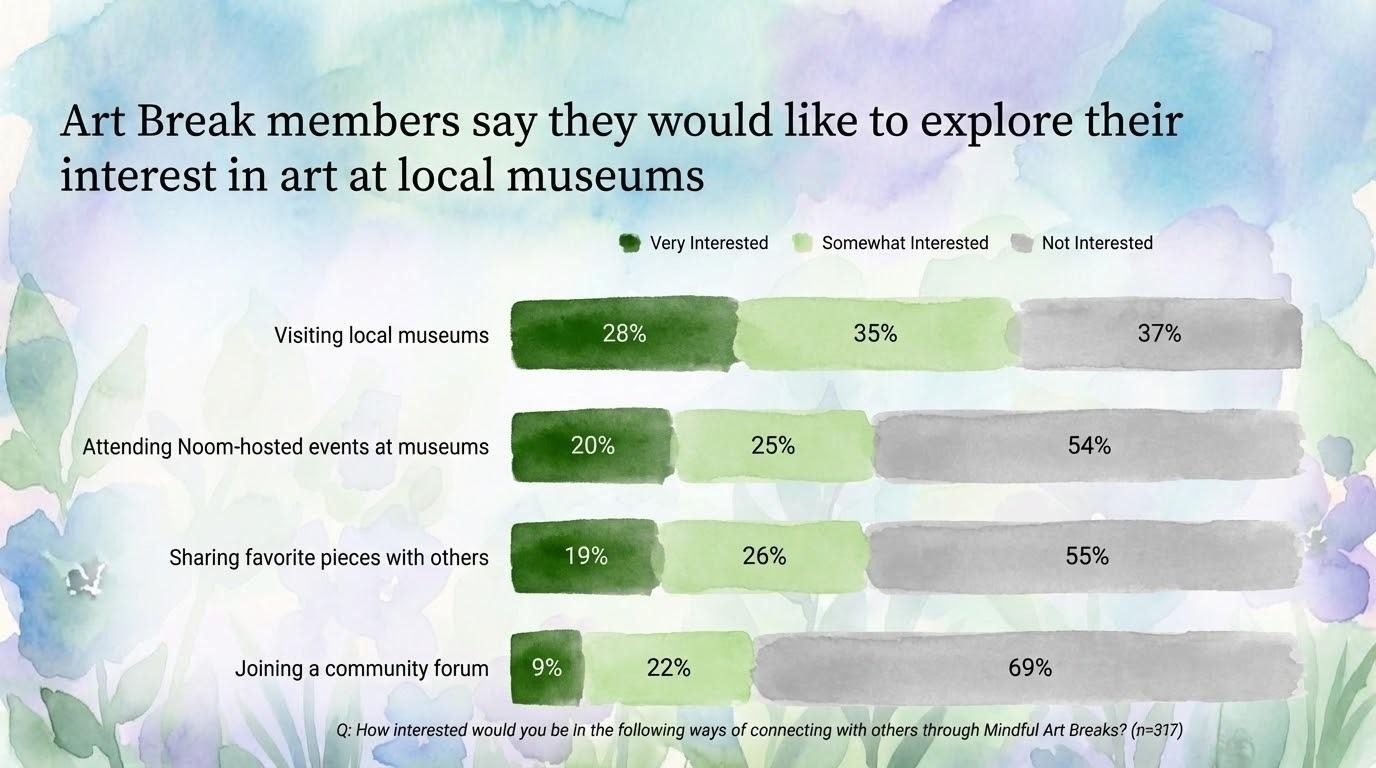
Perhaps it’s the fact we credit the source museum of every piece. Visiting a local museum ranks ahead of sharing favorite pieces and joining a community forum.
In other words: a two-minute habit inside a digital product can nudge someone toward a richer offline life. That’s exactly the kind of “vitality today” that the longevity mindset is meant to unlock.
Art for art’s sake—and why measuring it can still be meaningful
Let’s be clear: art should exist for art’s sake – whether it induces flourishing benefits or not. Humans express themselves through art, and they’ve been doing so for tens of thousands of years.
Semir Zeki is the founder of the field of neuroaesthetics. In his book Inner Vision, Zeki argues for rooting theories of aesthetics in the brain.
“Every technological development has also brought forth new art…the work of an artist may be expanded through insights from research.”
Semir Zeki
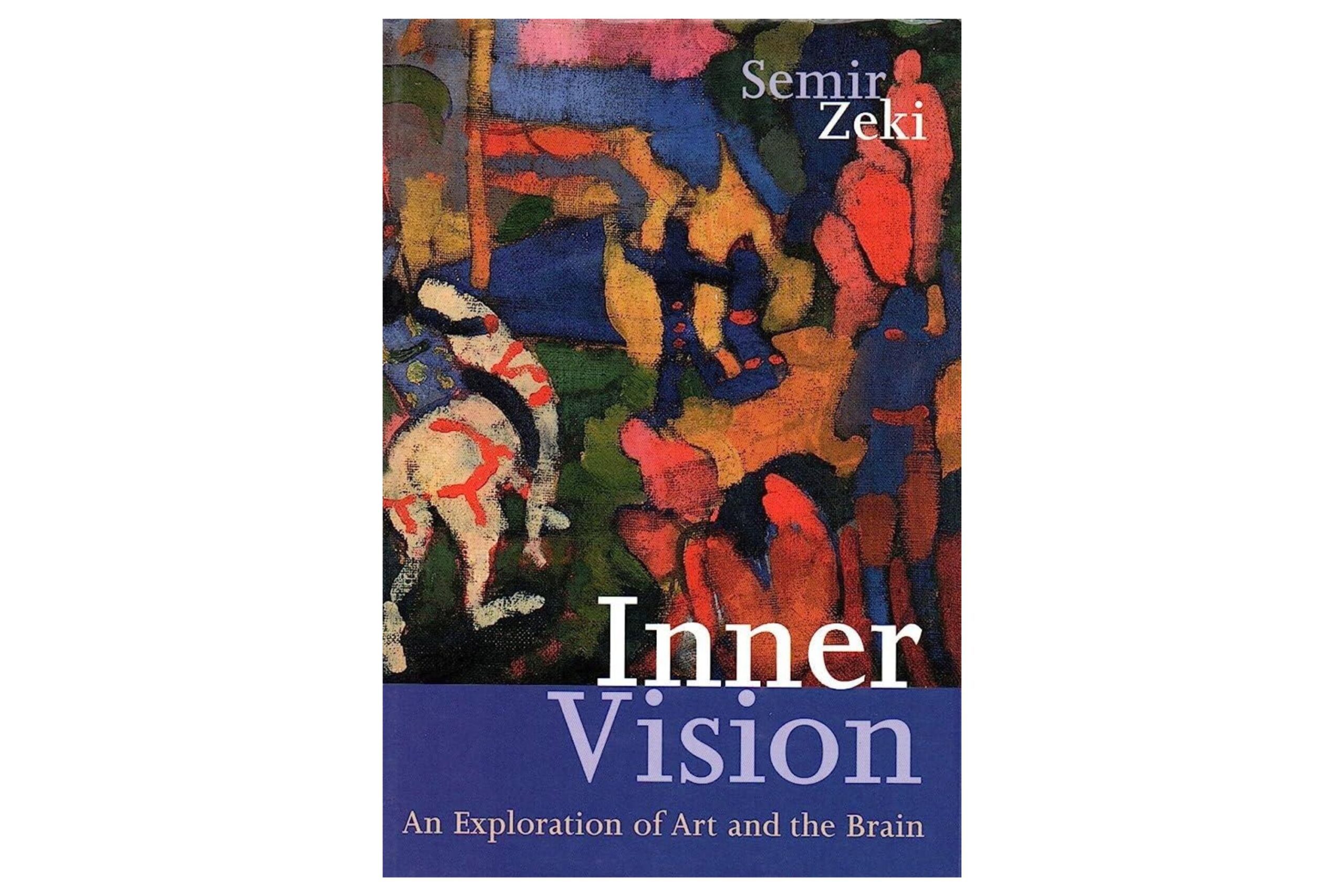
The field of Positive Psychology itself can be considered a technological development – one worthy of bringing forth new art.
We wondered: If different types of art affect different brain regions, as Zeki showed through fMRI studies, could different types of art induce different, measurable flourishing effects?
If an artist wished to maximize the aggregate flourishing impact of their art, what would they do? More simply: could artists who were trying to induce an emotion like awe do so reliably? Would it correlate with stress relief?
These questions became a second arc of the Mindful Art Break story: not just “can art help users,” but “can we learn something about awe itself—and about how art creates awe?”
Why awe?
We focused on awe because awe is one of the most reliable “state shifters” we’ve seen—often linked in research to reduced stress and a widened perspective.
Awe has been shown in studies to quiet the DMN and benefit health. Awe is associated with elevated vagal tone and reduced fight-or-flight response. It increases oxytocin and reduces inflammation.
As awe researcher Dacher Keltner puts it: art can deliver everyday awe.
That line encapsulates the spirit of Mindful Art Break: not “awe once in a lifetime,” but awe as a small, repeatable state shift you can access on a random Tuesday.
A “Call for Awe”: testing student art against museum masterpieces
Madeline Cook is a Noom intern and a student at Tufts, pursuing a dual degree, including a Bachelor of Fine Arts and a Bachelor of Science.
She posted a “Call for Awe” in a Tufts School of the Museum of Fine Arts email newsletter. Madeline advised on a primer to help give some guidance on how one might produce awe. The students had very short notice – they turned around their artwork in one week, right before exams.
Then we scored all the pieces we received on various emotion dimensions – awe, beauty, stress reduction (N=150) on a 7-point Likert scale.
These works were displayed in the Princeton Art Museum at Noom’s recent Art of Wellbeing Annual Summit. We wanted to compare the awe impact of student artwork and museum art. We used our AI tool to find awe-inducing art – including works by Bierstadt, Butler, and Achenbach – and we paired them off against the student works.
So how did the students do?
Exceedingly well. Student art produced an awe lift of 0.62 vs 0.73 for museum pieces (pre–post), and both sets significantly reduced stress in our measures.
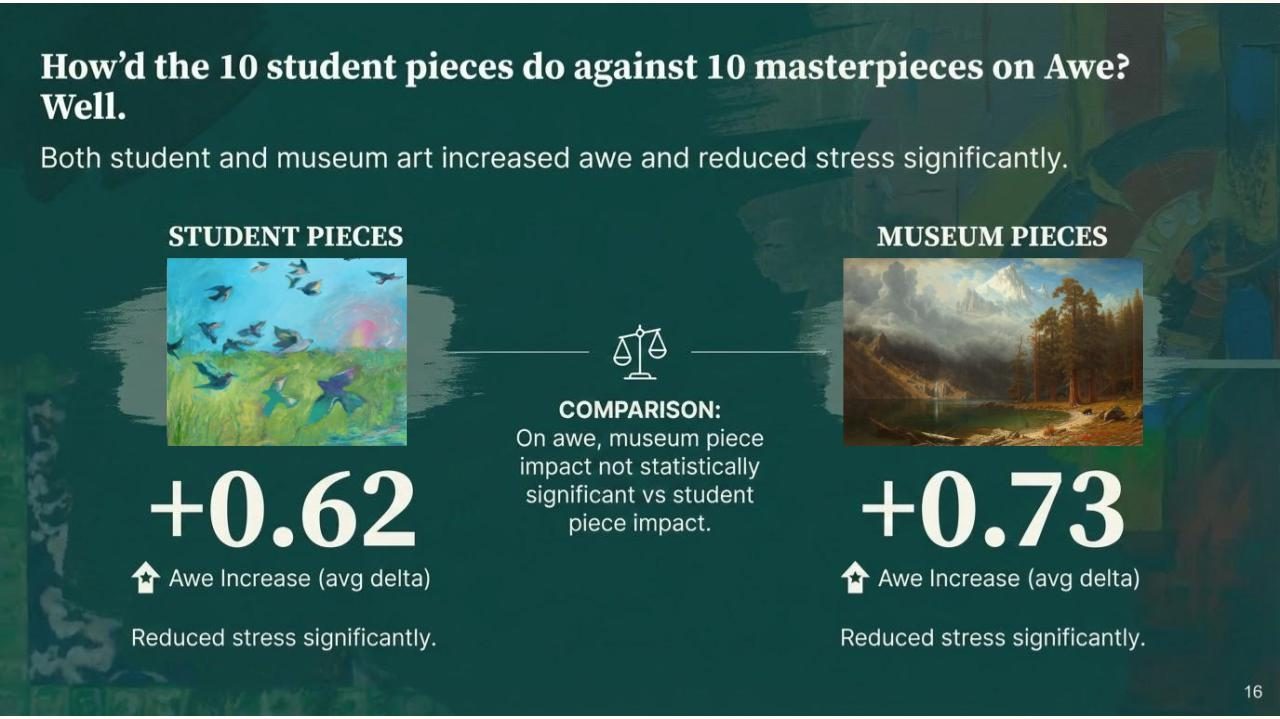
In other words, the student art had a similar impact on awe as the museum art.
In other words: awe isn’t just something “genius masters” can evoke. Under the right conditions, with the right prompts and intentions, young artists can evoke awe, too—on short notice—right before finals.
What we learned from high-scoring student art
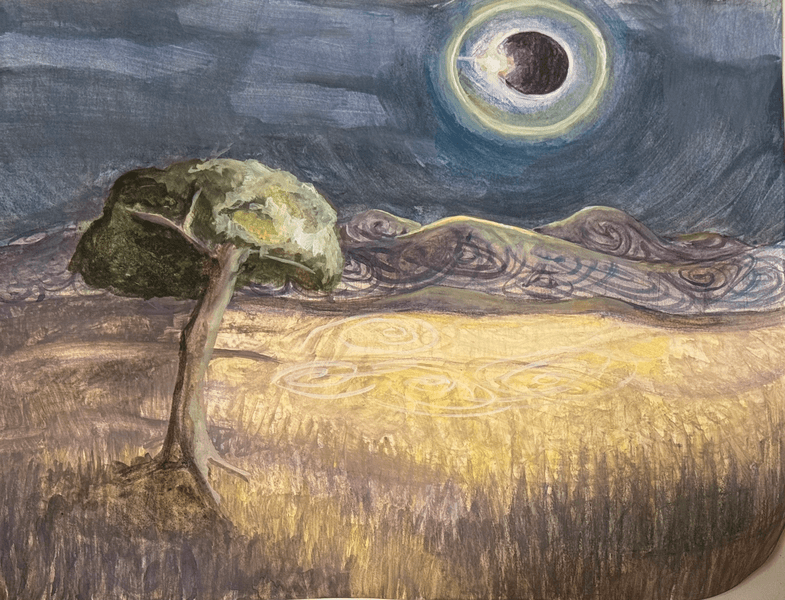
At the event, Madeline walked the audience through several standout works. Madeline painted the artwork shown below, using a savanna landscape. As she explained, the savanna is shown in neuroaesthetics research to be appealing – that may be why it scored well on beauty.
The eclipse and the open landscape may induce a feeling of something bigger than yourself—explaining why it scored well on awe.
The painting also scored highest in distress. Madeline noted that the combination of beauty, unease, and stress reduction is interesting. The distress may be because the sun has gone away – the actual experience of totality does have an eerie quality.
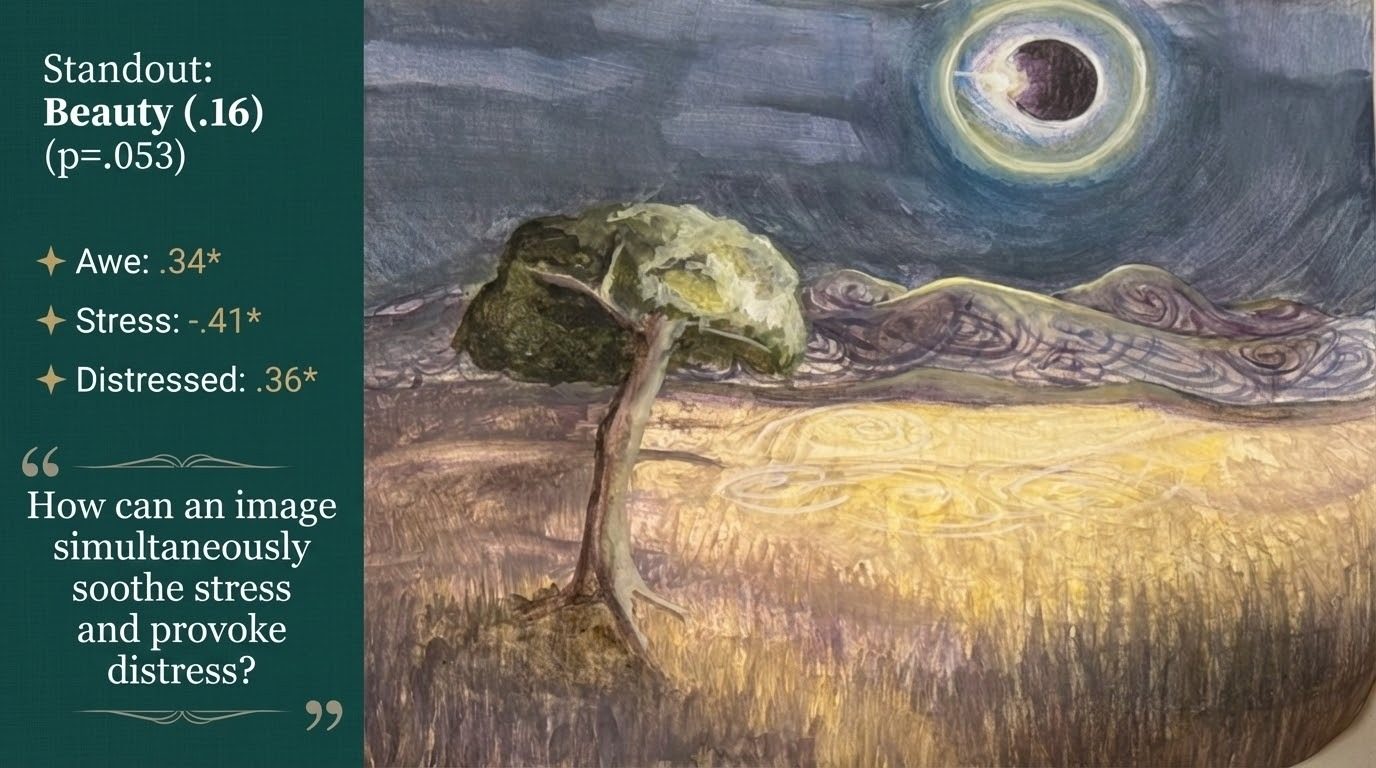
As Madeline explained, awe is not one thing. It has flavors—beauty-awe, cosmic-awe, pattern-fascination, even “dark awe.”
Professor Dacher Keltner of Berkeley notes that awe can be threat-tinged. A quarter of experiences of awe carry some peril or threat.
Keltner has talked about the social aspect of awe—that awe brings about togetherness. Perhaps a viewing experience of “shared awe” would increase not only awe but also feelings of connection.
Other examples of artwork highlighted fascination vs. awe, and how awe and fascination might work together to reduce stress.
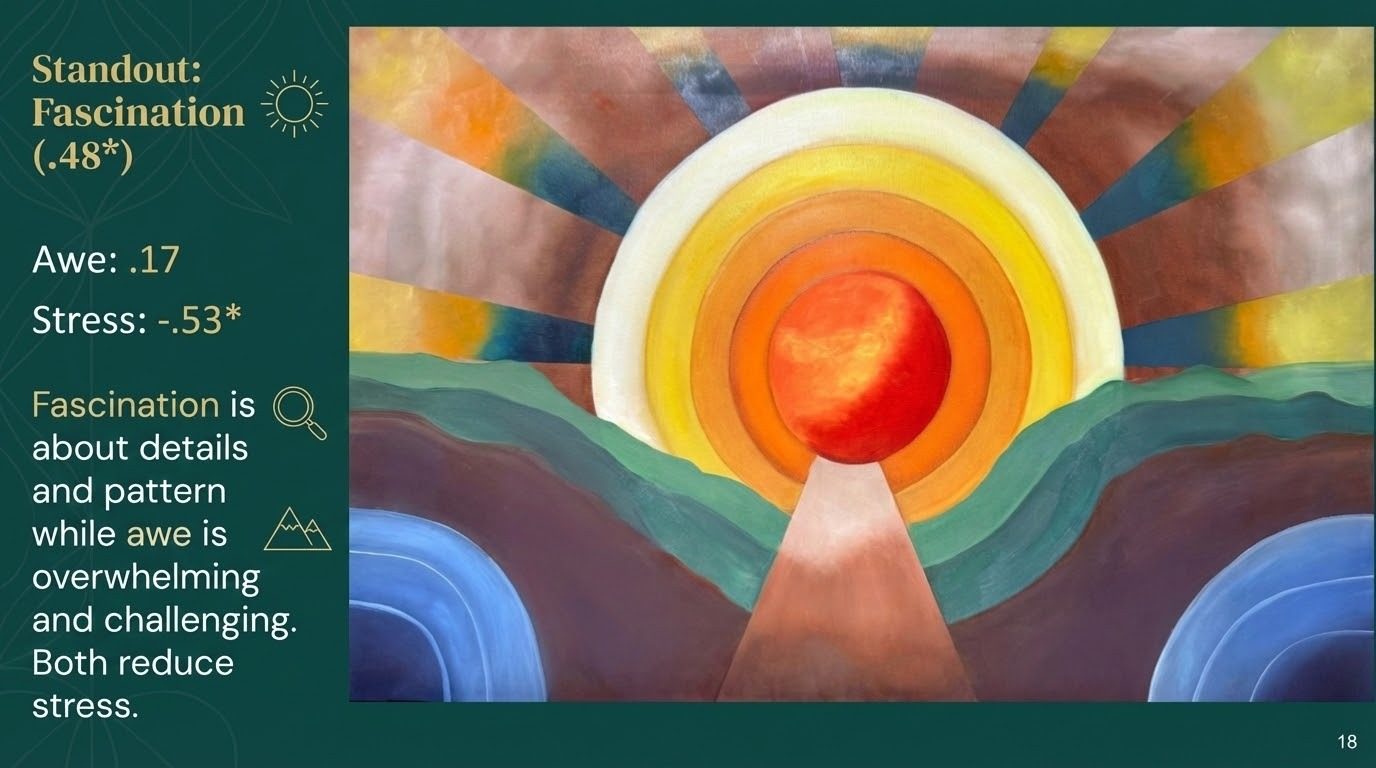
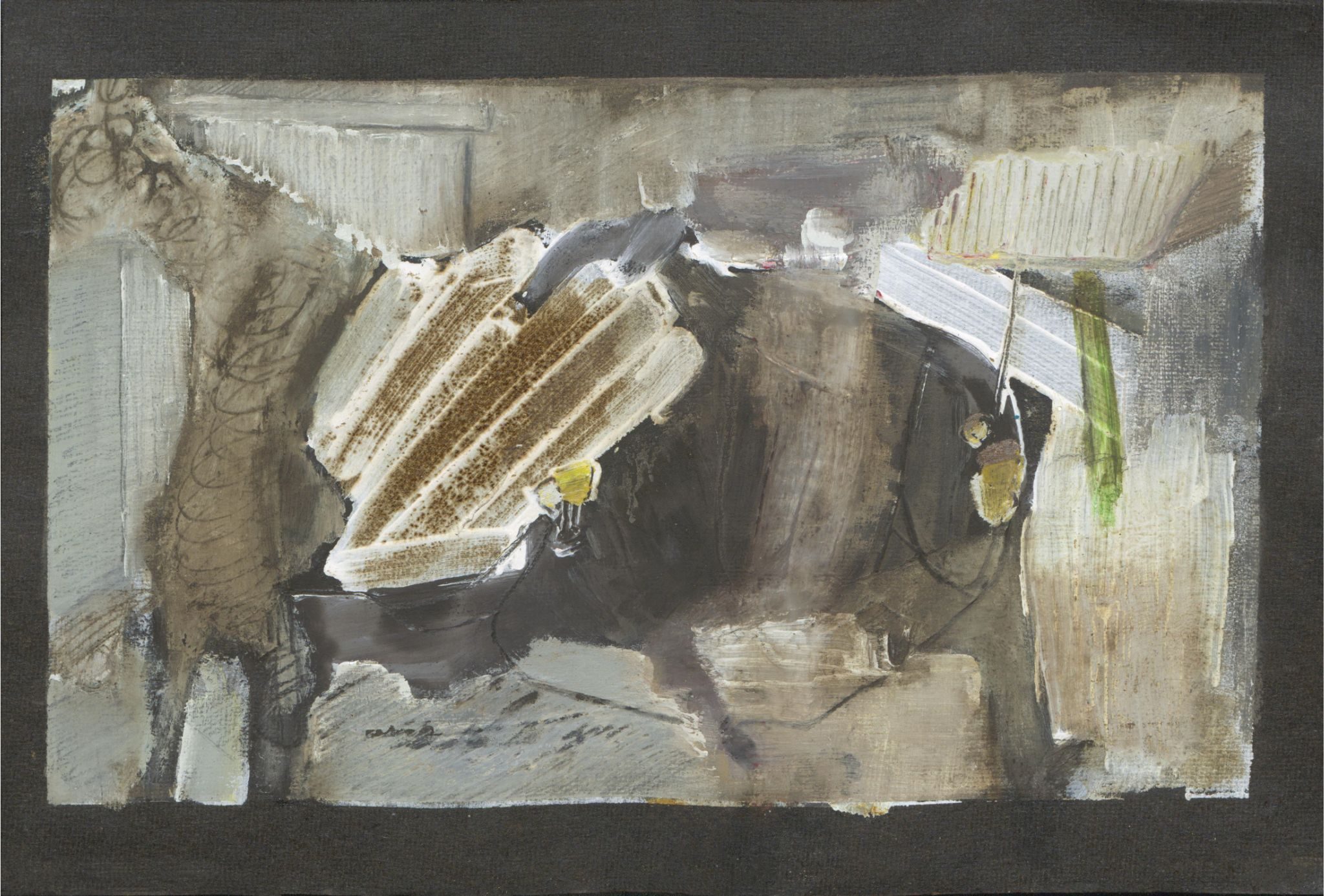
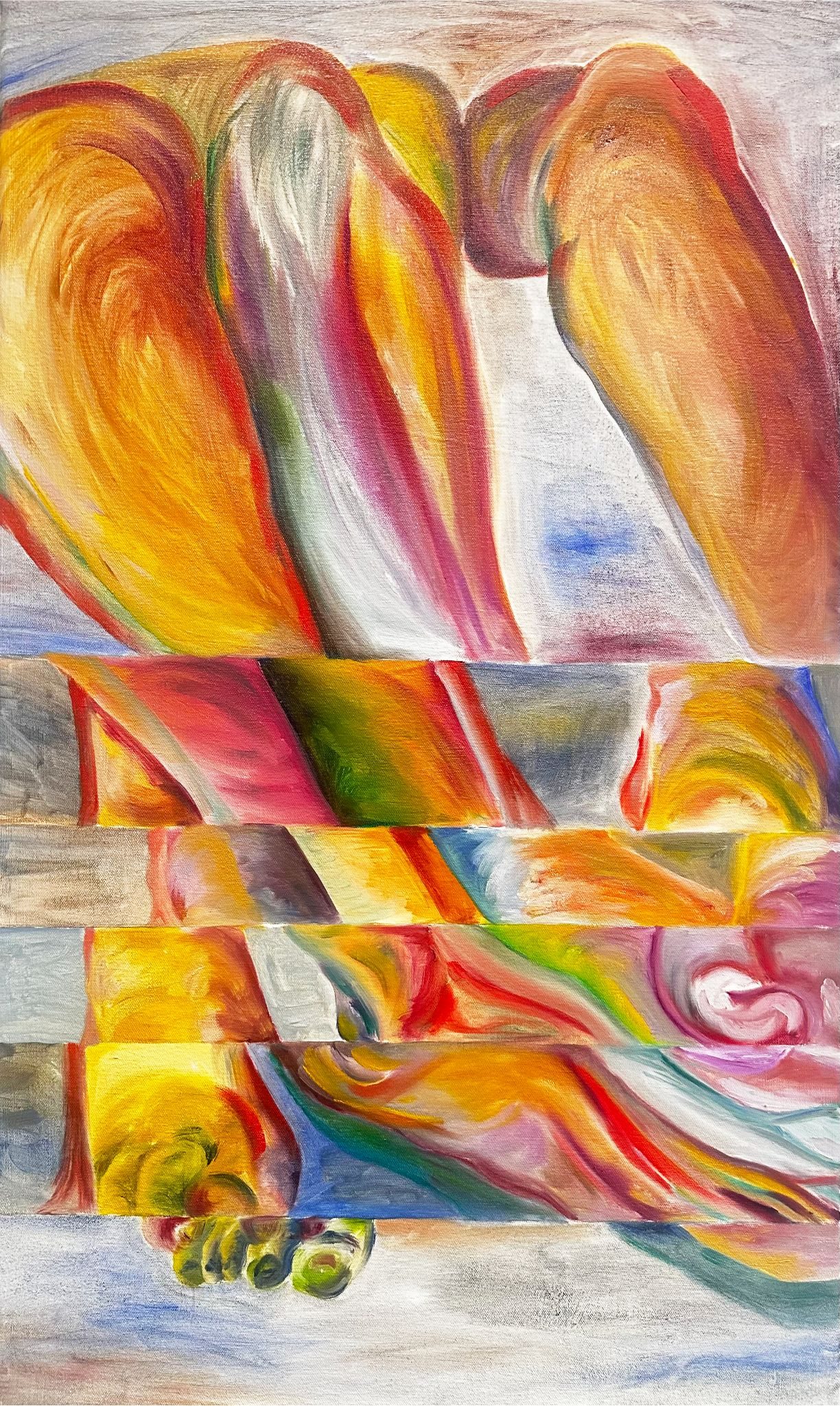
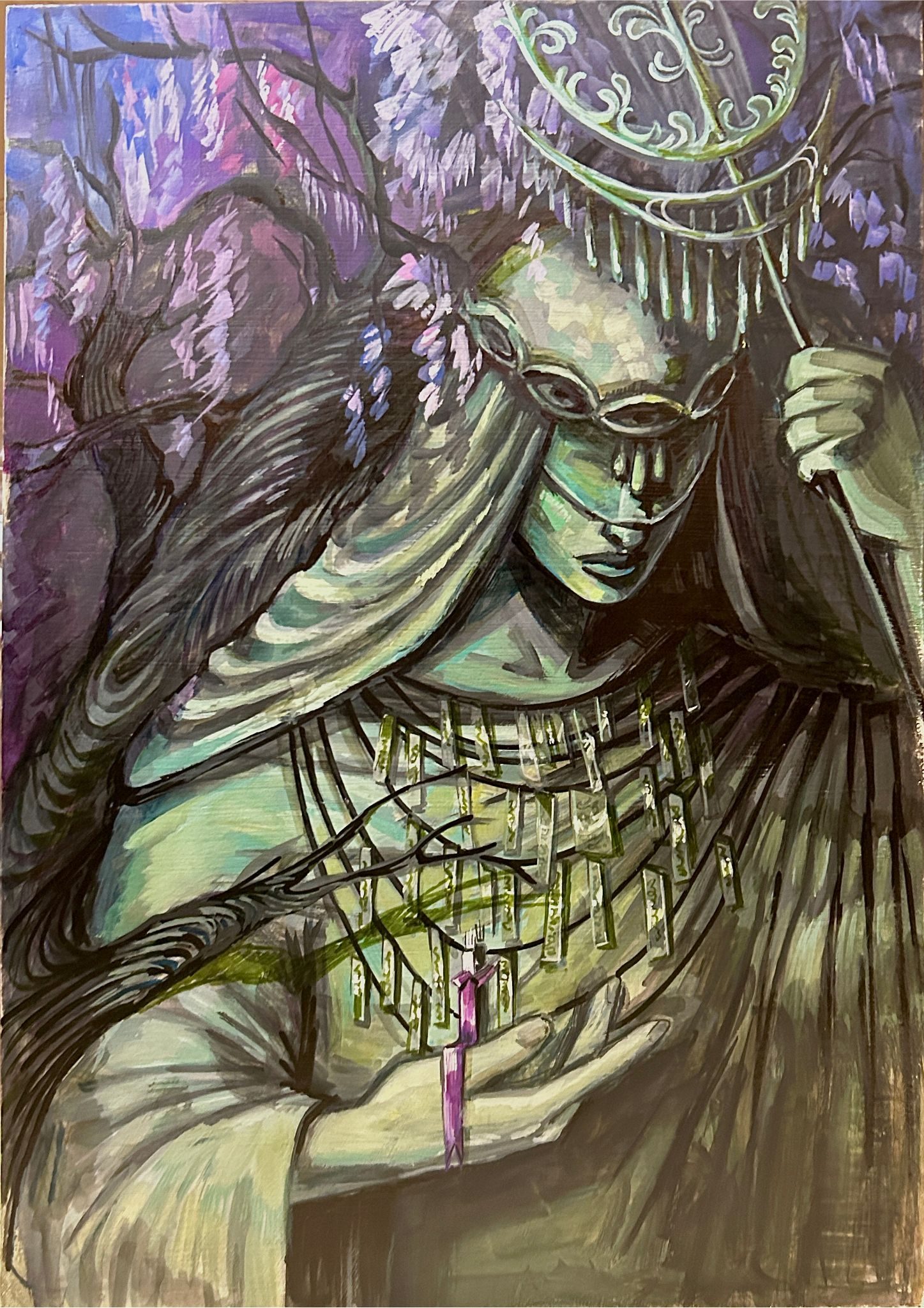
The artwork below stands out for having the highest Fascination score—but it did not score as highly in Awe. Fascination is more about details and patterns, while awe is overwhelming and challenging. Both paintings reduced stress.
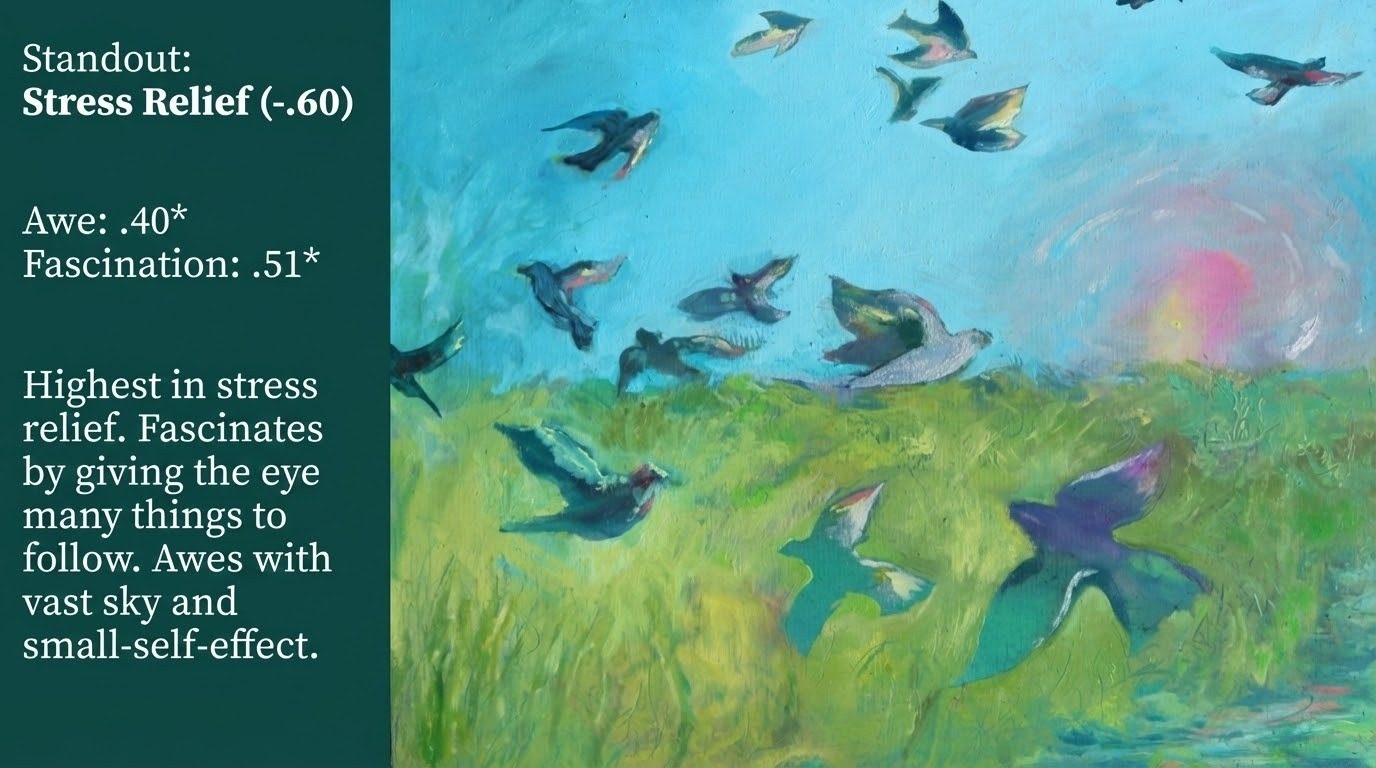
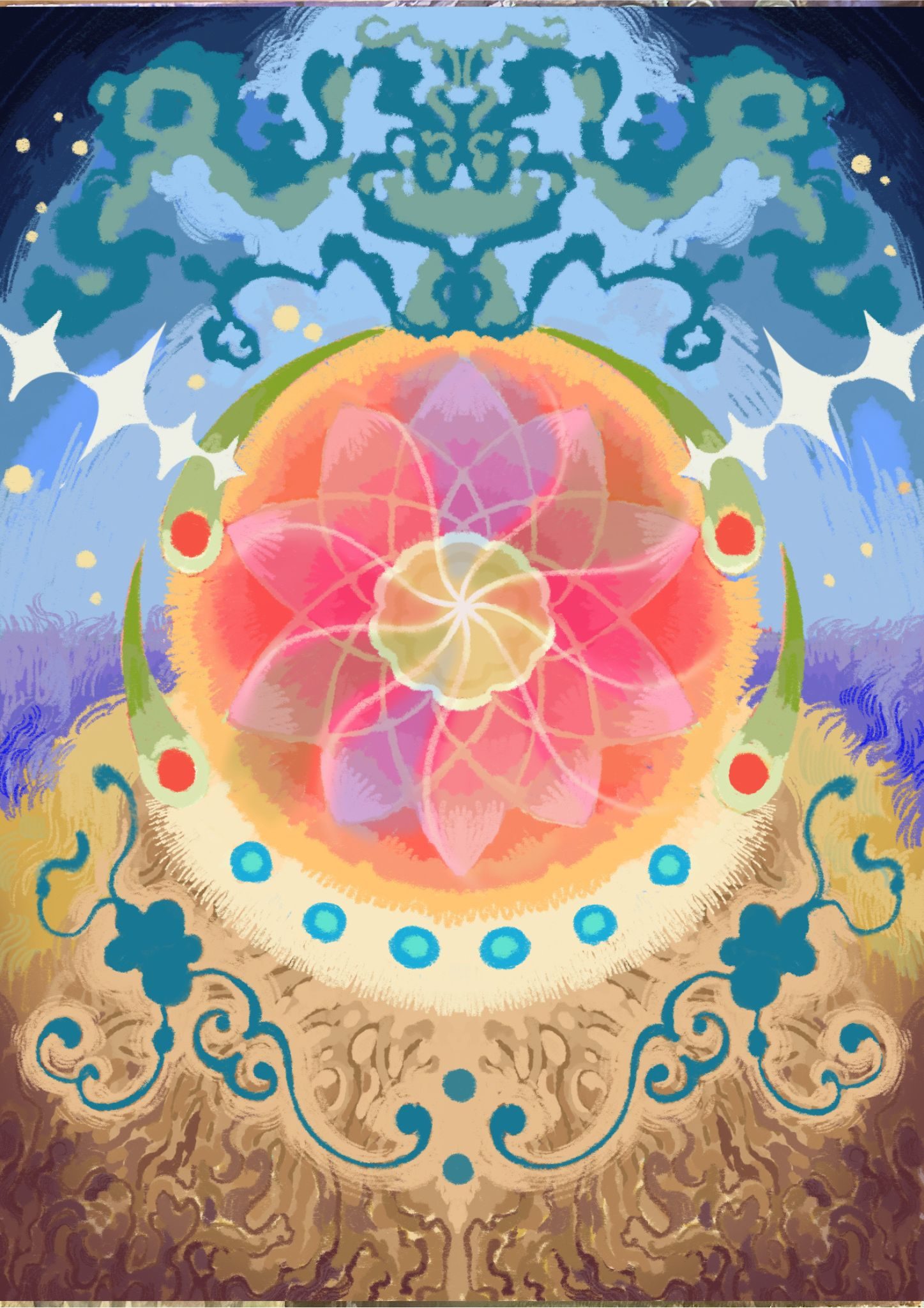
The painting below scored highest among all artworks studied on stress relief. It also scored well for Awe and Fascination. The fascination may come from giving the eye many things to follow. Awe may be evoked from the vast sky, creating a sense of smallness for the viewer. The fact that it has the highest stress relief score, and also scored well for Awe and Fascination, suggests that Awe and Fascination may work together to reduce stress.
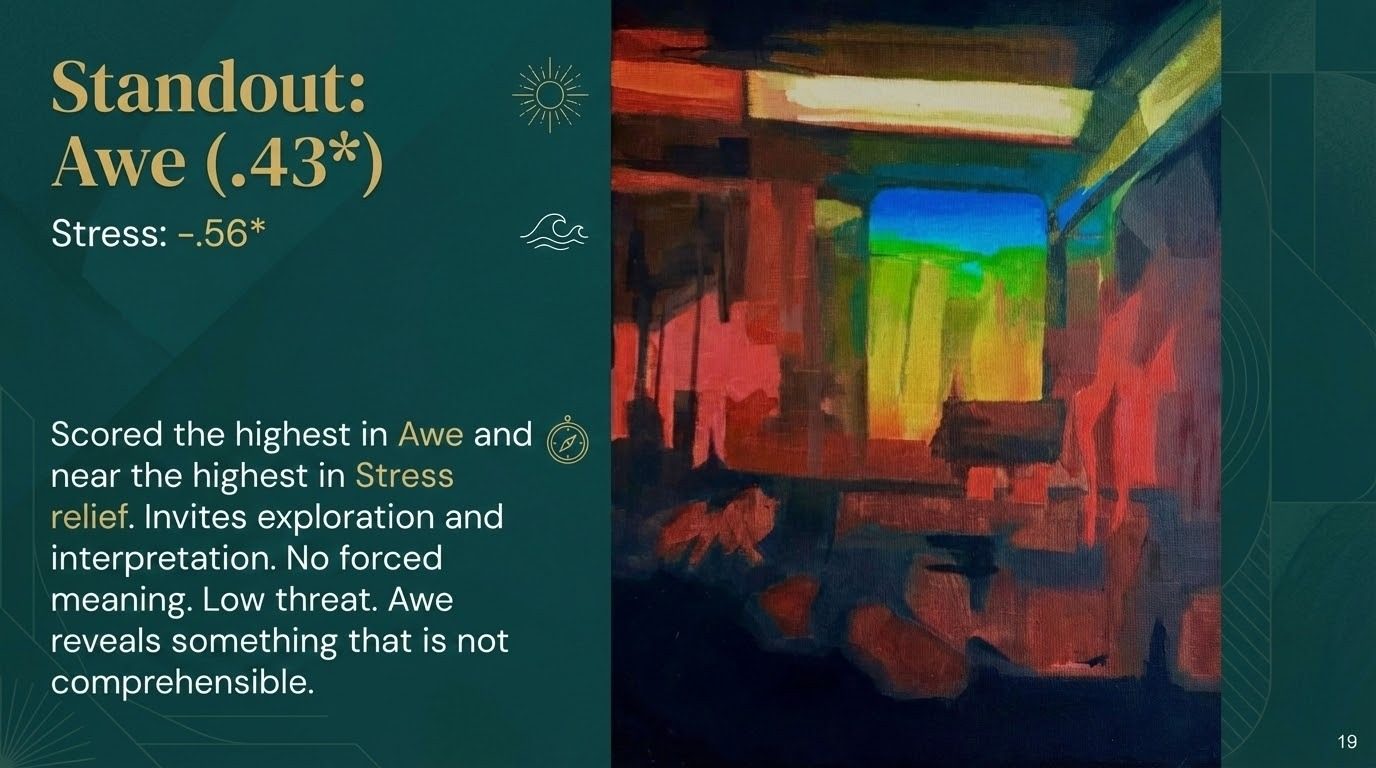
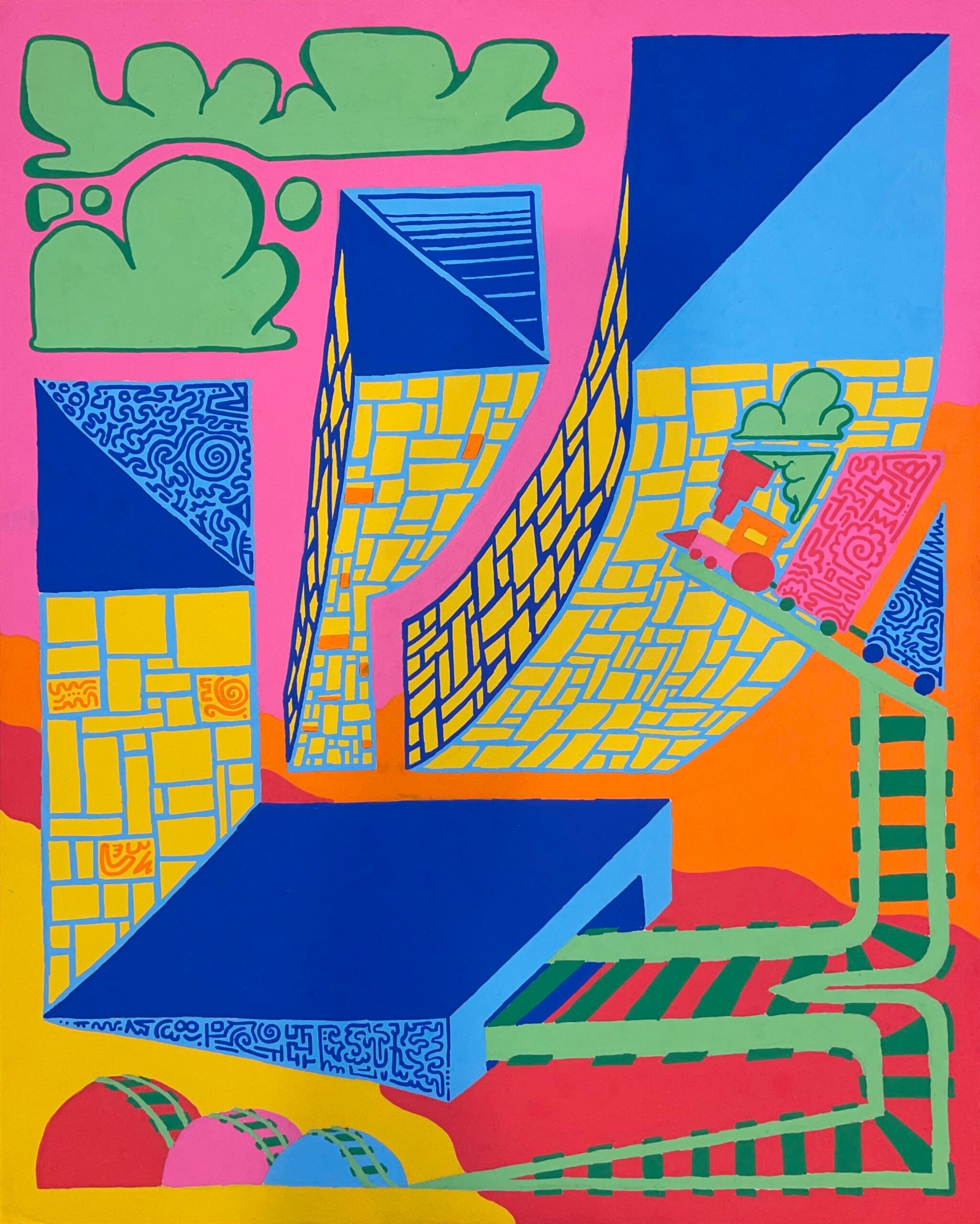
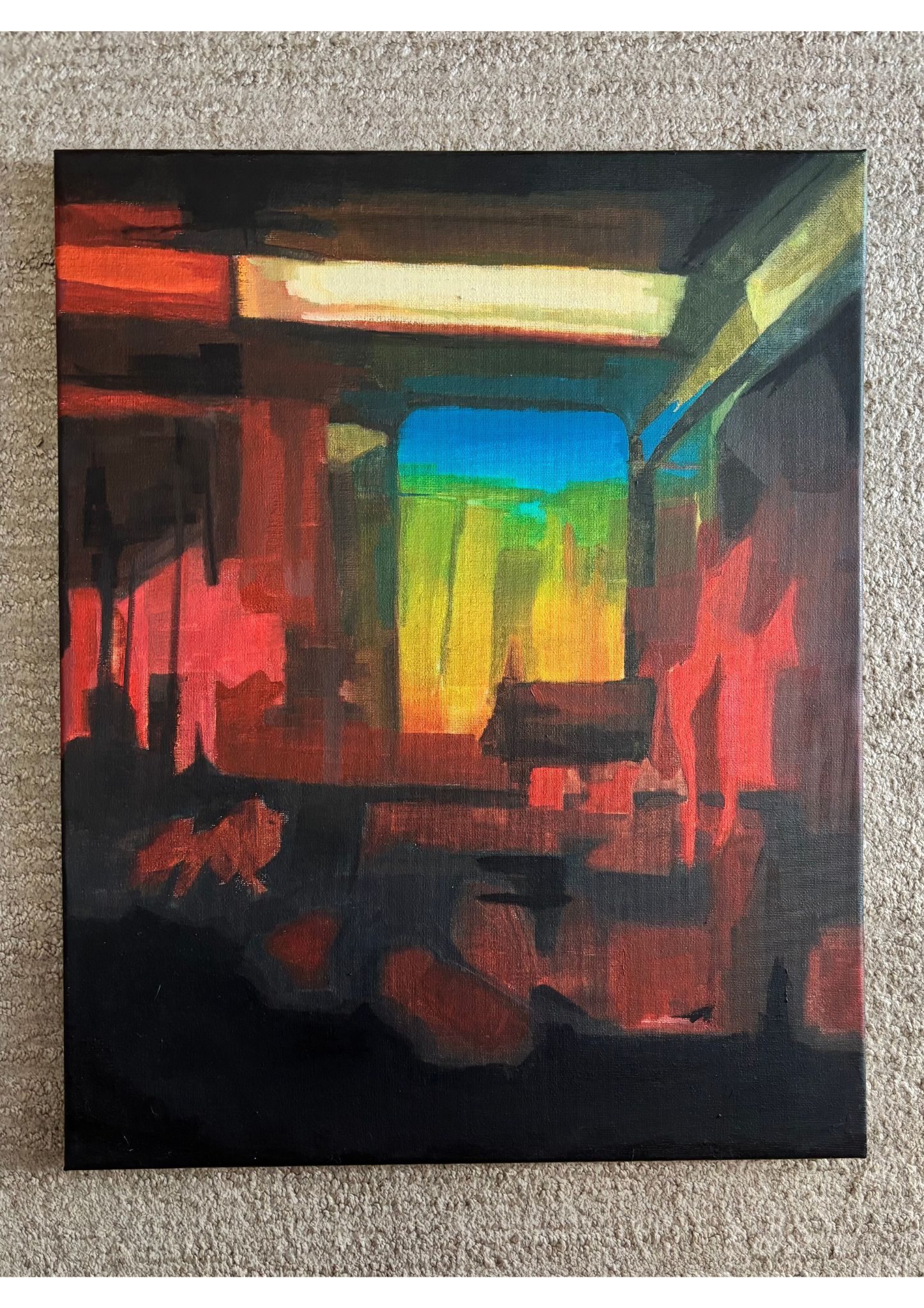
The painting below scored highest for Awe and was also rated near the top for Stress Relief. It invites exploration and interpretation. The meaning is ambiguous. There is no threat. It reveals itself in a way that is not completely comprehensible.
As Madeline said at the event, she sees a train car and a window with a city—but others may see different things.
Continuing the science: how we’re measuring emotional shifts
At Noom, we’re committed to advancing scholarship around art therapy. This includes measuring:
- Positive/negative emotions (adapted modified differential emotions scale, mDES-20)
- Awe (Awe Experience, Short Form)
- Stress via brief ecological momentary assessment questions
- Aesthetic responsiveness assessment (ArEA)
That research roadmap matters because Mindful Art Break isn’t just “content.” It’s a living product experiment—quantifying what people have intuitively known for centuries: art can change how we feel.
Where we go from here
Mindful Art Break became the most popular mindset habit on Noom overnight—despite few resources. It was striking that student artists evoked awe on par with museum pieces. Perhaps, that’s a good reason to go out and buy local art.
In the future, we plan to expand our Art Break features—favoriting, saving, frequency of habit. We expect to collaborate with UPenn and the Humanities and Human Flourishing Center to push forward the science in this field.
A wellbeing feature that makes life feel bigger
Mindful Art Break started with a question: What does art have to do with health?
Now we can answer:
- Art can modulate the DMN.
- Brief encounters with art can lift wellbeing, especially through awe, fascination, and stress relief.
- With the right design—task integration, rewards, and a short time-box—art can become a habit of daily life.
- And unexpectedly, it can expand life outside the app—like wanting to visit local museums.
That’s an “art therapy” feature in the most Noom sense: not a clinical add-on, but a psychologically grounded practice that helps people feel more present, more calm, and more connected to meaning—one two-minute break at a time.
Student Art
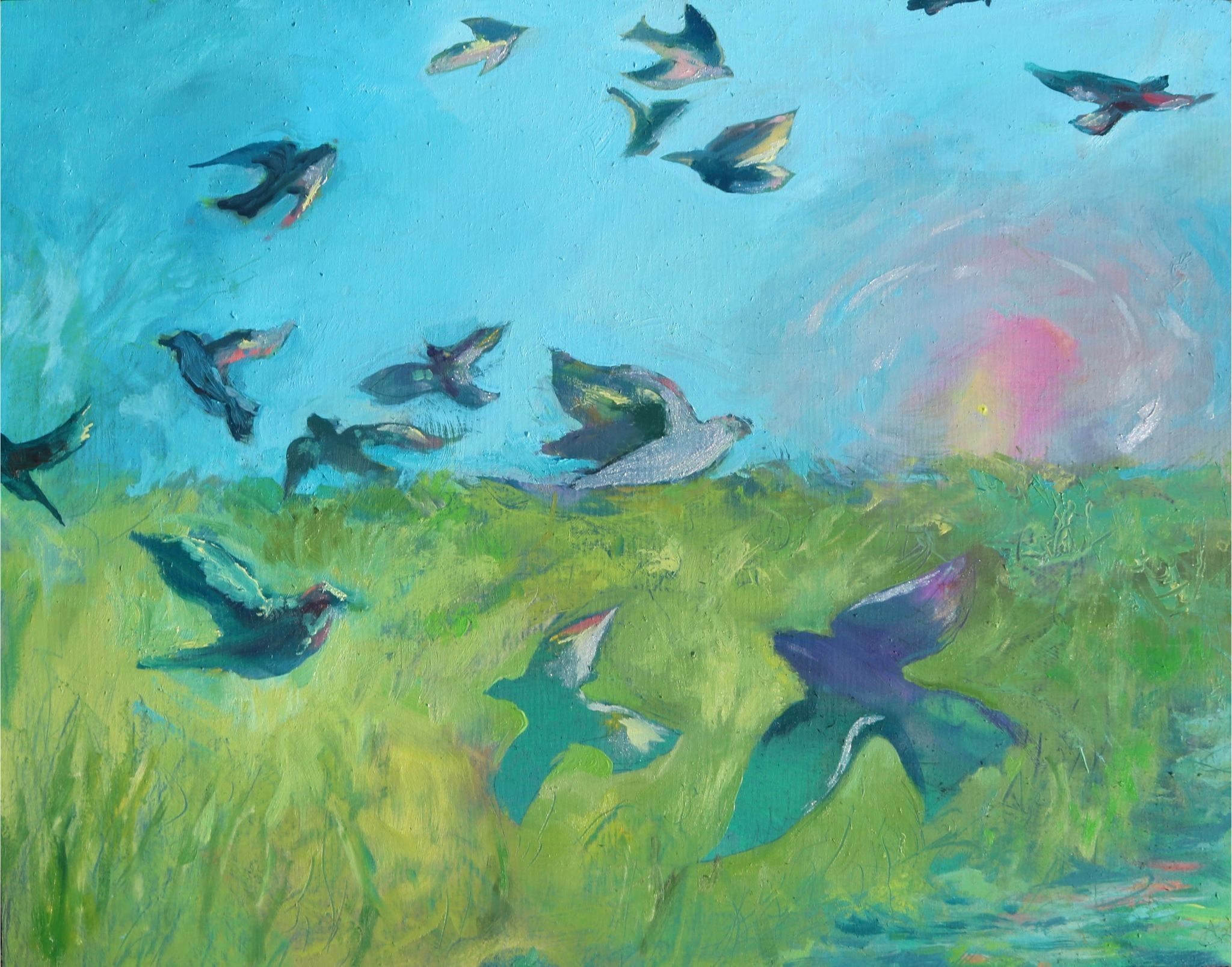
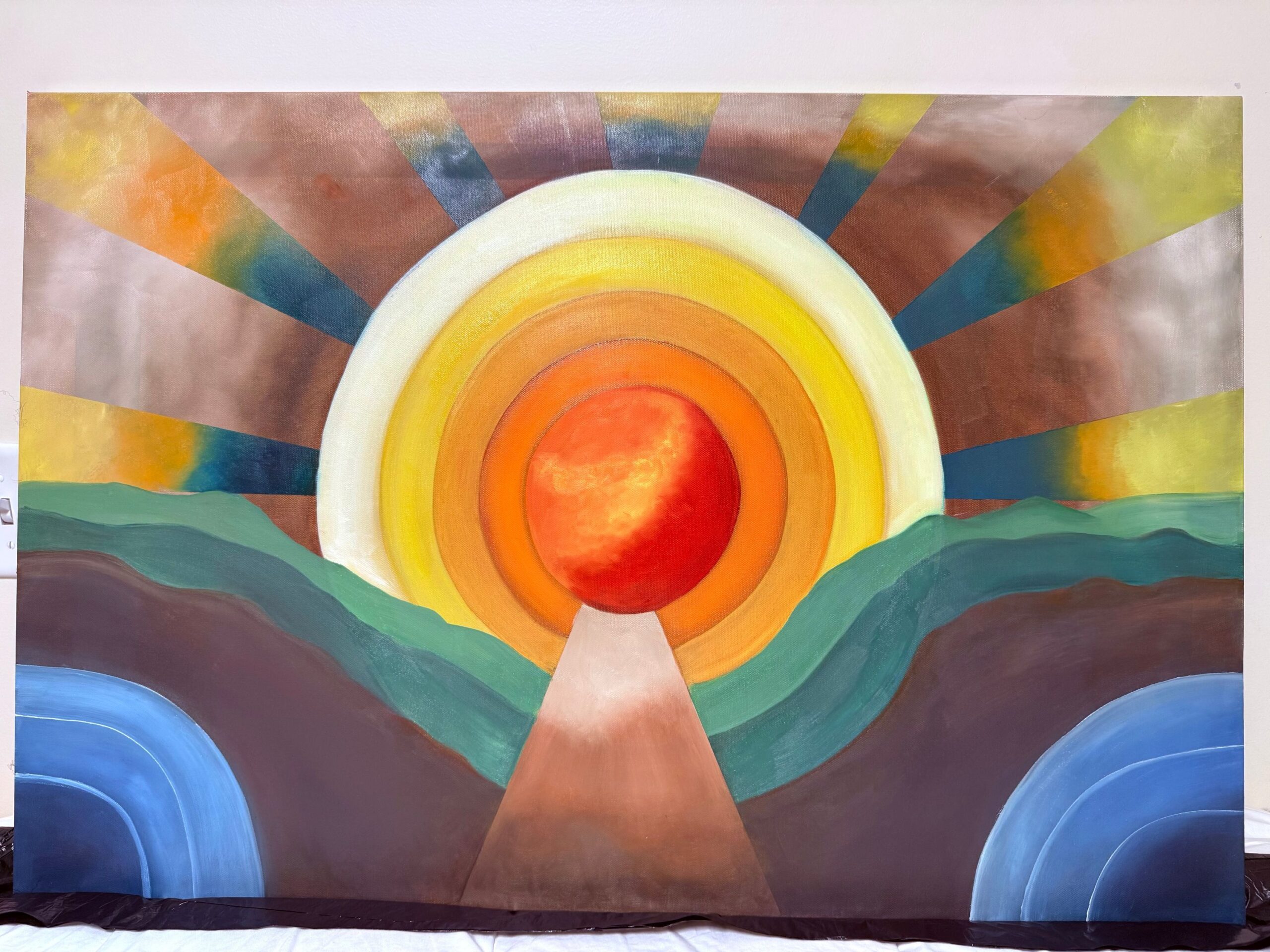
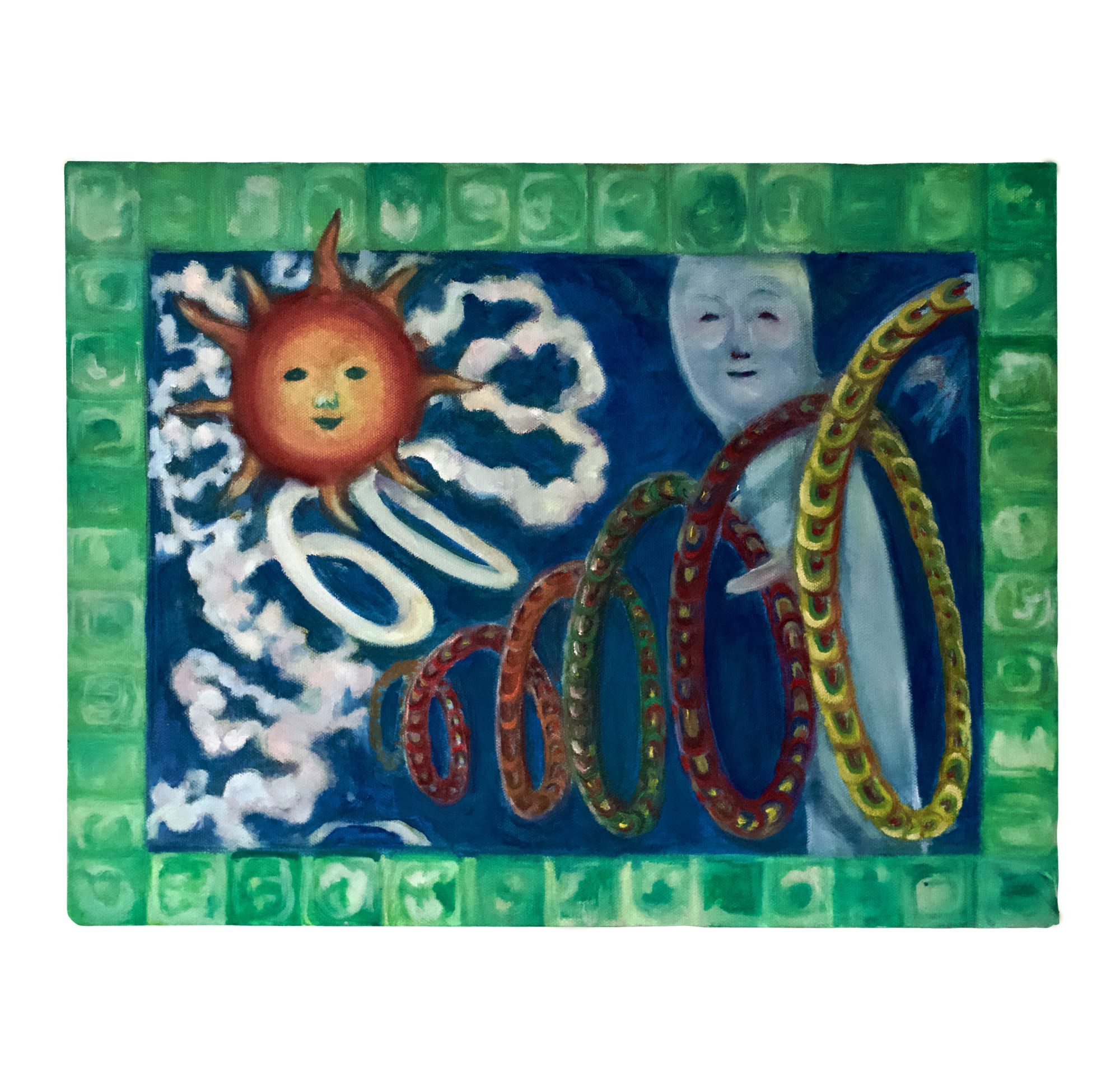
Noom recognizes the student artists who were generous enough to contribute to this project. Here is a list of student artwork included in the study:
- Analiese Christenson – The Flight
- Wivine Cyuzuzo – From Within
- Madeline Cook – Totality on the Savanna
- Justin Tavares – Sunset Cityscape
- Natasha Boutureira – Sonder
- Matilda Love – Open Ride
- Aria Ma – Despite Overwhelmed
- Jasmine Li – The Legacy of Wisteria
- Shakira Zheng – Pure Land
- Yinuo Xu – When your green eyes melt into the reflection of windows
The raw datasets collected to explore student art outcomes are available here: Student Art and Museum Art.
Editorial standards
At Noom, we’re committed to providing health information that’s grounded in reliable science and expert review. Our content is created with the support of qualified professionals and based on well-established research from trusted medical and scientific organizations. Learn more about the experts behind our content on our Health Expert Team page.