


How Noom Turned 20,000 Paintings Into a Two-Minute Habit That Lifts Mood and Reduces Stress
“If art doesn’t make us better, then what on earth is it for?” – Alice Walker
For centuries, people have turned to art for reflection, meaning, and peace of mind. Now, for the first time, we can measure, personalize, and scale that experience. Mindful Art Break bridges ancient wisdom and modern science. It turns centuries of creative expression into a measurable, everyday practice for wellbeing and growth. It marks the first time a digital health platform has brought the science of art therapy to millions, transforming a timeless human experience into a simple, everyday habit of flourishing.Before we set out to build our art therapy program, we began with this bedrock belief: Art is valuable for its own sake. The value of art exists separate and apart from any mental health benefits of viewing it. Humans create and engage with art because they are human. Art is in our nature. The cave walls of Lascaux and Chauvet testify to this fact across time.
Today, science is catching up to what our ancestors may have known intuitively: engaging with art can improve our mental and physical wellbeing. That’s why we wanted to explore how Noom could deliver art therapy to our members – expanding access to the transformative powers of viewing fine art.
Noom set out to examine whether making art a habit for our members could help them feel better, think clearer, and live more fully. We did extensive research in neuroaesthetics and positive psychology. We surveyed over 5,000 people to see which works of art sparked the greatest emotional uplift, and then used AI and custom prompts to analyze thousands of public-domain artworks—creating a data-driven framework for art that inspires wellbeing.
The result of our research is Mindful Art Break: An innovative approach to delivering art therapy in digital form.
This feature underscores Noom’s continued expansion beyond weight management into whole-person, everyday wellbeing. Mindful Art Break is a direct result of Noom’s Blueprint of Everyday Wellbeing, which guides the company’s product development and strategy.
In this blog post we’ll share the full story of how Noom developed this groundbreaking new feature. But first, it’s worth first stepping back to examine the science behind art therapy, the importance of awe, and how art can support self-reflection and transformative change.
There’s no doubt about it: Art therapy is having a moment.
In countries like France and Switzerland, hospitals and health systems are partnering with art museums. Doctors are prescribing museum visits like medicine.
Why is art therapy effective? Research demonstrates that art activates multiple brain regions involved in emotion, reward, and cognitive function. Studies have shown the therapeutic power of art in reducing stress and anxiety.
Major research universities are advancing the understanding of how the visual arts induce human flourishing. Several studies conducted on both cancer patients and trauma patients have concluded that interaction with fine art filled occupational voids, distracted thoughts of illness, reduced distress, and improved focus on positive life experiences. Even the World Health Organization notes “that the creation and enjoyment of the arts helps promote holistic wellness and can support positive clinical outcomes.”
Neuroaesthetics pioneer Semir Zeki said: “All visual art is expressed through the brain and must therefore obey the laws of the brain.” Zeki showed that representational works activate more regions—and often produce greater awe and stress relief—than abstract pieces. Research supports this link: art engages reward pathways, fosters fascination, and promotes flourishing, consistent with vision’s dominance in brain processing.
Just as Joseph Campbell uncovered universal narratives in mythology—patterns that reflect and obey the laws of the brain—Zeki argued that we can also speak of the neuroscience of different categories of art. Building on Zeki’s work, we believe it is possible to explore how distinct forms of visual art engage the brain in different ways and produce disparate effects on wellbeing.
Through our research, we found evidence supporting a link between an artwork’s capacity for producing awe and the stress relief a person experiences viewing the art. We found certain representational artworks induce greater flourishing effects than abstract pieces on a general population audience—a result that is consistent with Zeki’s finding via fMRI studies that “abstract compositions activate a less extensive part of the brain than representational or figurative compositions, even when the two are made of the same elements.”
Viewing art activates the reward center in the brain, opening the mind to wonder and fascination. Vision consumes an enormous share of brain resources—more than all the other senses combined. MIT neuroscientist Mriganka Sur notes half the brain is devoted to vision. The brain centers interpreting vision span 30 distinct cortical areas.
Because awe often arises when perception pushes us beyond our current understanding, it is fitting that the visual system—so dominant in shaping experience—plays a key role. UCLA Professor Dacher Keltner literally wrote the book on Awe. He has found that awe slows heart rate, orients attention toward others, and prompts exploration and engagement with the world. Awe is boundary breaking. Keltner defines the experience of awe as “to be in the presence of something vast that transcends a current understanding of the world.”
Whether through art, nature, or ideas, awe expands perception and connects us to something greater, making art a powerful tool for wellbeing.
Mechanisms of Action
Scholars propose four pathways by which the arts enhance flourishing: immersion (captured attention), embeddedness (hope, autonomy, emotion regulation), socialization (identity and community), and reflectiveness (intentional self-examination).
Immersion refers to “the immediacy that often attends engagement with the arts.” In designing Mindful Art Break, we focused on capturing attention with the art itself, offering reflective prompts that support—but never compete with—the impact of the piece. We selected works most likely to hold attention, on the premise that directing focus toward something beautiful or awe-inspiring naturally diverts it from intrusive thoughts about daily or future stressors. Our hypothesis was simple: sustained attention to art, even briefly, can evoke emotions like calm.
Embeddedness refers to the psychological processes that underlie the development of “qualities and feelings such as hope, relatedness, autonomy, and emotional regulation.” Experiences of mastery can spark curiosity, drawing people deeper into engagement with the arts. With Mindful Art Break, our goal is to foster not just a one-time encounter with art, but a weekly habit that encourages members to notice “art” in the everyday, enriching ordinary moments with meaning.
Socialization reflects “the degree to which individuals take on various roles and identities within communities and cultures.” The arts facilitate cultural exposure that broadens perspective and reveals new ways of being. With Mindful Art Break, our hope is that participants begin to see themselves as “someone who looks at and appreciates art,” thereby taking on a new identity as an appreciator of the arts, and as someone then able to consider engaging in further community and culture related to the arts. We see a similar transformation in health every day at Noom: when members make meaningful progress, healthy eating and regular exercise stop being just habits and instead become part of who they are.
Finally, reflectiveness describes “an intentional, cognitive emotional process for developing, reinforcing, or discarding one’s habits, character, values, or worldview … resulting in an evolution of the self and enhancing meaning and purpose.” By designing a feature meant to encourage moments of pause and reflection, we open the window for something deeper—a eudaimonic experience—to take place. Through thoughtful and accessible text prompts, we aim to deepen the impact of art-viewing—inviting members to turn their gaze inward and reflect on their character, relationships, and daily habits.
James Pawelski, a professor at the Positive Psychology Center at the University of Pennsylvania, notes “wellbeing is not the same as the absence of ill-being.” To flourish, we must facilitate the positive. Historian Darrin McMahon traces how earlier eras emphasized virtues—gratitude, kindness, forgiveness, friendship, compassion, optimism, hope, magnanimity, charity—even amid hardship (or as Auden put it, to “sing of human unsuccess in a rapture of distress”).
After 1800, as the human condition became less “brutish and short,” the “pursuit of happiness” shifted toward this-life possibilities. Those older virtues were not discarded; they became inputs to a broader vision of flourishing. In this view, happiness is not a string of short-term dopamine spikes. A person may have meaning, purpose, and connection—and, even without a naturally sunny temperament—still live a flourishing life.
Contemporary positive psychology reinforces this: a behavior’s value depends on its long-term impact, not just its immediate mood lift. Pawelski calls this “an empirical approach to the good life.” In designing this feature—essentially a public art experience—we’ve tried to follow that approach, grounding choices in evidence at every step to help people build durable, virtue-aligned habits that support lasting well-being.
Slow-Looking Vs. Free Exploration
Building on that empirical approach, we turned to a practical question: how should people engage with art to feel its benefits most deeply? In art therapy, as in wellbeing, process matters as much as content. That led us to explore two approaches—slow-looking and free exploration—and to design our feature around what works best for everyday use.
We chose free exploration to make art more accessible to members with shorter session times and varying tastes. Slow-looking demands sustained focus, but free exploration invites curiosity—letting members gravitate toward the pieces that speak to them most.
We wanted to ensure viewers were never forced to engage with a piece of art that didn’t resonate with them, so offering only a single work was not an option. We have no reason to believe this approach lessens the pleasure or calming nature of our intervention.
In fact, a recent study comparing slow-looking versus free exploration found no significant differences in outcomes for calm or pleasure, reinforcing our decision to integrate art naturally into short Noom sessions rather than impose a lengthy, structured exercise.
To optimize engagement, we ran a dose-response study within a two-minute viewing window, testing 1, 5, 10, and 20 artworks. Ten emerged as the sweet spot—maximizing flourishing scores while delivering a balanced member experience. With 10 well-chosen works, each member is likely to find something that captures their attention without being overwhelmed by choice.
Comparison of Change in Total Wellbeing Composite Metric Score among Mindful Art Break Users (n=220 per group)
| Art Sampled | Total Wellbeing Score Change | Effect Size | Effect Size Interpretation | p value |
|---|---|---|---|---|
| 1 Cezanne | 2.10 [1.41, 2.80] | 0.401 | Medium | <.001* |
| 1 Monet | 2.42 [1.63, 3.21] | 0.405 | Medium | <.001* |
| 1 Malevich | 0.18 [-0.68, 1.04] | 0.027 | Small | 0.687 |
| 5 Artworks | 2.95 [1.99, 3.90] | 0.408 | Medium | <.001* |
| 10 Artworks | 3.83 [2.71, 4.95] | 0.452 | Medium | <.001* |
| 20 Artworks | 3.09 [2.11, 4.06] | 0.418 | Medium | <.001* |
The Importance of Awe
Awe is one of the most powerful — and most underrated — emotions in human experience. It quiets the brain’s internal chatter, slows the heart, and shifts our perspective beyond ourselves.
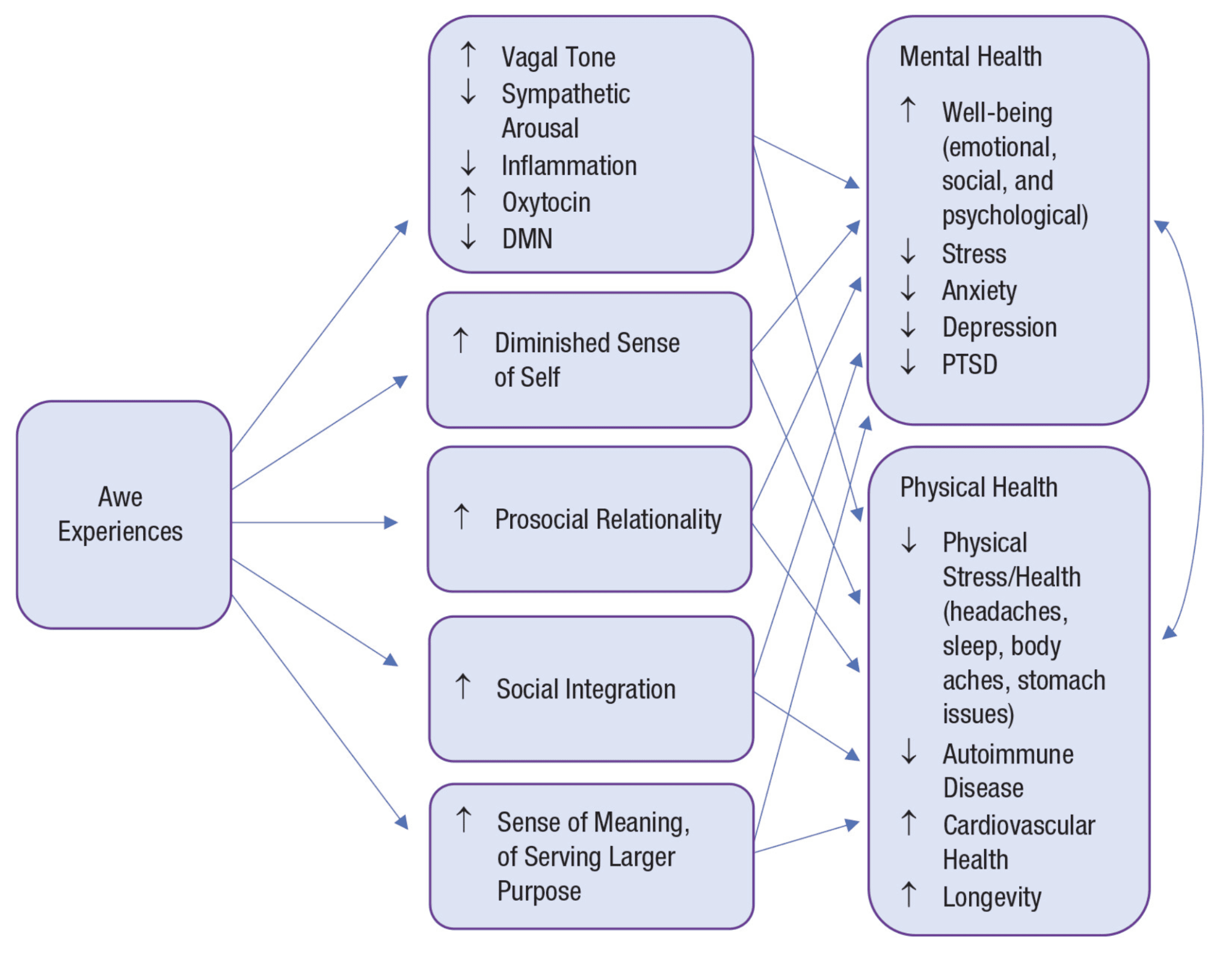
Awe has been shown to quiet the Default Mode Network of the brain—often considered the seat of consciousness—while slowing heart rate, increasing oxytocin and decreasing inflammation. If the DMN is the seat of prospection, then quieting it would reduce the stress of intrusive thoughts and the worries of the day.
Across flourishing dimensions, we found “awe” and “calm” or “stress reduction” consistently produced some of the largest improvements from pre- to post-survey. Research by Dacher Keltner into the psychology of awe showed that unlike pleasure, awe is not subject to the hedonic treadmill; that is, there is no “law of diminishing returns” when it comes to awe. As such, creating an experience to induce everyday awe is consistent with maximizing the wellbeing of our members.
Our finding that awe and stress reduction go hand-in-hand aligns with Keltner’s pathways for awe. The chart below, from Keltner, shows how awe might drive reductions in stress and anxiety while improving longevity.
At Noom, our mission is to help people live better, longer—every day. Mindful Art Break was designed to turn that mission into experience: by reliably sparking moments of awe, we help members find calm, curiosity, and connection in just a few mindful minutes. Over time, this simple practice trains attention toward awe-inspiring moments—reducing stress in the short term and cultivating lasting “everyday awe.”
Awe is fleeting and mysterious and everywhere. A wonder-full life is a more wonderful life.
In our research, we found that awe and stress relief go hand in hand. As the results of a 2-minute art-viewing experience of 10 images (n=220) show, when asked on a 7-point Likert scale, there are significant shifts in various dimensions of wellbeing:
Effects of 2-Minute Art Viewing Experience with 10 Images
| Outcome | Pre Score Mean (SD) | Post Score Mean (SD) | Difference (95%-CI) | p | Effect Size (Cohen’s D) | Effect Size Interpretation |
| calm | 5.59 (1.38) | 5.83 (1.28) | 0.24 [0.15, 0.33] | 0.001* | 0.220 | Medium |
| awe | 3.73 (1.69) | 4.40 (1.73) | 0.67 [0.60, 0.74] | <.001* | 0.416 | Medium |
| psychological richness | 4.57 (1.47) | 5.00 (1.47) | 0.43 [0.35, 0.51] | <.001* | 0.336 | Medium |
| happiness | 5.13 (1.57) | 5.45 (1.46) | 0.32 [0.23, 0.41] | <.001* | 0.269 | Medium |
| connection | 4.80 (1.60) | 5.17 (1.42) | 0.37 [0.28, 0.46] | <.001* | 0.306 | Medium |
| appreciation of beauty | 5.64 (1.25) | 5.81 (1.22) | 0.17 [0.10, 0.24] | <.001* | 0.142 | Small |
| curiosity | 5.26 (1.28) | 5.22 (1.43) | -0.04 [-0.13, 0.05] | 0.6 | -0.034 | Small |
| purpose | 5.37 (1.41) | 5.55 (1.28) | 0.18 [0.10, 0.26] | 0.038* | 0.144 | Small |
| stress | 3.69 (1.96) | 3.08 (1.82) | -0.61 [-0.70, -0.52] | <.001* | -0.401 | Medium |
| creativity | 5.02 (1.59) | 5.35 (1.56) | 0.33 [0.23, 0.43] | <.001* | 0.303 | Medium |
| fulfillment | 5.09 (1.49) | 5.28 (1.43) | 0.19 [0.11, 0.27] | <.001* | 0.147 | Small |
| fascination | 4.45 (1.64) | 4.97 (1.58) | 0.52 [0.46, 0.58] | <.001* | 0.319 | Medium |
| distress | 3.06 (1.93) | 2.72 (1.72) | -0.34 [-0.43, -0.25] | <.001* | -0.231 | Medium |
As the data show, viewing artwork had the greatest positive impact on awe, and the greatest negative impact on stress.
We also examined the correlation between self-reported awe and stress. After viewing 10 art images, people who felt more awe reported feeling less stress. The more awe the person felt overall, the lower their reported stress (r= -0.22, p=0.005). We saw a small boost in awe related to a small drop in stress (r= -0.23, p<0.001).
These findings underscore a simple truth: moments of awe—however small—can make a measurable difference. In just two minutes, participants felt both calmer and more uplifted. By helping people pause, reflect, and reconnect, Mindful Art Break demonstrates that awe can be cultivated like any other healthy habit—and that it’s one of the fastest ways to quiet the mind and restore balance.
Building the World’s First Flourishing Index for Art
Selecting art for emotional impact is both a science and an art in itself. Not every painting moves us in the same way. Some pieces spark a moment of passing admiration, while others leave a lasting imprint—shifting mood, perspective, and even state of mind. To identify which works most powerfully support emotional health, we combined three forces: artificial intelligence, psychological theory, and human curation.
At the core of this effort are two innovations that work hand in hand: our scoring algorithm and the Art Research Tool (ART). The algorithm—developed with ChatGPT o5 and guided by research in positive psychology, neuroaesthetics, and art therapy—evaluates paintings for their ability to evoke positive emotions like awe, calm, beauty, and creativity.
ART, built by our Chief Technology Officer Rich Friedman, is a living database of scored works drawn from leading museums including the Metropolitan Museum of Art, Princeton University Art Museum, The Art Institute of Chicago, The Cleveland Museum of Art, and The National Gallery of Art. Together, the algorithm scores and ART stores—bridging vast museum collections to a curated set of works optimized for wellbeing.
We tested via surveys of 5,000 people how flourishing scores vary when exposed to 50 public domain artworks drawn from the period 1800–1920. This era offered a rich variety across movements such as Romanticism, Impressionism, Realism, and early Modernism. Our selection represented a comprehensive cross-section of the time period—global in scope, inclusive of artists of multiple genders, balancing both well-known and lesser-known works, and spanning representational and abstract forms.
We used the survey results to create a data-informed prompt to feed an LLM to AI-score tens of thousands of public domain artworks based on those findings.
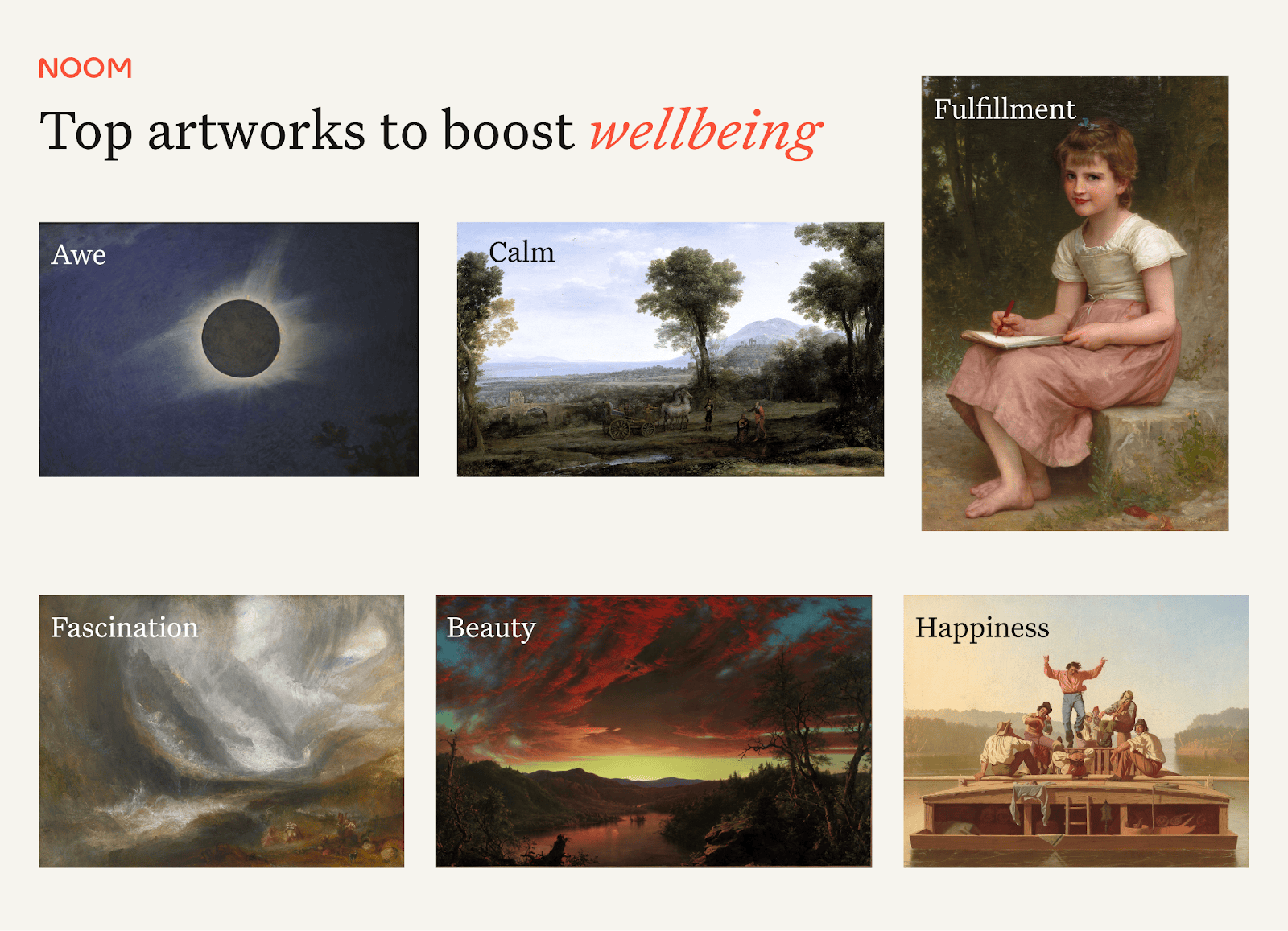
Standout works that boost dimensions of flourishing the most include these — all scoring in the Top-10 for their dimension among 15,000+ public domain museum artworks.
- Awe – Solar Eclipse by Howard Russell Butler (Princeton University Art Museum)
- Beauty – Twilight in the Wilderness by Frederic Edwin Church (Cleveland Museum of Art)
- Fulfillment – A Calling by William Adolphe Bouguereau (Cleveland Museum of Art)
- Fascination – Valley of Aosta: Snowstorm, Avalanche, and Thunderstorm by J.M.W. Turner (Art Institute of Chicago)
- Happiness – The Jolly Flatboatmen by George Caleb Bingham (National Gallery of Art)
- Calm – Landscape with St. Philip Baptizing the Eunuch by Claude Lorrain (Princeton University Art Museum)
What We Learned from 5,000 People on How Art Shapes Wellbeing
Early testing and research on Mindful Art Break have yielded intriguing insights into how art influences wellbeing. With more than 5,000 participants surveyed, our studies are, to our knowledge, among the largest to date on art and flourishing. Here are some of the most notable findings so far:
Insight 1: Representational art provides the strongest flourishing boost for a general population audience.
In our early surveys, representational paintings showed a significantly higher impact on flourishing compared to abstract works. Viewers consistently reported greater awe, calm, and psychological richness after engaging with representational art. Abstract art still produced positive shifts, but the magnitude was smaller—suggesting that images of recognizable people or objects may be associated with greater emotional resonance. Looking ahead, our next step is to explore whether familiarity with abstract art enhances its potential to promote flourishing. Our current findings are based on surveys of a general population sample. We’re also interested in the possibility of maximizing flourishing outcomes by personalizing the art therapy intervention. We will be investigating this in future product research.
Insight 2: Awe and stress relief are the standout emotions.
Among all measured outcomes, awe and stress reduction showed the largest gains, often with medium-to-large effect sizes. Awe is associated with heightened attention and an expanded sense of perspective, while stress relief is associated with a state of relaxation. Connection and fascination also showed significant increases, underscoring art’s power to both encourage inward reflection and deepen one’s relationship with others. By contrast, we saw less impact from viewing art on deeper dimensions of non-hedonic wellbeing, such as purpose or fulfillment. This suggests different approaches may be required to influence deeper human feelings. We did not expect to see much impact to these deeper states based on a 2-minute intervention.
Insight 3: More is not always better.
Viewing a set of 10 images emerged as the “sweet spot” for improving overall wellbeing within a short viewing period—in our case, two minutes. This number of images outperformed smaller sets of 1 or 5 and even larger sets of 20. Ten images appeared to offer enough variety to expand engagement without overwhelming participants. That said, several individual artworks produced effects just as strong as multi-image sets, showing that certain masterpieces that may also have widespread appeal can deliver transformative impact on their own. When only a single work is shown, we hypothesize that the wellbeing benefit depends heavily on whether the viewer connects with that piece. By contrast, presenting a set of ten increases the likelihood that at least one artwork will evoke a meaningful emotional response.
Insight 4: Demographics matter.
Different groups may respond to art in different ways. For example, men reported greater post-viewing shifts in several different emotions, while women showed the greatest gains in pre/post wellbeing measures. Those with art experience prior to the experiment saw greater shifts in their pre/post wellbeing measures than those less familiar with art.
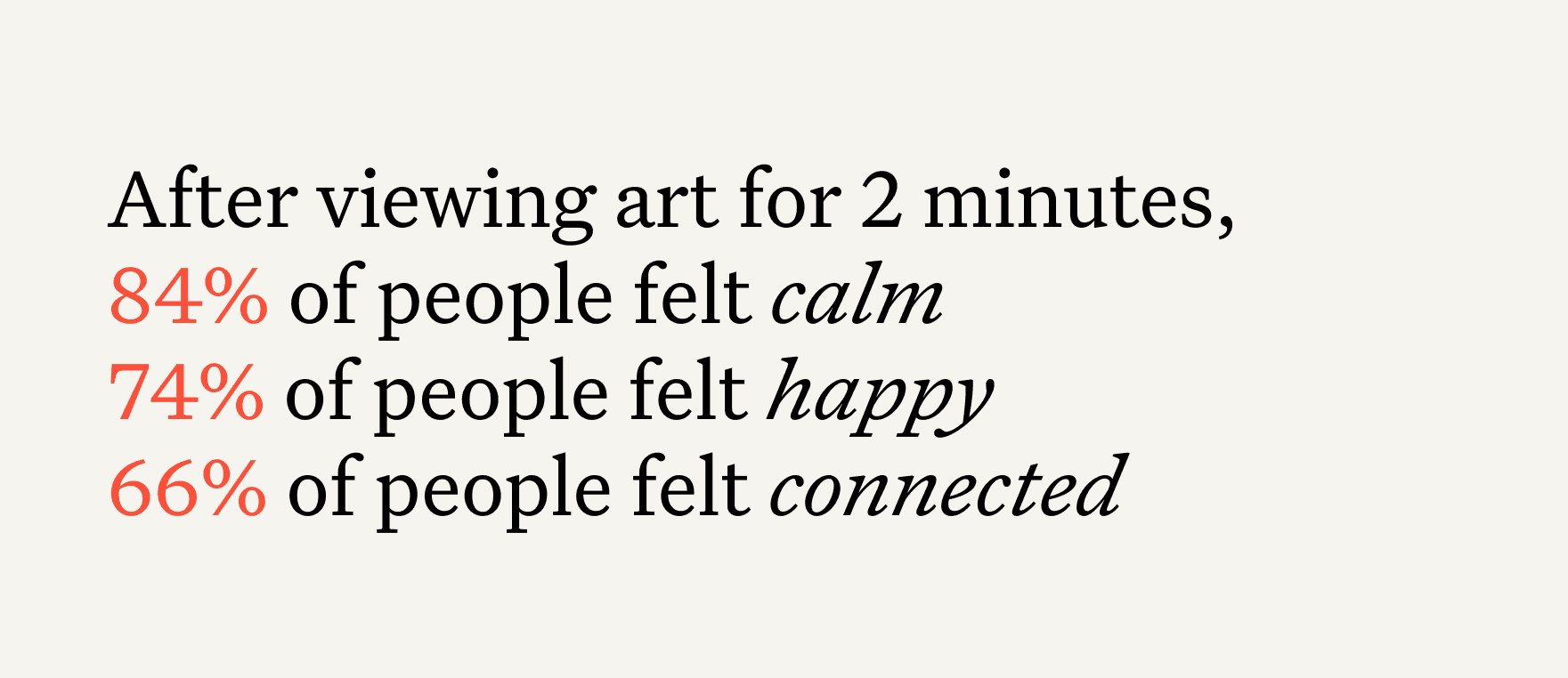
Ultimately, viewing art for two minutes correlated with high positive emotional states across participants – 84% of people felt calm, 74% of people felt happy, and 66% of people felt connected after a short, 2-minute art viewing experience. This finding became the impetus for turning our research into a tool, one that made the therapeutic powers of art accessible to all viewers.
The Moment: Turning Art Into a Wellbeing Habit
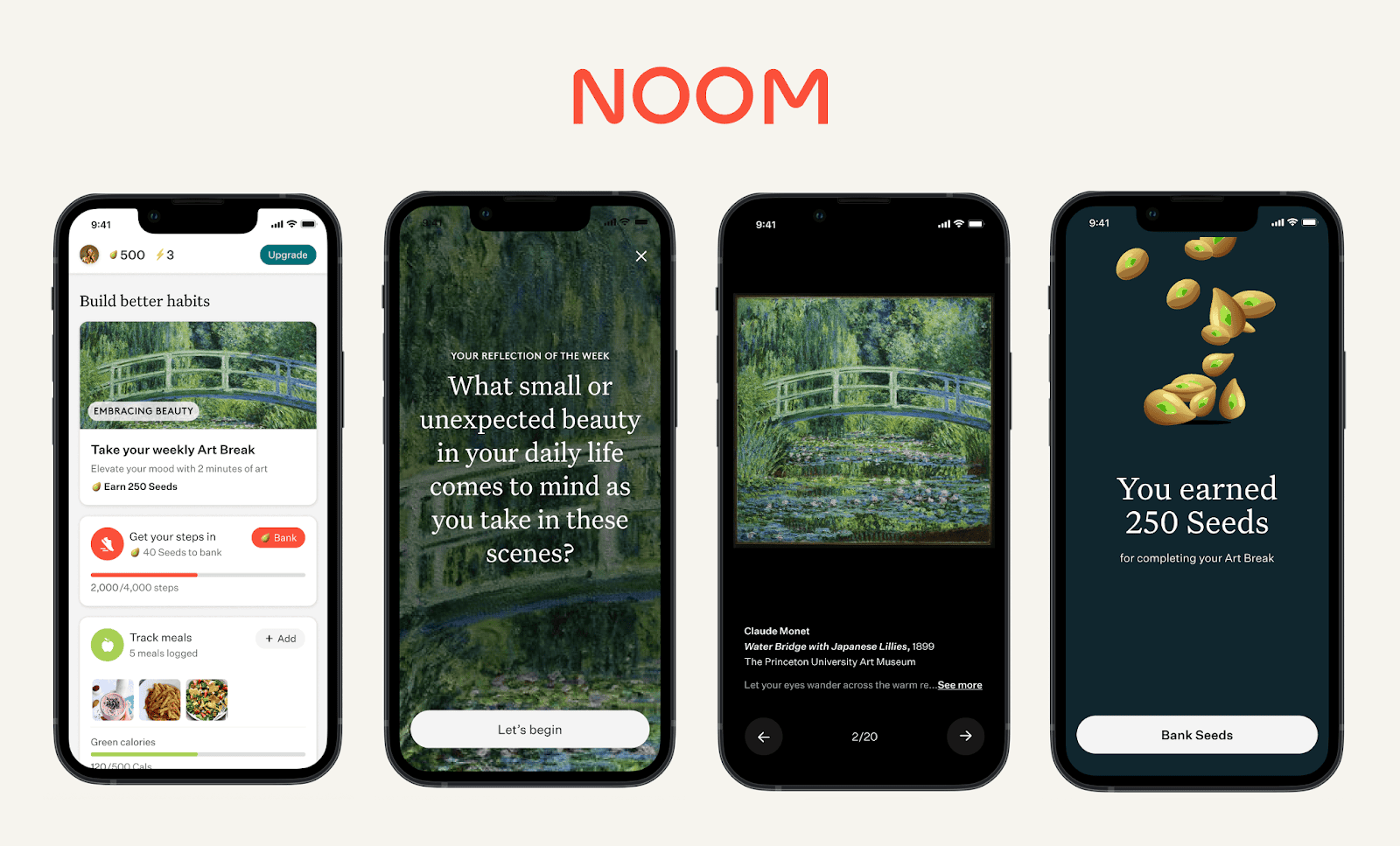
Habits are at the core of what Noom does best, and our approach to art is no different. With the launch of Mindful Art Breaks, we’re introducing our first psychological microhabit—a small, intentional practice designed to strengthen mindset and enrich emotional wellbeing.
Mindset isn’t separate from health goals—it’s the foundation that supports them. By addressing psychological wellbeing directly, we help members sustain progress in other areas—from fitness to nutrition to sleep. Anchoring art as a weekly microhabit gives members a simple but powerful tool to unlock motivation and resilience across their health journey.
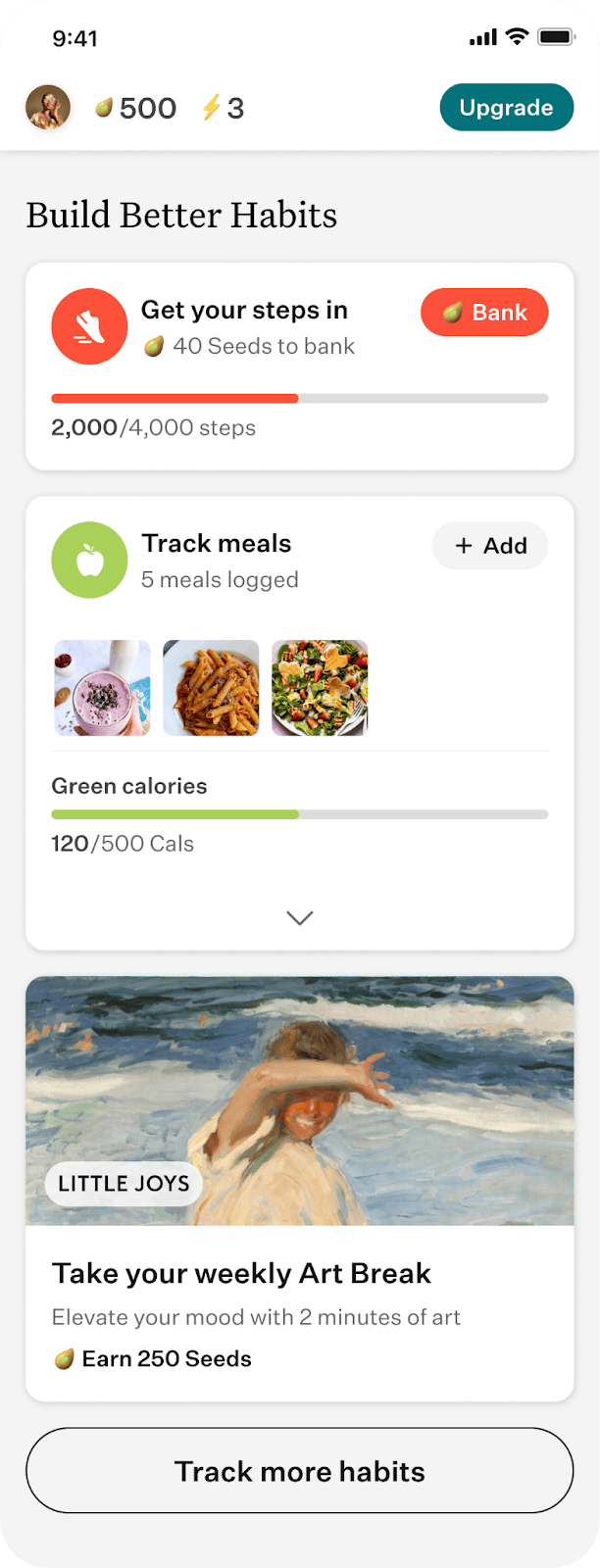
Each week, members are invited to take a Mindful Art Break alongside their core tasks like steps and nutrition. These two-minute experiences are more than pauses; they are structured opportunities to cultivate flourishing. Through rotating weekly themes tied to eight pillars of positive mindset—calm, awe, joy, connection, mindfulness, curiosity, meaning, and resilience—members can engage with different dimensions of wellbeing. Whether it’s the immediate pleasure of looking at something beautiful, the shift in perspective that awe provides, or the deeper reflection that art can spark, there will always be something new to explore.
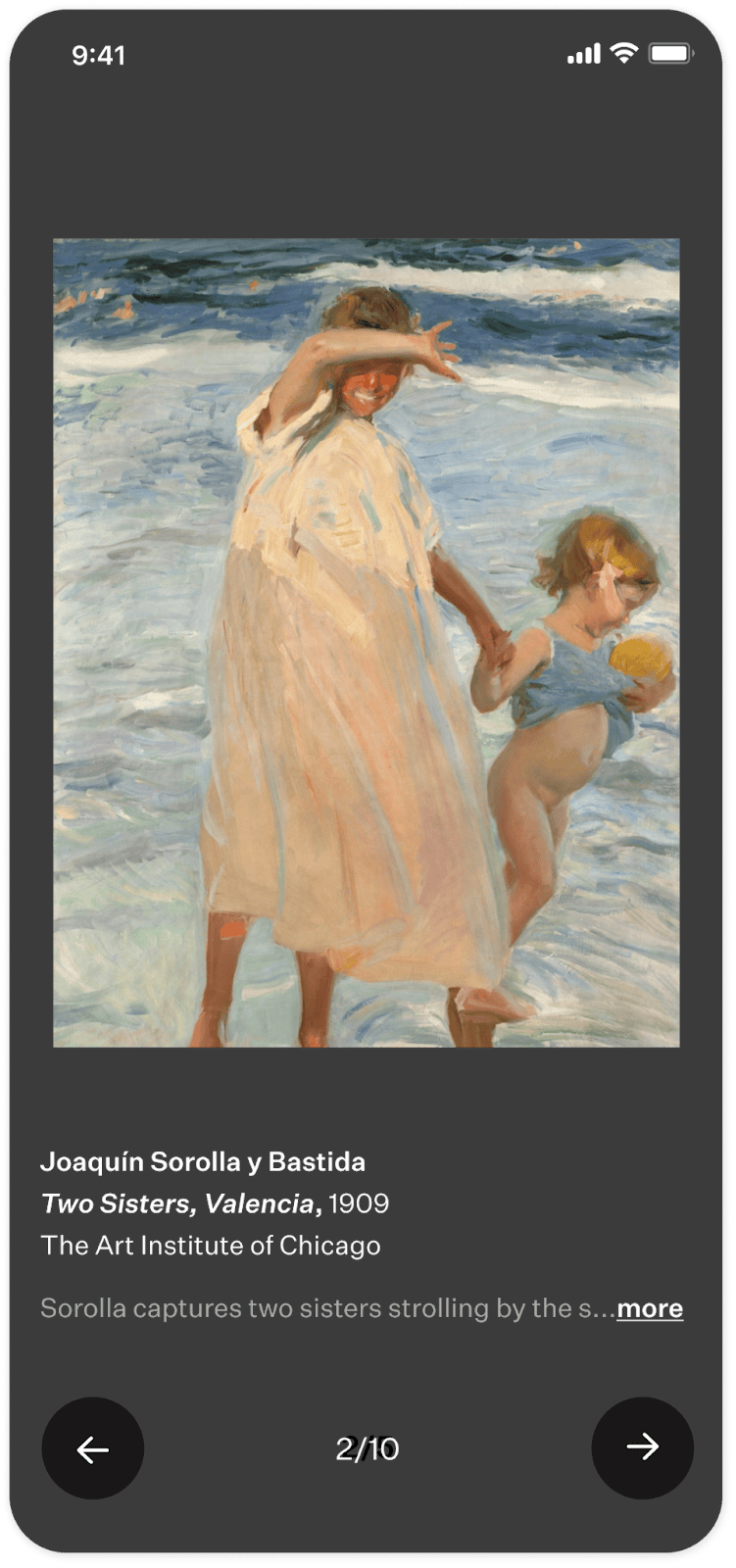
To help viewers fully engage with each gallery, we introduced two enhancements: reflection questions and background music. Each weekly theme includes a question linked to one of our eight pillars of positive mindset, encouraging deeper emotional connection and personal reflection. As viewers explore each piece, a short three-sentence prompt offers artistic context and ties the artwork to the weekly theme. This structure helps viewers build a mindful habit—connecting art, theme, and self in a cohesive experience.
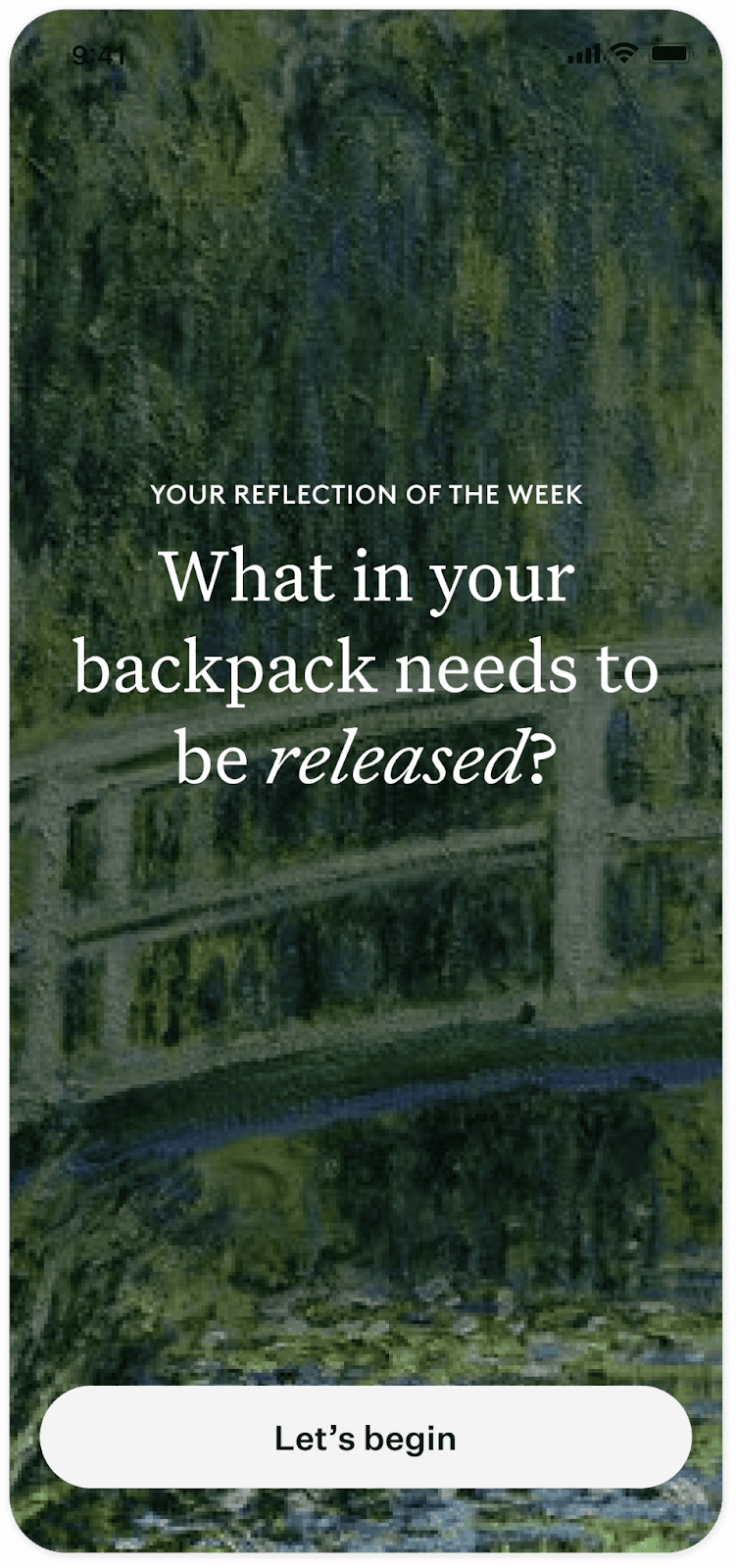
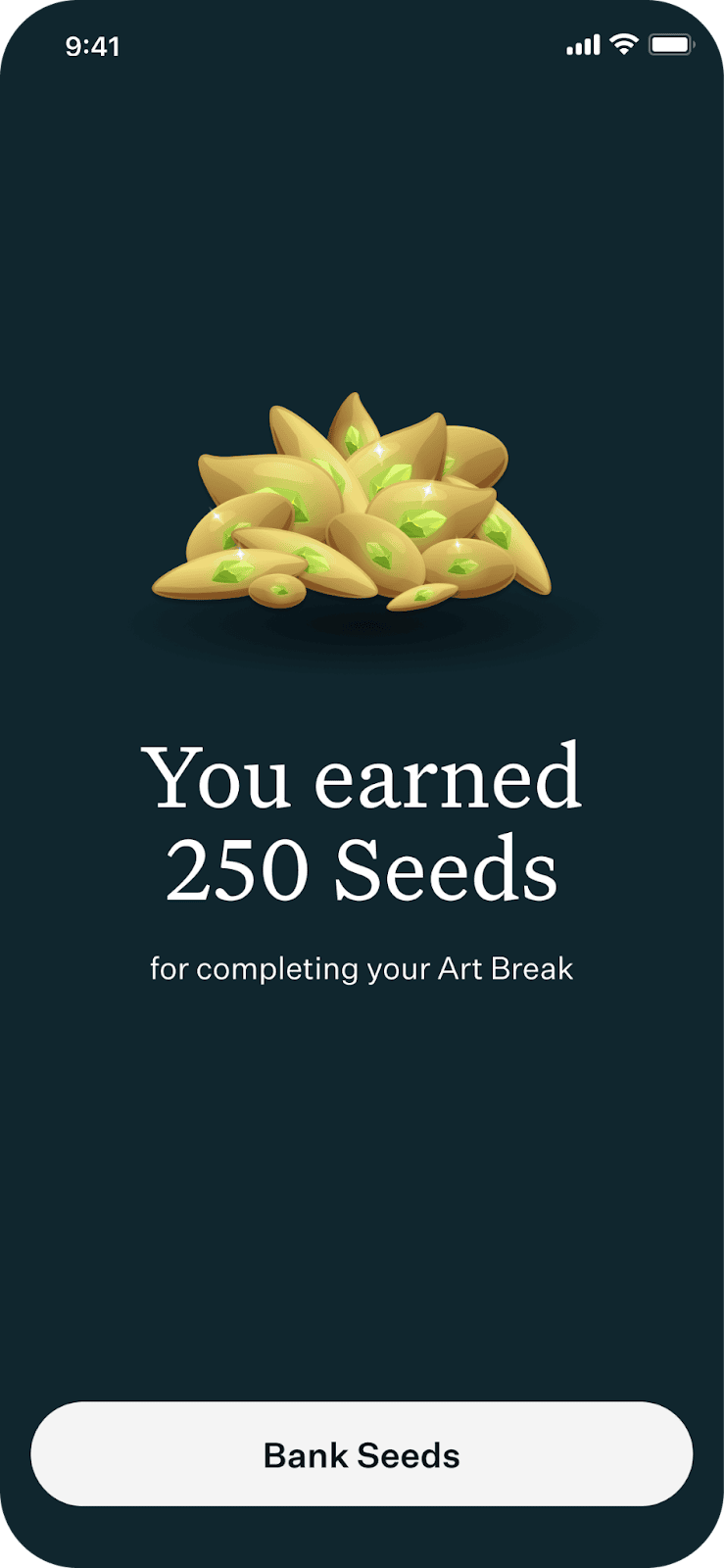
By rotating weekly themes tied to different mindset pillars, the feature creates a balanced ecosystem of wellbeing. Seasonal moods and emotions are captured and linked to specific pillars, helping viewers understand, express, and regulate their feelings more deeply over time. Backed by science and gamified for motivation, just two minutes of engagement earns Noom’s virtual currency, Seeds—making reflection both fun and rewarding. This positive feedback loop turns brief moments of engagement into lasting mindset shifts, laying the foundation for long-term flourishing. A mood tracker will follow soon after launch.
Wellbeing in Your Pocket
The Mindful Art Break feature marks the beginning of an important step in Noom’s journey towards health as flourishing—incorporating positive mindset habits to support the physical changes and goals of our members. Our initial research and product has led to exciting findings that reinforce the strong connection between mind and body, and our product is positioned to help both mind and body flourish together. While our algorithm is in the process of refinement and fine-tuning, we are excited to conduct additional research on its efficacy in ranking and sorting on dimensions of wellbeing, as well as other research that advances the field of positive psychology.
This feature reflects our vision for the future of healthcare as whole-person health—where care moves beyond maintenance to become a source of everyday wellbeing. With the right habits and a balanced understanding of how mindset drives flourishing and high self-esteem, we’re taking an important step toward integrating mind and body as equal partners in a healthy life.
Resources
Editorial standards
At Noom, we’re committed to providing health information that’s grounded in reliable science and expert review. Our content is created with the support of qualified professionals and based on well-established research from trusted medical and scientific organizations. Learn more about the experts behind our content on our Health Expert Team page.