At the stroke of midnight on the day after Christmas, motivation for change spikes 100%.
This is a chart of daily signups for Noom’s GLP-1 Behavior Program. You can see that volumes spike on December 26, continue growing, and then culminate on New Year’s Day.
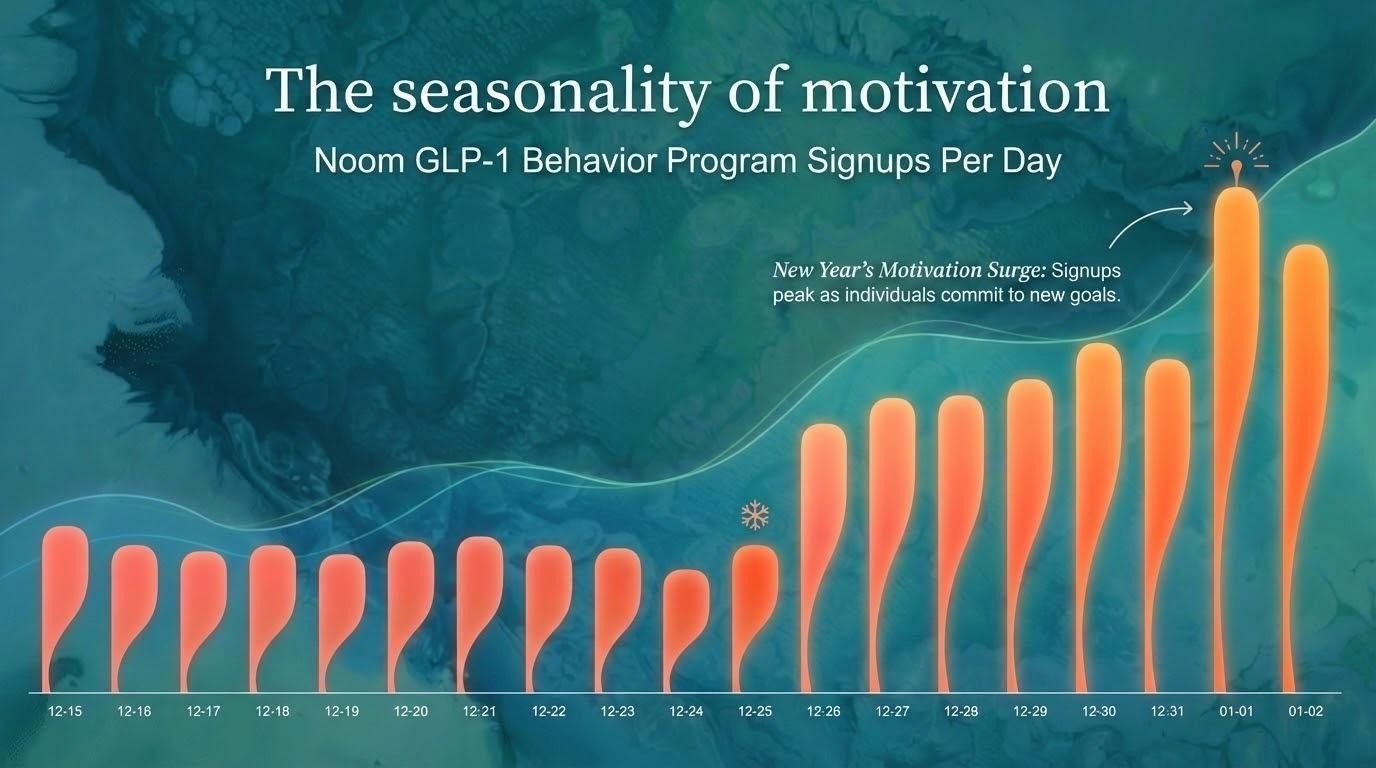
These periods of change don’t last long, but they are critical to wellbeing. We can use these periods to design our future choice landscape.
We all know that motivation is unreliable. By the end of January most resolutions will be forgotten. For Noom, the trick is harnessing fleeting moments of motivation to design habits and embrace catalysts that can make healthy habits durable, even when motivation flags.
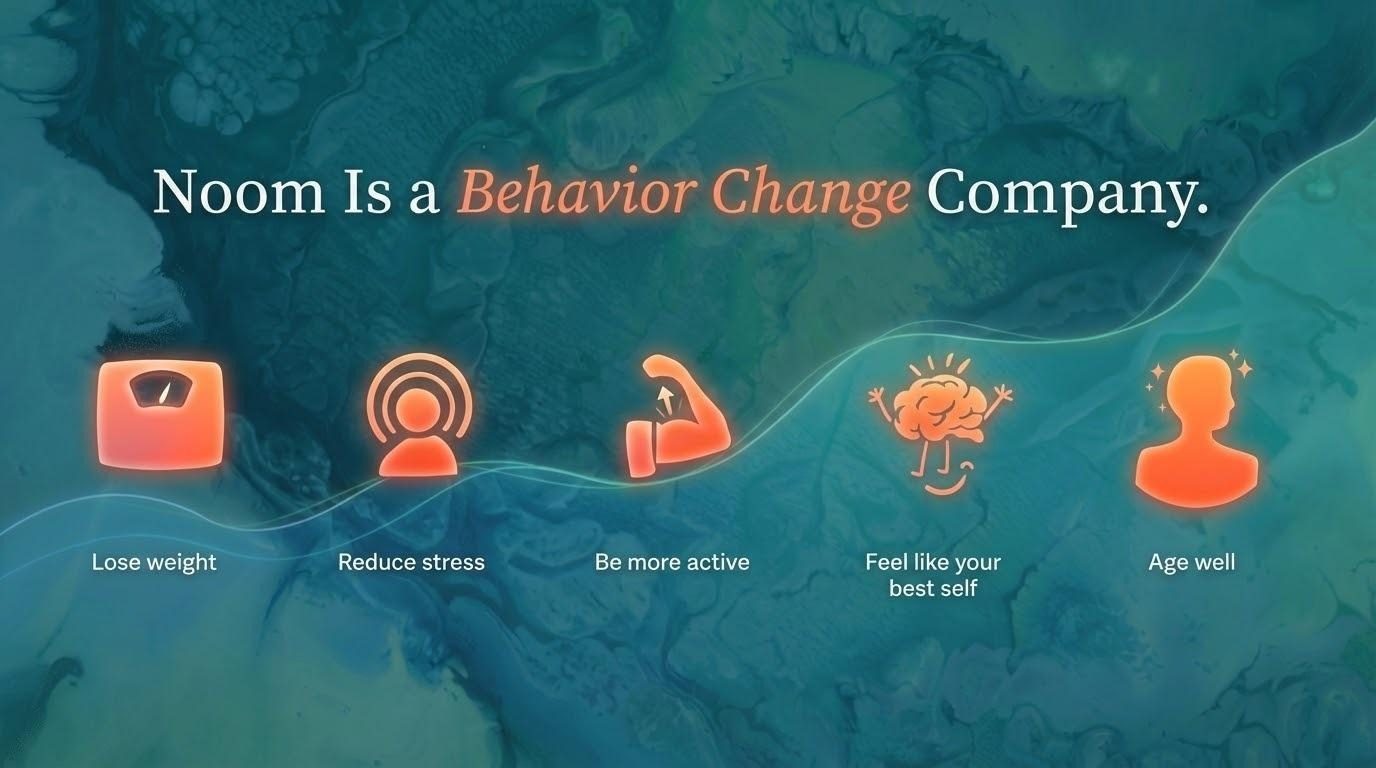
At its heart, Noom is a behavior change company.
We concern ourselves with the ordinary and unremarkable — the dozens of unconscious choices every day that determine how well and how long we live. These little moments don’t feel like choices at all — they are automatic.
They are habits. And they are so important.
Long-term health is built on embracing good habits and eliminating bad ones. People want to do the right thing … they want to lose weight, they want to stress less, to be more active, to feel better, and to age well.
What Noom does best is help people actually do the healthy thing they want to do. We simplify the latest habit science to create change systems that make it easy to adopt healthy habits and to break unhealthy ones. Fortunately for us all, it turns out that healthy habits can be designed, and unhealthy habits can be deliberately undone.
Of course, habits can only form when you WANT to do something that you believe you CAN do. Wanting to do something is motivation, and this feeling that you can do something is self-efficacy. They work in tandem, both equally critical.
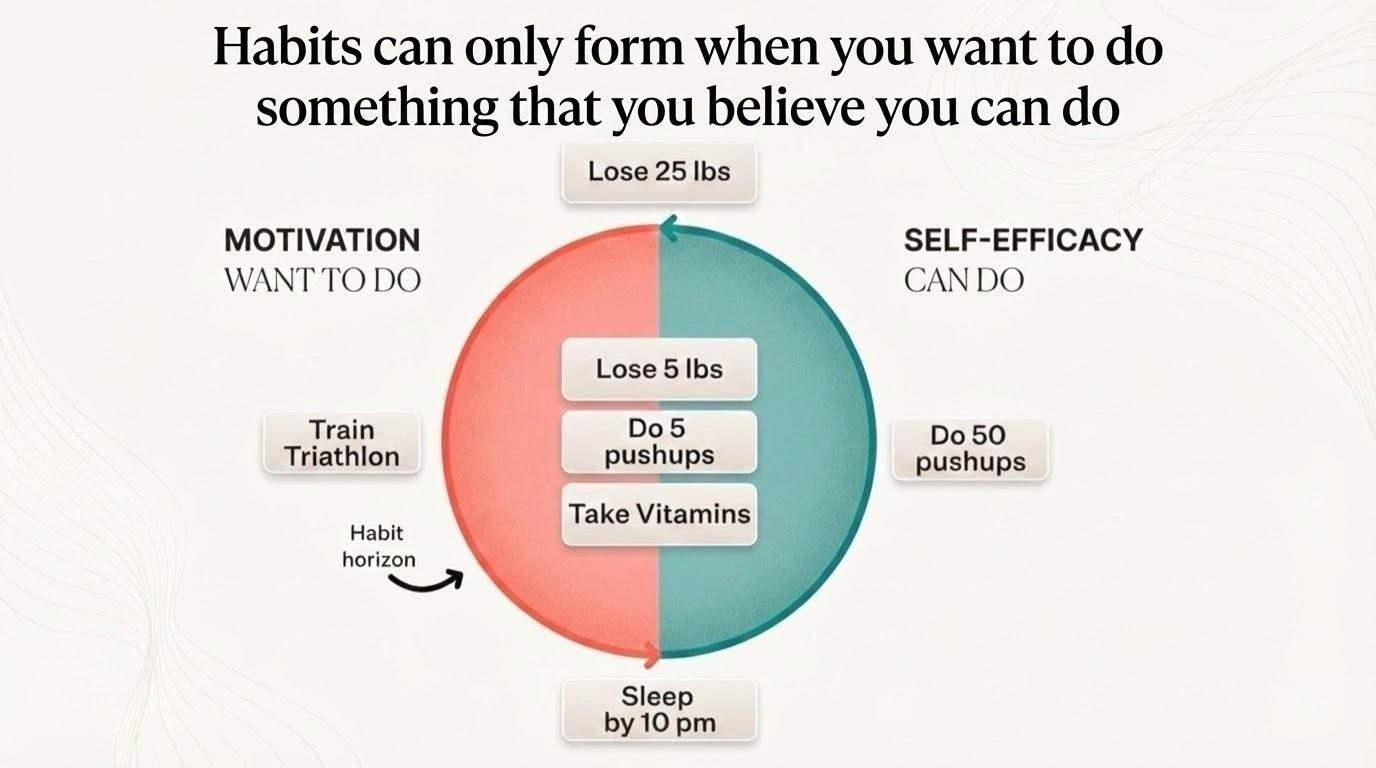
In this diagram, only these middle behaviors are accessible – losing 5lbs, doing 5 pushups and taking vitamins. Behaviors that lie outside this habit horizon – like the event horizon of a black hole – will not be adopted.
To access the behaviors outside the habit horizon we must expand motivation and self-efficacy, so the circle itself gets wider.
“I live my life in widening circles.”
– Rilke
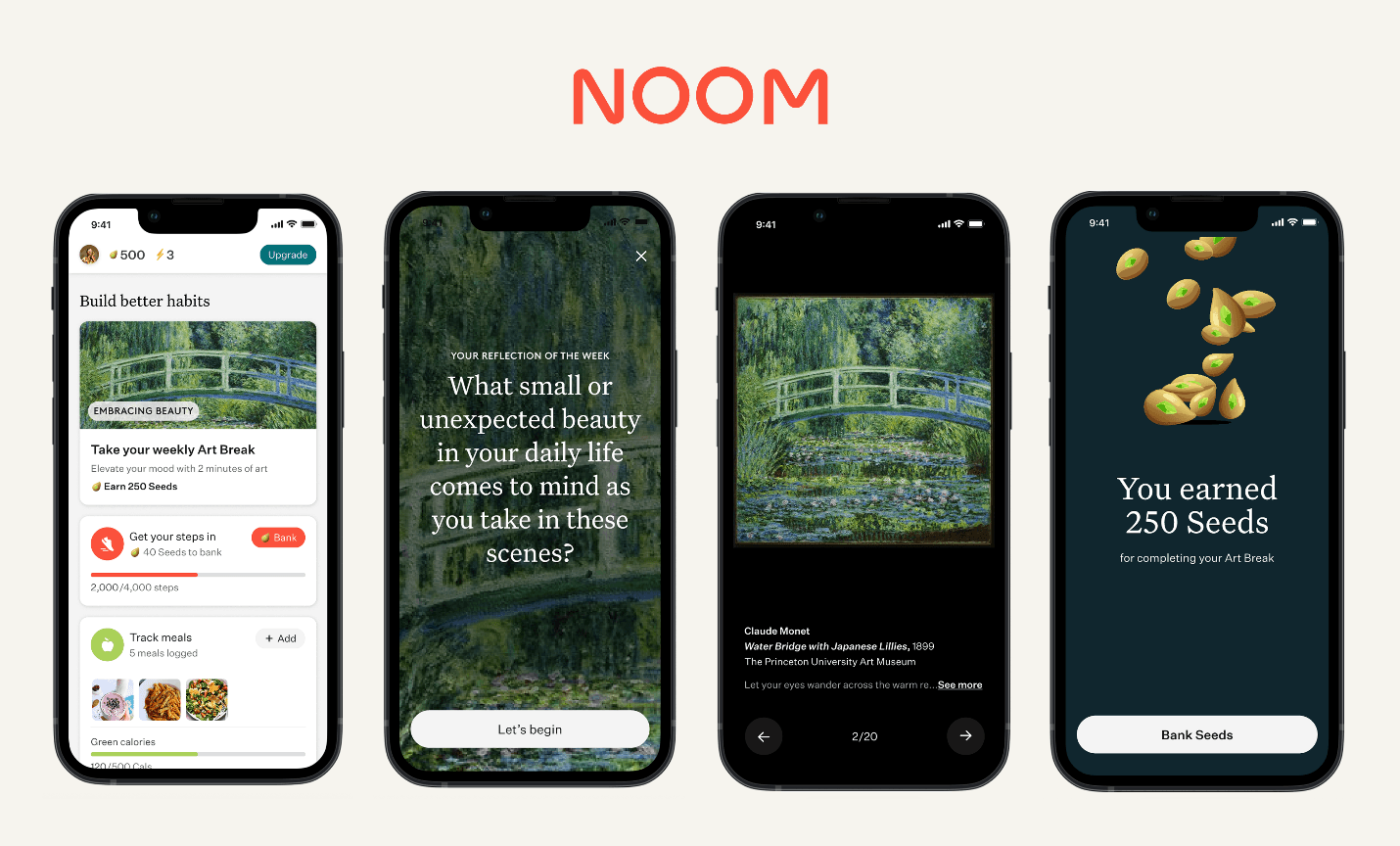
Noom strengthens motivation by boosting intrinsic and extrinsic rewards – this left semi-circle.
Intrinsic rewards involve celebrating to yourself the completion of the habit. Extrinsic rewards include earning virtual currency for healthy behavior. For example, we use streaks and levels and other gamification concepts to make change easier and maybe even fun.
Social pressure can also help drive motivation. A friend or a coach can boost accountability.
Beyond motivation, Noom also boosts self-efficacy, the right semi-circle.
Self-efficacy is this feeling that you CAN do something. We use coaching, mindfulness and resilience training to boost self-efficacy. We help our members build resilience by reframing setbacks, not as personal failures, but as par for the course for those brave enough to do the hard work of habit building.
To boost self-efficacy, Noom breaks down each new habit into its tiniest unit — into a microhabit — that you believe you CAN DO.
During this most recent World Series, we took out commercials showcasing our Chief Wellness Ambassador Rebel Wilson, actor and star of the Pitch Perfect franchise, among other accolades. In the commercial, Rebel scales a fictional mountain called Peak Health, where she emphasizes microhabits to tens of millions of viewers.
Microhabits are powerful. If you wish to begin a jogging habit, it might start as getting to the end of the driveway in your sneakers — and any steps further are extra credit.
About a year ago, in this same spirit, I adopted a microhabit of my own. Every morning, in every weather, I run to a pond that is 1 mile from my house. This includes doing it in snow boots.
It’s only a 20-minute jog there and back, and after 10 minutes I get a reward — I take a picture of the pond so I can stitch together a gallery of the changing seasons at the end of the year.
I have hundreds of these pictures. My reward is also being outside and the cup of coffee I have after. Sometimes the reward is my daughter Elyse who joins me – this is her on a recent cold pond run.
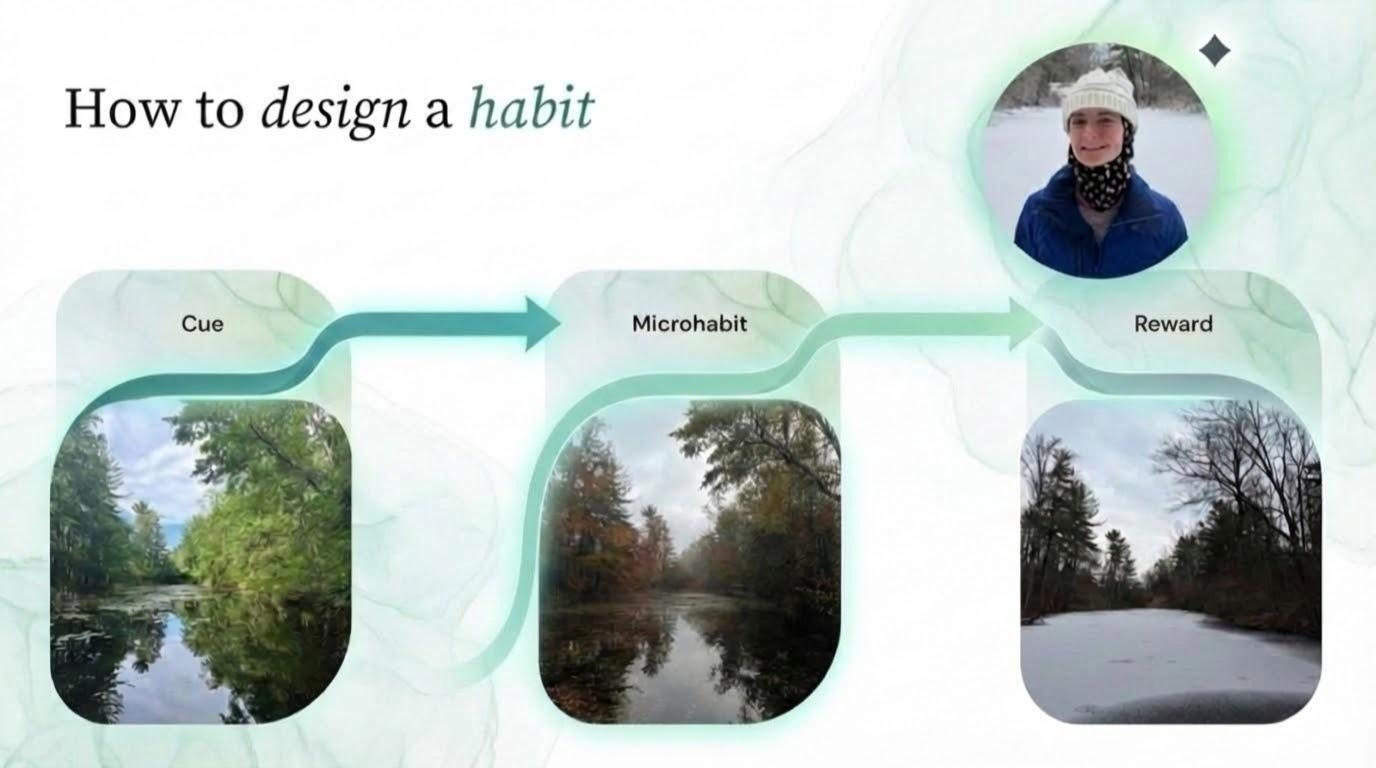
This simple behavior – a short jog – was something I wanted to do (I had the motivation) and that I believed I could do (I had the self-efficacy).
I designed this habit following the same steps we encourage our members to take. My cue was seeing the running clothes I laid out the night before. The microhabit was the run itself.
And my rewards were multiple: the photo, the outdoors, the coffee after, and eventually the knowledge that whatever else happened that day, at least I went for a run.
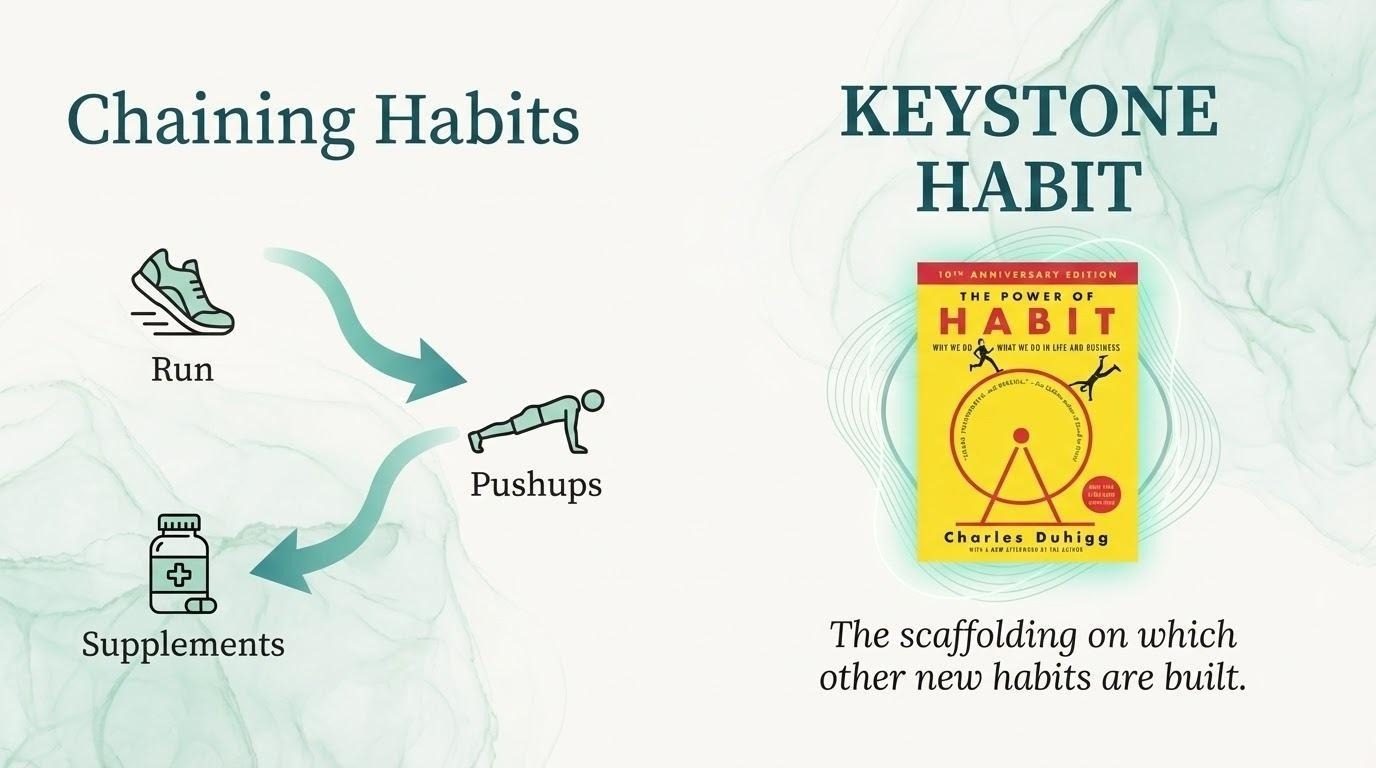
As it would turn out, this microhabit became more than that. It became a keystone habit – the scaffolding on which I built other habits. Keystone Habit is a term coined by Charles Duhigg in his bestselling book The Power of Habit.
Now I do 3 sets of pushups along the way, once before I start the jog, another at the pond, and the last when I finish.
I used the running habit as the cue for the pushup habit. The reward for my run – my coffee — became the cue for another habit, because I keep the supplements right next to the coffee. Within 6 months, a singular habit became a habit chain: a morning run → pushups → supplements.
Before I walk my kids to school, I’ve run 2 miles, done 100 pushups, and taken my vitamins and supplements. That’s a decent start to a day.
At Noom, we help our members become architects of their own choice landscape – to think in terms of chaining habits together. Health journeys deepen because one action sets off a chain reaction.
For example, getting more movement may increase energy level and sleep quality, which makes yet more movement possible. Success on the scale increases a hunger for more success, increasing motivation. Meanwhile, success also boosts self-efficacy, this feeling that you can do hard things.
Success accelerates success — a walk down the block becomes a 5K becomes a triathlon. This success acceleration is a defining characteristic of a health transformation.
While each of the three steps in the habit process of cue, microhabit, reward is important — the reward may be the most important of all.
Behavior scientists like BJ Fogg have said the reward is meant to release dopamine in the brain so the brain associates it with the habit. Habits get established by hacking the brain’s ancient reward pathways. Perhaps my running habit took root because I had the right rewards:
- I like to be outside,
- I wanted the photo,
- I savored the coffee more knowing I had done something.
Today, there is yet another way to hack these ancient neural pathways — GLP-1 medication.
With brand names like Mounjaro, Zepbound, Ozempic, and Wegovy, GLP-1s make once difficult behaviors easy. Losing 10 pounds, 20 pounds, 30 pounds is now as simple as taking a weekly shot or a daily pill.
What makes GLP-1s so special?
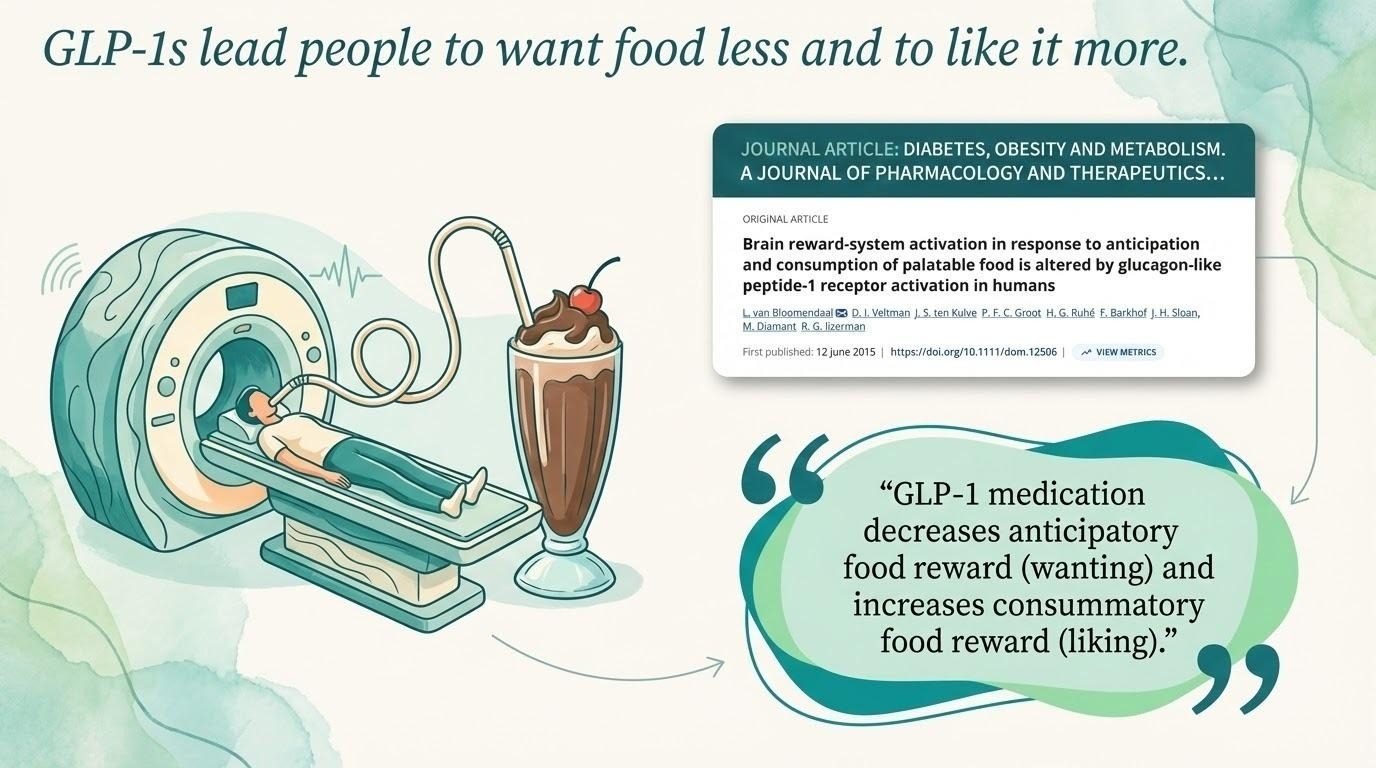
They affect metabolic health, heart health, reduce cravings to food, alcohol, and nicotine, reduce inflammation and knee pain. But the one study that really hit home for me was this milkshake experiment. It clearly shows how GLP-1s affect the reward system of the brain.
Participants in the study were given a taste of chocolate milk while in an fMRI, but with a twist – a cue light would signal that the chocolate milk was about to be delivered through a tube, allowing the researchers to separate brain activity during anticipation (wanting) from activity during consumption (liking).
In the placebo arm, those with obesity showed a common imbalance of overeating: their brain’s reward areas lit up with the cue light, indicating high craving or wanting, but their neural response during the actual tasting was blunted, indicating lower liking. They literally wanted the food more but liked it less.
GLP-1 shifted the brain response. It wasn’t willpower – just like with habit design – it’s hacking the reward center of the brain.
On GLP-1, bad habits no longer have the same pull, increasing capability for positive change. GLP-1 leads to weight loss. Losing weight makes movement easier, which makes exercise easier. Motivation expands – you WANT to do more healthy things AND self-efficacy increases – you feel you can do those things, even difficult things that you might have failed at in the past.
Put another way, it’s as if the habit universe itself expands.
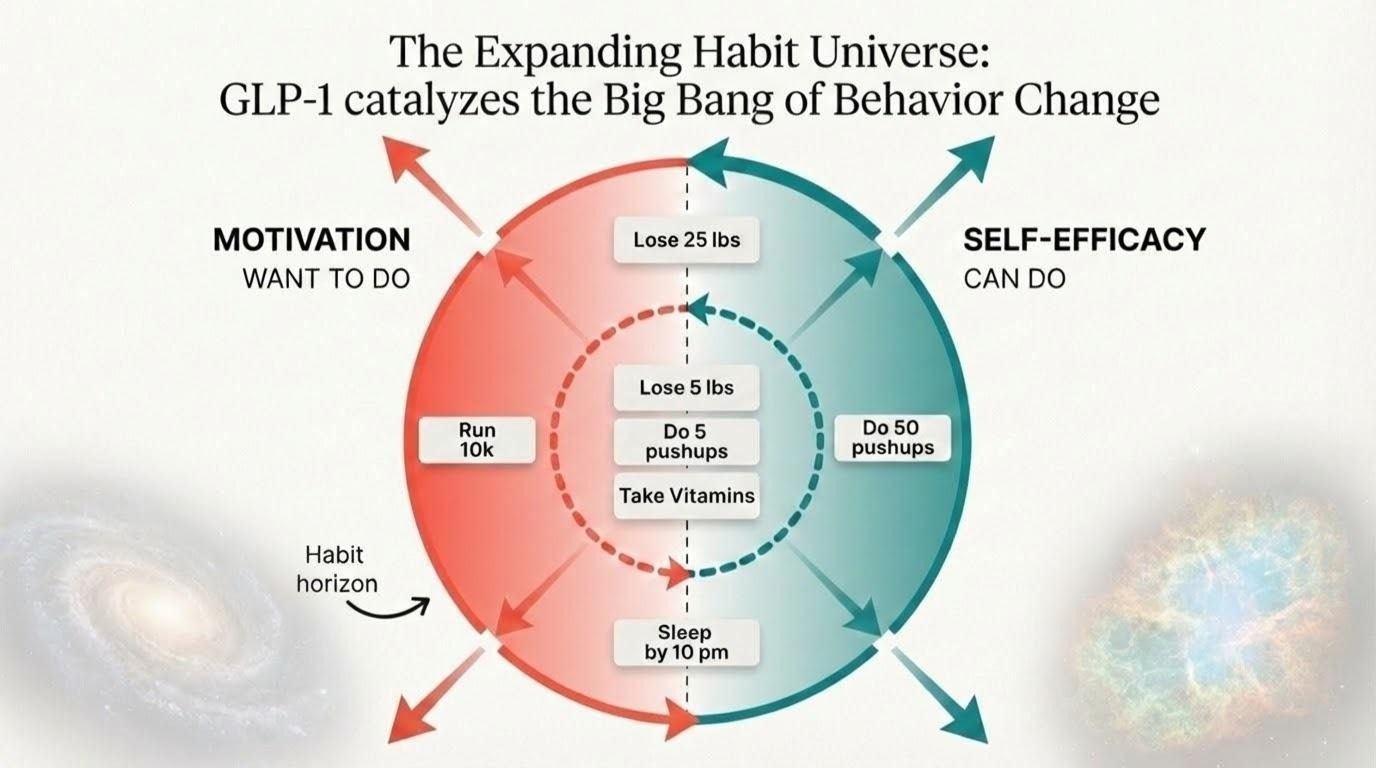
That’s why we consider GLP-1s to be Habit Catalysts, the galvanizing spark of behavior change. They are enabling interventions. Combined with habit design, they can spark the Big Bang of Behavior Change.
This is how a walk, becomes a jog, becomes a 5K, becomes a triathlon. Success feeds success. GLP-1s act as a success multiplier by increasing the likelihood that effort turns into a win, and wins into more effort.
To be clear, GLP-1s are not themselves healthy habits – they’re the trigger. They lower the activation energy of change, widen the habit horizon, and jumpstart the expansion of the habit universe. They’re the flywheel starter: before momentum comes movement.
GLP-1s are not by any means the only habit catalyst. A habit catalyst is anything that lowers the activation energy of change, increases the likelihood of early wins, and sparks the expansion of the habit universe.
For some, a wearable like Oura or Whoop might be the catalyst; for others a health scare or a blood test, or the concern of a loved one might be.
The defining characteristic of a habit catalyst is that it expands the conditions under which habits can take hold. Someone who once was too exhausted and hungry after work now has the energy and the desire to go for a run.
Motivation and self-efficacy increase. A healthy behavior once outside the habit horizon is now contained within it. Over time these new habits shift identity. You become the person who skips the snack aisle and who exercises every day.
Those shifts in identity last – even after the med goes away. When the medication and the habits are adopted at the same time, both success and change become more likely.
Now, I have an admission to make … That jog to the pond had some help. I began my jogging habit at the same time as I began microdosing GLP-1 once a week.
The impact was immediate and profound. Within 4 months, my A1C fell from 5.6 to 5.3, I lost 10 pounds, and I started lifting heavier weights, because I was working out more.
Over time, I became more concerned with my digital health too. I removed my phone from the bedroom and bought a $10 alarm clock, so I stopped touching the world’s most distracting device the first thing in the morning. I became more intentional about architecting my choice landscape.
How much of my personal Big Bang of Behavior Change was sparked by the GLP-1? I’ll never know. But I do know the GLP-1 catalyzed my health journey, and at Noom we’ve seen it do the same for countless others.
Combining behavior change with GLP-1 is – for many – the key to creating healthy change that lasts. As the habit universe expands, health transforms.
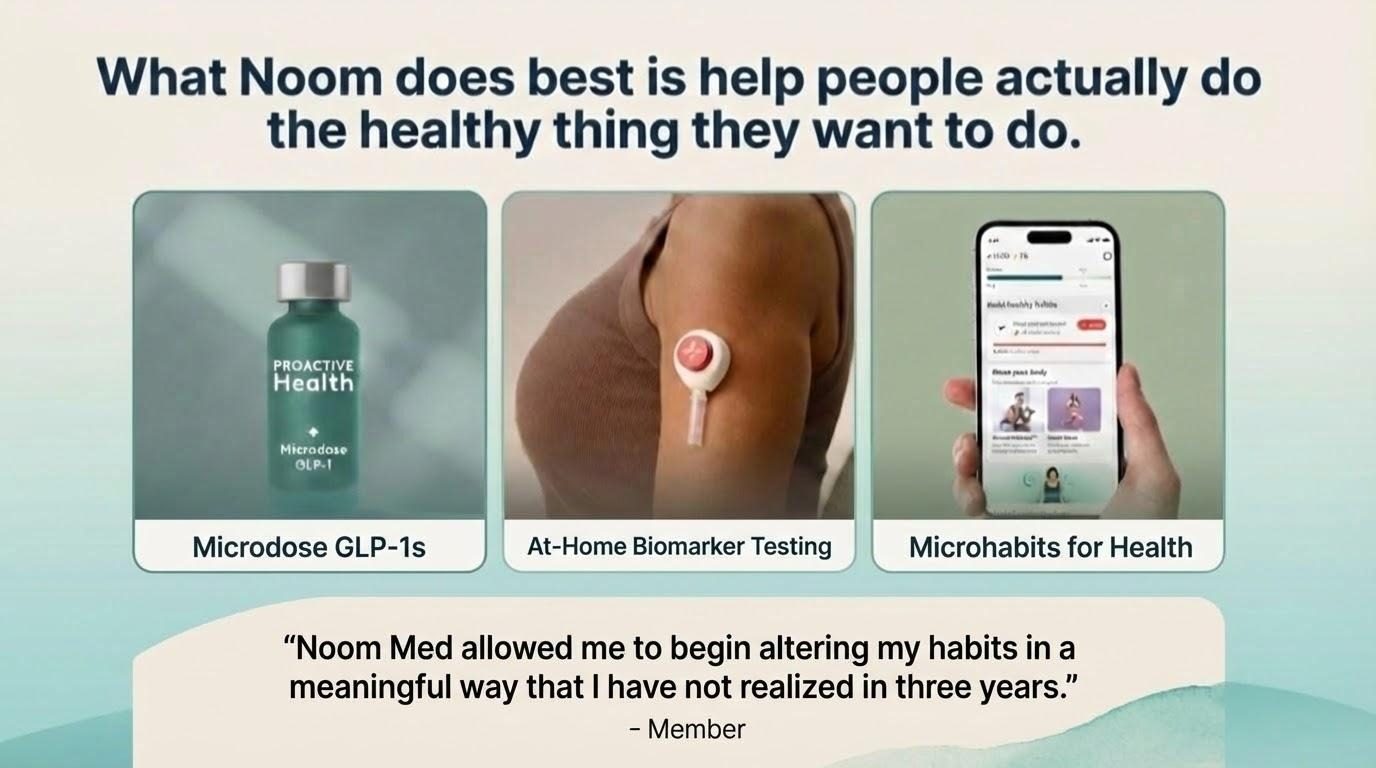
What Noom does best is help people actually do the healthy thing they want to do.
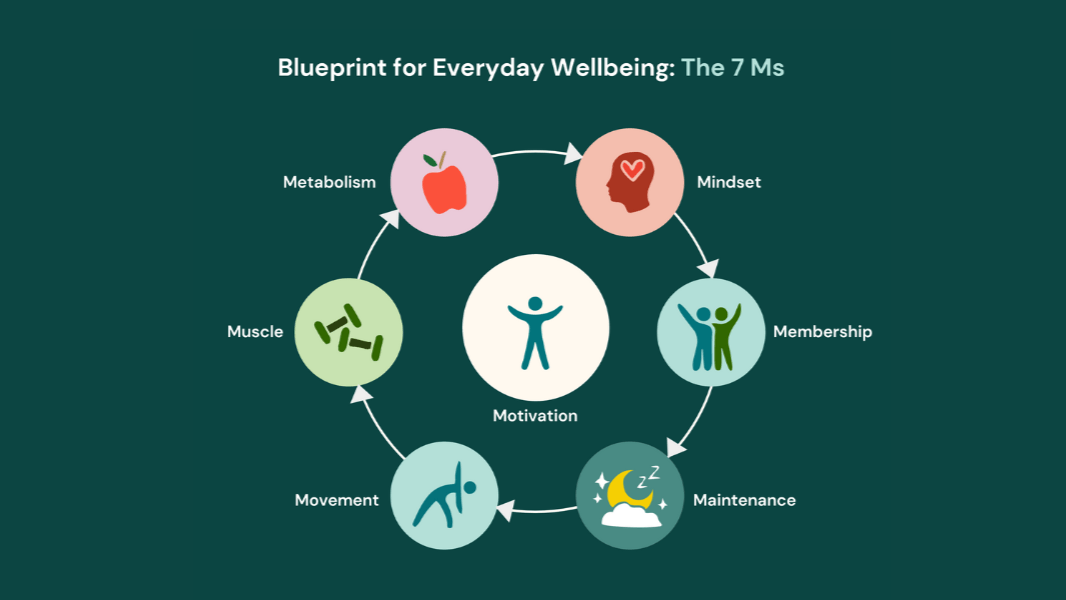
Most people want to feel better, to look their best, and to stay capable longer. They want to address health problems early. They want systems that just work.
Noom mines moments of motivation, moments like New Year’s, to transform the choice landscape so that a monk’s mindset is not a requirement to sustain healthy habits.
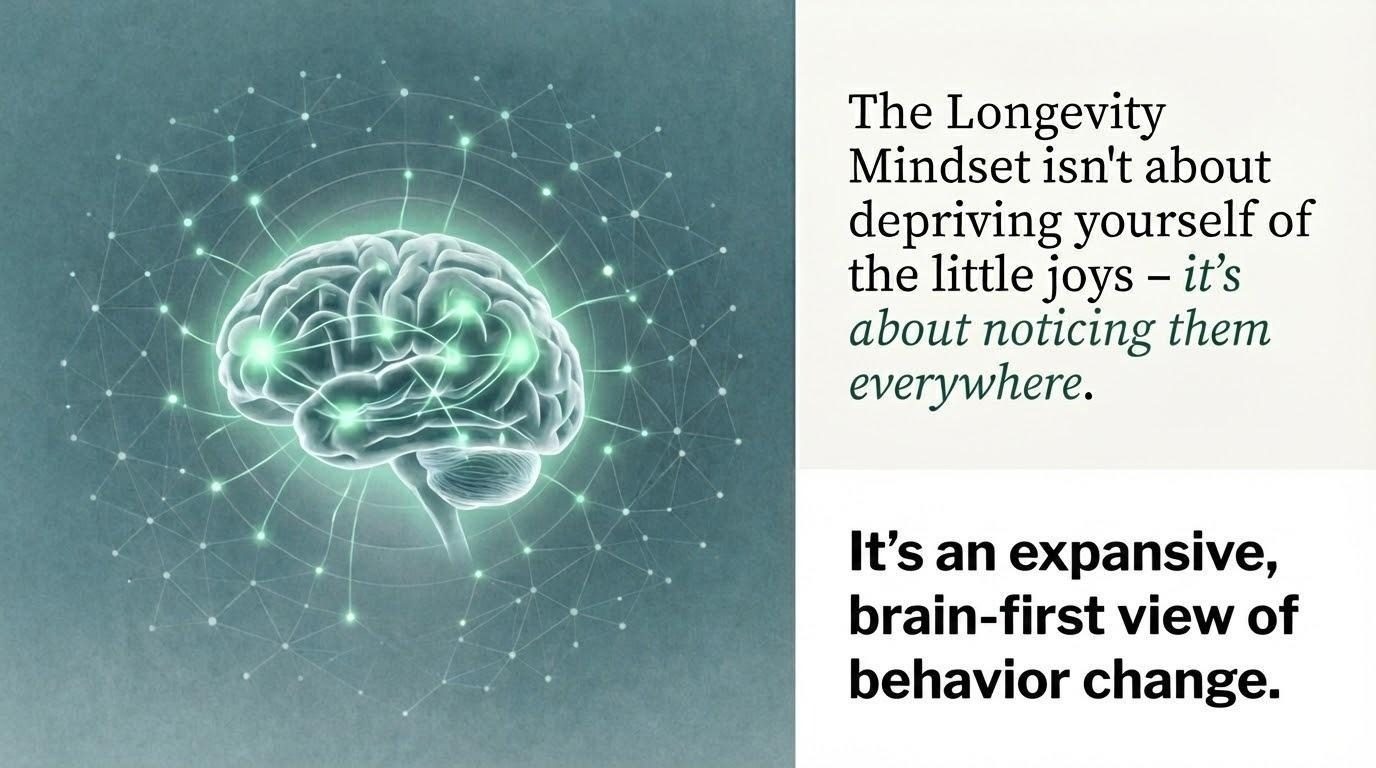
The mindset we strive to cultivate is a longevity mindset. The longevity mindset isn’t about depriving yourself of the little joys – it’s about noticing them everywhere.
It’s not about optimizing for lifespan or healthspan tomorrow – it’s about seeking vitality today. It’s an expansive, brain-first view of behavior change.
It’s Noom.
Editorial standards
At Noom, we’re committed to providing health information that’s grounded in reliable science and expert review. Our content is created with the support of qualified professionals and based on well-established research from trusted medical and scientific organizations. Learn more about the experts behind our content on our Health Expert Team page.