

What you’ll learn:
- The carnivore diet can sometimes lead to quick weight loss, but there’s not much solid research showing it’s safe or effective in the long run.
- Some people say they feel better on it, but most of those benefits are self-reported. When you weigh them against the risks—like missing out on key nutrients and possibly raising your heart health risks—the drawbacks tend to win out.
- For lasting results, balance is key. Building meals around whole, nutrient-rich foods and pairing them with sustainable habits sets you up for healthier weight loss that sticks.
The appeal of a simple fix for weight loss is powerful, as shown by the many diets that promise it. We get it—nutrition advice is often challenged, and with conflicting headlines everywhere, figuring out what to eat can feel overwhelming. Add in the steady stream of trends on social media (cortisol cocktail, anyone?), and the picture gets even murkier. In that context, highly restrictive diets like keto—with one clear rule to follow—can feel like a relief.
One diet that takes keto and low-carb to the extreme is the carnivore diet. The idea is simple: eat only animal products and eliminate all plants. The name is a nod to animals that eat mostly meat, but the diet is really based on the belief that some primitive societies relied heavily on animal foods and were protected from certain illnesses.
In a survey of people following the diet, people said they believed cutting out carbohydrates could improve health. They reported benefits like rapid weight loss, reduced inflammation, stable blood sugar, mental clarity, and even high satisfaction with their eating patterns. Many also noted lower BMI and perceived health improvements.
But real-world evidence is thin. Research on Paleolithic nutrition shows that even societies that relied heavily on animal foods still included plants in their diets, making an all-meat diet very uncommon in human history.
“The notion that an all-meat diet is a return to a long-lost ancestral tradition is a misinterpretation; plant foods have consistently been a part of the human diet and are scientifically proven to be crucial for both weight management and long-term health,” says Kayla Reynolds, MS, NASM-CPT, Noom’s Director of Knowledge, Learning & Behavior Change Curricula.
That said, as we’ve seen from low-carb diets more broadly, eating fewer refined carbs and increasing protein can deliver some short-term health benefits. The same survey found that many carnivore followers felt satisfied and healthier overall. Still, researchers flagged possible nutrient gaps, and other studies raise concerns about cardiovascular risks.
Before you start clearing out your kitchen, let’s take a closer look at what the carnivore diet is really all about—and what the science actually says about its benefits and safety.
What is the carnivore diet?
The carnivore diet, also known as a zero-carb or all-meat diet, includes only meat, fish, eggs, and, for some, small amounts of dairy. The carnivore diet is really defined by what it eliminates: all plant-based foods.
The diet gained mainstream attention after the release of Dr. Shawn Baker’s 2019 book, The Carnivore Diet, which promoted all-meat eating through personal testimonials of rapid weight loss and improved health.
At its core, the carnivore diet suggests that many plant foods are unnecessary—or even harmful. That’s where things get controversial. The idea runs counter to a lot of nutrition science, which highlights the benefits of plants. Carnivore enthusiasts argue that substances like lectins and oxalates, found in different plants, can cause gut issues or block nutrient absorption. Others go even further, saying an all-animal diet is the “proper human diet” and more in line with what our ancestors ate.
This concern centers on compounds known as anti-nutrients. These are natural substances in plants that, in theory, interfere with the absorption of vitamins and minerals. For example, lectins are found in beans and grains, and oxalates are high in spinach and nuts. Proponents worry these anti-nutrients irritate the gut lining.
While it’s true that high levels of these compounds can interfere with nutrient absorption, most anti-nutrients are significantly reduced or completely eliminated through proper preparation, like soaking, sprouting, or cooking. Plus, the long-term benefits of a whole-foods, high-fiber diet far outweigh any minimal risk posed by these compounds.
Why is the carnivore diet popular?
The carnivore diet has become popular in large part due to social media. Influencers share dramatic before-and-after photos and personal success stories that make the approach look simple and effective. That simplicity is part of the draw. In a world full of complicated nutrition advice, the carnivore diet cuts through the noise with one extreme rule: eat only animal products.
It also builds on the momentum of the low-carb trend. Research shows that eating fewer carbs can support weight loss and metabolic health, but a low-carb plan still leaves room for fruits, veggies, and other high-fiber foods. Variations get stricter:
- A ketogenic diet cuts back on carbs even further, with the exception of vegetables.
- The carnivore diet takes it to the extreme with a near-zero-carb approach.
For some, that kind of all-or-nothing rule feels easier to follow. But, as you’ll see, it comes with its own set of challenges.
What can you eat on the carnivore diet?
On the carnivore diet, you’ll eat meat, fish, eggs, animal fats, and sometimes dairy, while skipping all plant foods like fruits, vegetables, grains, legumes, nuts, and seeds. That means most meals center on cuts of beef, pork, chicken, or fatty fish, with organ meats and bone broth often added for extra nutrients.
The carnivore diet: Sample meal plan
Here is what a few days of eating on the carnivore diet might look like:
- Day 1
- Breakfast: Scrambled eggs cooked in butter with sausage.
- Lunch: A large, fatty ribeye steak seasoned with salt.
- Dinner: Pan-fried salmon fillets with a side of beef jerky.
- Day 2
- Breakfast: Bacon and a few hard-boiled eggs.
- Lunch: Leftover steak from the previous day.
- Dinner: A large bowl of ground beef, browned and seasoned with salt.
- Day 3
- Breakfast: A can of sardines and scrambled eggs.
- Lunch: Roasted chicken thighs (with the skin on).
- Dinner: Two large beef burgers (patties only) with melted cheddar cheese.
What can you drink on the carnivore diet?
Hydration on the carnivore diet is simple, but the rules can be strict depending on how you follow it.
- Water is your main drink: Plain water is the primary beverage, keeping you hydrated without any carbs or plant-based ingredients.
- Bone broth is a great choice: Many people add bone broth for its electrolytes and collagen, which can be helpful for both health and hydration.
- Other drinks are optional: Some less strict versions of the diet allow black coffee and unsweetened tea, but some avoid them since they are derived from plants.
Variation of the carnivore diet: The lion diet
Some followers practice an even more extreme version called the “lion diet,” which consists of only red meat, salt, and water, eliminating all poultry, pork, seafood, and dairy.
What are the supposed benefits of the carnivore diet?
Supporters of the carnivore diet often share stories of feeling more energetic, less bloated, or even experiencing fewer digestive issues. Some describe these benefits as “life-changing.” It’s important to know, though, that these reports come mostly from personal experience—not from large, long-term clinical studies on effectiveness or safety. Let’s take a closer look at those claims:
Claim 1: The carnivore diet can lead to rapid weight loss.
Verdict: Strong possibility.
Rapid weight loss can be common in the first week or two because cutting carbs depletes glycogen, and each gram of glycogen stores about 3 to 4 grams of water. That means the scale may drop quickly, but it’s mostly water—not fat. And that rate of weight loss is unlikely to continue.
Research on low-carbohydrate diets shows that while weight loss may start faster compared with higher-carb diets, the long-term results often even out by about 6 to 12 months.
Over time, results between low-carb (not specifically carnivore) and low-fat diets tend to look similar at 12 months, so the early success isn’t a guarantee of better long-term outcomes. Focusing on sustainable habits matters more than any first-week dip.
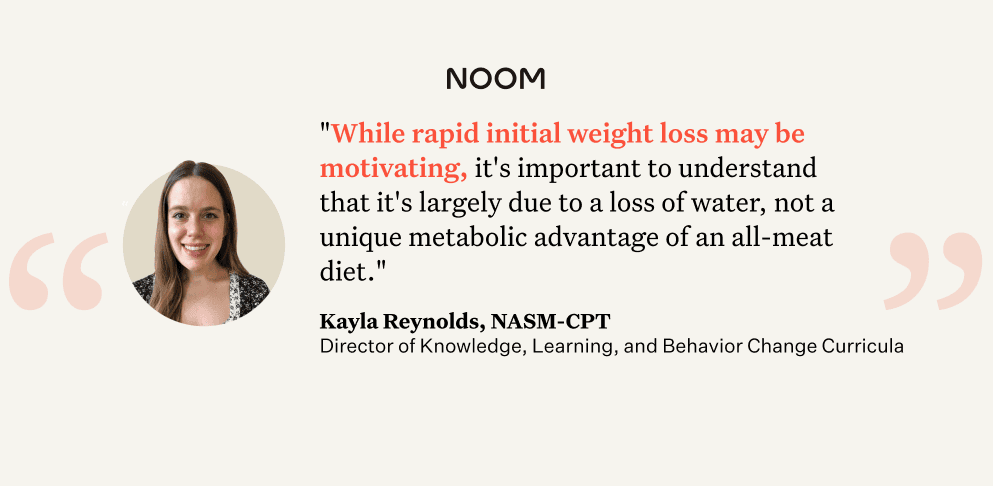
“While rapid initial weight loss may be motivating, it’s important to understand that it’s largely due to a loss of water, not a unique metabolic advantage of an all-meat diet,” says Reynolds.
Claim 2: The carnivore diet helps keep you feeling full.
Verdict: Strong possibility.
Protein is the most filling macronutrient in part because it takes longer to digest. Research shows it also has the biggest impact on satiety hormone production, like peptide YY, while dialing down levels of the hunger hormone ghrelin. That combination helps explain why many people feel fuller, longer, after a protein-rich meal.
On the carnivore diet, fullness is also reinforced by what’s missing: salty snacks, sugary drinks, and ultra-processed foods. Some followers even find they’re satisfied with just one or two large meals a day, which cuts calories further.
That said, these effects are still best described as hypotheses why people report feeling fuller on the carnivore diet. Until well-designed, long-term studies are done, it’s hard to know how much of the benefit comes from animal protein itself versus cutting out other foods, and how much is psychological vs. biological.
Claim 3: The carnivore diet can help reduce inflammation.
Verdict: It’s possible.
Some proponents claim that by cutting out all plant-based “antinutrients” and sugars, the body’s inflammatory response calms down. While there’s limited data on an all-meat diet, research shows that ketogenic diets can reduce inflammation markers like C-reactive protein (CRP). These benefits are thought to arise from improved blood sugar and insulin regulation. You don’t have to go fully carnivore to see potential anti-inflammatory effects—more balanced low-carb approaches that include nutrient-rich plants may still support reduced inflammation.
Claim 4: The carnivore diet can improve mental clarity.
Verdict: It may help.
Many followers report an end to “brain fog” and a boost in focus and energy after switching to the carnivore diet. This can be credited to the brain running on ketones, which some researchers suggest may act as a steadier, more efficient fuel than glucose. Reviews show that ketogenic approaches may support cognitive function in healthy people and that low-carb, high-fat diets supplemented with ketosis can influence brain performance in some trials.
But the transition isn’t always smooth. When first starting a very low-carbohydrate plan, many people experience the so-called “keto flu,” marked by fatigue, headaches, and irritability as the body adapts to using fat and ketones for energy. While these effects usually improve after a week or two, it’s a reminder that the mental clarity often reported with low-carb diets may come later—once your body has fully adjusted.
Claim 5: The carnivore diet can provide autoimmune symptom relief.
Verdict: Unclear.
One of the most powerful claims about the carnivore diet is that it can put autoimmune conditions into remission. Some people describe dramatic improvements in symptoms of conditions like Crohn’s disease or rheumatoid arthritis after adopting an all-meat plan. The theory is that the carnivore diet functions as an extreme elimination diet, removing potential dietary triggers that may worsen autoimmune responses in sensitive individuals.
Research does show that low-carbohydrate and ketogenic diets may help reduce inflammation and improve some autoimmune-related symptoms, though most studies are preliminary, small in scale, or focused on conditions like multiple sclerosis or type 1 diabetes.
It’s important to emphasize that no diet—including carnivore—should be viewed as a substitute for medical treatment. If you’re living with an autoimmune condition, never self-diagnose or make major dietary changes without guidance. Always consult with a doctor and a registered dietitian or nutritionist to find the approach that’s safe, effective, and tailored to your health needs.
Claim 6: The carnivore diet “heals the gut.”
Verdict: False.
The idea that the carnivore diet “heals the gut” by removing plants runs counter to what we know from modern nutrition science.
Your gut is home to trillions of beneficial microbes—collectively known as the gut microbiome—that play a crucial role in digestion, immunity, and even mental health. These microbes thrive on dietary fiber, which is found only in plant foods. When you eliminate fiber completely, you deprive your microbiome of its primary fuel source, which can reduce microbial diversity and contribute to gut dysbiosis—an imbalance linked to conditions such as irritable bowel syndrome and other chronic illnesses.
Since the carnivore diet functions as an elimination diet, if you’ve been eating a food that irritates your gut, cutting it out could temporarily improve symptoms. Research shows that low-carb and ketogenic diets may reduce certain digestive issues and inflammation in the short term. But this doesn’t mean you need to remove all plant foods to find relief. In fact, plant-based fibers feed the very bacteria that support long-term gut health, and diets rich in diverse plant foods are consistently linked to healthier, more resilient microbiomes and help prevent constipation.
Is the carnivore diet safe?
Because there’s no extended research on the carnivore diet, there’s no way to know if it’s safe long-term. But based on what we already know about nutrition, there are some significant, science-backed risks to consider.
The carnivore diet can lead to nutrient deficiencies
A recent study created multiple meal plans based solely on animal products and compared them against national nutritional benchmarks. While the authors found the diet could supply adequate amounts of some vitamins and minerals, it consistently fell short in fiber, vitamin C, magnesium, potassium, calcium, folate, and, in some cases, iron.
Importantly, this isn’t a long-term human trial—it’s a theoretical nutritional analysis. It gives us insight into possible risk areas, but not proof of what would happen to real people over years of strict adherence.
Is the carnivore diet bad for your heart?
The diet typically includes a high intake of red and processed meats, which can lead to a significant intake of saturated fat and cholesterol. Decades of research have linked high intake of these types of meat to an increased risk of cardiovascular disease. Experts advise eating meat in moderation and choosing leaner protein sources to protect heart health.
Is the carnivore diet bad for your kidneys?
The body breaks down protein into urea, which is filtered out by the kidneys. An extremely high protein intake significantly increases the workload on the kidneys and can increase the risk of kidney stones. While healthy kidneys can typically manage this, for individuals with undiagnosed or pre-existing kidney disease, this sustained strain could be harmful.
How does the carnivore diet compare to other low-carb diets?
Which is better for weight loss, keto or carnivore? While there aren’t studies that compare the two, they’re very similar.
The ketogenic diet is also a very-low-carbohydrate (less than 50 grams per day, often even fewer), high-fat diet designed to put the body into a state of ketosis, or fat burning. But, unlike the carnivore diet, keto plans allow high fiber plant foods like leafy greens, cruciferous veggies, like broccoli, avocados, nuts, seeds, and low-carb fruits like berries. You can learn more in this beginner’s guide to the keto diet.
How does the carnivore diet compare to the Paleo diet?
The Paleo diet focuses on whole and natural foods, but it is far less restrictive than the carnivore diet. Paleo includes fruits, vegetables, nuts, and seeds, while eliminating grains, legumes, dairy, and processed foods. It is a whole-foods diet that provides fiber and a much wider range of nutrients than the carnivore diet.
How to lose weight in a healthier way
Lasting weight loss and improved health are not about finding the most extreme diet but about building a set of skills and habits that you can maintain for life. Instead of making major restrictions, consider these evidence-based strategies:
- Embrace a balanced, whole-foods diet: Focus on a variety of foods. A balanced eating pattern like the Mediterranean diet, rich in fruits, vegetables, lean proteins, healthy fats, and whole grains, is consistently ranked as one of the healthiest in the world.
- Prioritize sleep, movement, and hydration: These are the non-negotiable pillars of a healthy metabolism. Aim for 7 to 9 hours of quality sleep, find forms of movement you enjoy, and stay well-hydrated throughout the day.
- Reduce stress: Sustainable weight loss goes beyond just what you eat. It involves understanding why you eat. Using principles of cognitive behavioral therapy (CBT) can help you identify triggers, manage emotional eating, and build a resilient mindset. Finding ways to cope with stress instead of eating is a critical skill.
The bottom line: The carnivore diet is too restrictive for long-term weight loss
The carnivore diet makes big promises, and for some people, the simplicity feels refreshing in a world full of conflicting nutrition advice. Anecdotes of rapid weight loss, clearer thinking, or fewer symptoms are compelling—but the science just isn’t there yet. What we do know is that cutting out entire food groups, especially plants, puts you at risk for nutrient gaps and may carry long-term risks for your heart, kidneys, and gut health.
If you’re curious about experimenting with low-carb eating, you don’t have to go to extremes. Diets like keto still allow nutrient-rich plants that support your microbiome, provide fiber, and supply essential vitamins and minerals. Research consistently shows these balanced approaches can help with weight loss and overall health without the same risks as an all-meat plan.
For a more sustainable path to weight loss that is backed by science and doesn’t require eliminating entire food groups, Noom’s psychology-based approach can help you build lasting habits. If you are interested in exploring weight loss medications, see if you qualify for Noom Med. You’ll be connected with a clinician who can assess your needs and prescribe weight loss medication if needed.
Editorial standards
At Noom, we’re committed to providing health information that’s grounded in reliable science and expert review. Our content is created with the support of qualified professionals and based on well-established research from trusted medical and scientific organizations. Learn more about the experts behind our content on our Health Expert Team page.