What you’ll learn:
- Konjac jelly is a fruity, low-calorie snack made from konjac root that’s become popular for claims that it can help you feel full, eat less, and lose weight.
- Konjac contains glucomannan, a fiber linked to possible benefits for weight loss, digestion, and cholesterol, but most research used concentrated supplements—not konjac jelly.
- Konjac jelly can fit into a healthy eating pattern, but it’s often lower in fiber than you might expect, so check the label for calories, sugar, and fiber.
Finding easy ways to feel fuller for longer has become a big business online. People are drinking gelatin mixtures as part of the so-called gelatin trick, mixing chia seeds with water, and looking for other low-calorie foods and drinks that promise to take the edge off hunger. The latest snack getting attention: konjac jelly.
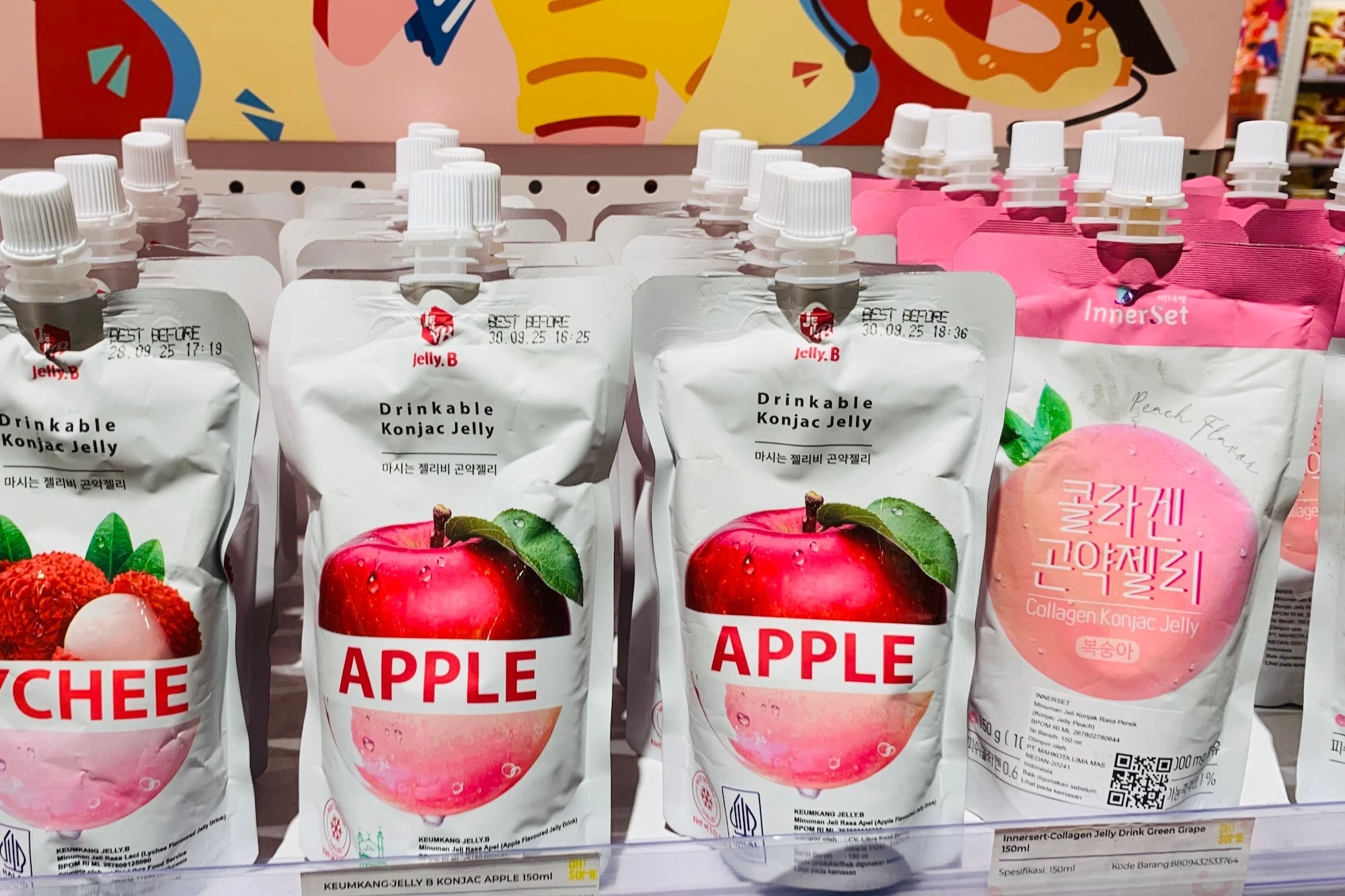
Usually sold in squeezable pouches in fruity flavors, konjac jelly is a low-calorie, gel-like snack made with konjac, a plant native to parts of Asia. Konjac contains glucomannan, a type of soluble fiber that absorbs water and forms a thick gel. That’s helped give konjac jelly a reputation online as a filling snack that might make it easier to eat fewer calories.
You’ll find versions at Asian grocery stores like H Mart, but konjac jelly has increasingly moved into mainstream stores and online retailers, too. But does eating it actually keep you full or help with weight loss?
“It’s easy to see why that idea has caught on,” says Maggie Hudspeth RDN, Noom’s Senior Manager of Coaching. “Foods that promise to help you feel fuller for very few calories are always going to get attention, especially when they’re easy to grab and actually taste good,” she says. “The important question is whether the food is actually helping you build an eating pattern that works for you, or whether the trend is promising more than the food can deliver.”
Here’s what konjac jelly is, what research really says about glucomannan and fullness, and what to know before adding it as a daily snack.
Noom’s Most Powerful Program
A dual-pathway GLP-1 and behavior change for lasting results.
What is konjac jelly?
Konjac jelly is one of several foods made from the plant Amorphophallus konjac, which is native to parts of Asia. In Japan, the plant and foods made from it are known as konnyaku—you may see that term on packaging alongside “konjac.”
On ingredient labels, konjac is usually listed as konjac powder or konjac flour. Along with it, you’ll typically see sweeteners (like sugar, sucralose, or a sugar alcohol such as erythritol), plant-based gums that help create the gel texture (like carrageenan, gellan gum, or xanthan gum), citric acid for tartness, and natural or artificial flavors. Fruit juice or purée is also common, while some newer “wellness” versions add ingredients like vitamin C or plant-based collagen alternatives.
How many calories are in konjac jelly products?
Konjac jelly is generally a very low-calorie snack, though the exact amount varies by brand, serving size, and how it’s sweetened. Much of the product is water, which helps give konjac jelly its high-volume, low-calorie appeal. We’ll look more closely at how the calories and nutrition compare below.
What are some other ways konjac is used?
Jelly is just one way konjac is used. Konjac can also be dried and ground into a powder or flour that’s used to make foods like shirataki noodles and konjac rice, as well as to thicken or gel other foods. Its main soluble fiber, glucomannan, is also sold as a fiber supplement in capsules and powders.
That’s an important distinction when considering konjac jelly’s potential benefits: While the jelly contains konjac, the amount of glucomannan and fiber can vary considerably from product to product. Eating a pouch of konjac jelly isn’t necessarily equivalent to taking the doses of glucomannan used in research.
Types of konjac jelly: Pouches, drinks, and the cups you won’t find here
In the U.S., you’ll most commonly come across konjac jelly in squeezable pouches or drinkable versions. The texture, serving size, ingredients, and nutrition can vary by product, so it’s worth checking the label if you’re comparing calories, sugar, or fiber.
- Squeezable pouches: These contain a soft jelly that you eat by squeezing it directly from the package—no spoon needed. That makes them particularly convenient as an on-the-go snack. Popular brands include Dally, which is sold at Target and other mainstream retailers, and Everydaze, which sells versions with added ingredients like vitamin C and plant-based collagen alternatives.
- Drinkable konjac jelly: These products have a looser consistency designed to be squeezed or sipped from a pouch or bottle. Depending on the product, they’re marketed as either a drink or snack. Brands like Orihiro and Jelly.B are commonly available through Asian grocery stores and online retailers.
- Mini jelly cups: These are small, firm jellies traditionally sold in individual plastic cups. They’re also the format behind some of konjac jelly’s biggest safety concerns. The FDA has an import alert for certain small, firm gel candies because their size, shape, and consistency can pose a choking hazard. That has made this particular style much less common in the U.S. than other forms of konjac jelly.
We’ll get into that safety concern—and what it means for the pouches you see in stores—next.
Glucomannan: The fiber behind konjac jelly
Glucomannan is the main soluble fiber in konjac and the ingredient responsible for its distinctive gel-like texture. Researchers have studied glucomannan’s effects on fullness and digestion for decades, which is part of what’s behind konjac jelly’s current reputation as a low-calorie snack that can help keep hunger at bay.
What makes glucomannan unusual is how much water it can absorb. When dry glucomannan comes into contact with liquid, it swells and forms a thick, viscous gel. Research suggests this ability to absorb water and increase viscosity may help explain why glucomannan has been studied for its potential effects on fullness and weight management.
There’s an important catch when applying that research to konjac jelly, though: The glucomannan in a jelly pouch has already been mixed with water and formed into a gel before you eat it. That means it shouldn’t be thought of as a dry fiber that suddenly expands dramatically once it reaches your stomach.
Noom’s Most Powerful Program
A dual-pathway GLP-1 and behavior change for lasting results.
What happens when people eat konjac jelly?
One study gives us a better idea of what happens when people actually eat glucomannan in gel form. Researchers replaced some or all of the pasta in a meal with a low-calorie gel made with konjac glucomannan.
People consumed fewer calories overall when the meal contained the gel, largely because the gel itself provided much less energy than pasta. But the researchers didn’t find evidence that people ate less afterward, and the gel didn’t consistently improve feelings of fullness.
That’s another reason to be cautious about claims that konjac jelly works as an appetite suppressant. A commercial pouch can provide a relatively large amount of food for very few calories, but we don’t have strong evidence that eating one will significantly suppress hunger afterward.
Glucomannan also isn’t fully digested in the small intestine. Instead, some of it reaches the colon, where gut bacteria can ferment it and produce compounds called short-chain fatty acids. Research suggests this prebiotic activity may influence the gut microbiome, although much of that research has studied glucomannan itself rather than commercial konjac jelly.
What are the benefits of konjac jelly?
Konjac jelly gets linked to all kinds of benefits, from weight loss to better digestion and blood sugar control. But before getting into them, there’s one important thing to keep in mind: Most of the research isn’t actually on konjac jelly.
Instead, studies typically use glucomannan—the soluble fiber in konjac—in concentrated powders, capsules, or tablets at specific doses. So, if a study finds a benefit from taking 3 or 4 grams of glucomannan per day, that doesn’t necessarily mean you’ll get the same effect from a pouch of konjac jelly. The amount of fiber varies by product and may be much lower.
With that in mind, here’s what we know about the most common claims.
Claim: Konjac jelly is good for weight loss
This is probably the claim you’ll hear most often, but the research is mixed.
One review of nine studies found that people who took glucomannan didn’t lose significantly more weight than people who took a placebo. Another review found a small benefit: People taking glucomannan lost about 2 pounds more on average. The studies varied quite a bit, though, making it difficult to know exactly how much of an effect to expect.
There’s enough evidence that European health authorities allow products to make a weight-loss claim about glucomannan—but only under very specific conditions. The benefit is tied to getting 3 grams per day, divided into three doses taken with water before meals, while following a calorie-restricted diet. That’s very different from eating a pouch of konjac jelly.
U.S. health authorities are less convinced. The National Institutes of Health’s Office of Dietary Supplements says glucomannan has “little to no effect on weight loss.” The FDA recognizes glucomannan as a dietary fiber, but it hasn’t authorized a weight-loss health claim for it.
So, glucomannan might give weight-loss efforts a small boost when you get enough of it, but there’s no strong evidence that konjac jelly itself causes weight loss. Its more practical advantage may be much simpler: It gives you something sweet and substantial to eat for relatively few calories.
“That’s where I think konjac jelly can be useful without asking it to do something magical,” says Hudspeth. “If you genuinely enjoy it and it satisfies that moment when you want something sweet, or you’re looking for a snack, great. You don’t need it to suppress your appetite or cause weight loss on its own for it to fit into a weight-loss plan.”
Claim: Konjac jelly is good for digestion
There’s more reason to believe glucomannan can help here. After all, it is a type of soluble fiber.
In one small study, healthy adults who took a glucomannan supplement had more frequent bowel movements and greater stool bulk. Because glucomannan absorbs water, it can add bulk to stool and make it easier to pass.
That doesn’t mean every konjac jelly will have the same effect. Check the nutrition label if you’re eating it specifically for fiber, since some varieties contain relatively little per serving. If increasing fiber is your goal, fruits, vegetables, beans, and whole grains can provide more fiber along with a wider range of nutrients.
Claim: Konjac jelly is good for blood sugar control
The evidence here is less clear.
When European health authorities reviewed the research, they didn’t find enough evidence to say that glucomannan reduces the rise in blood sugar after eating.
Some research has been more promising. A review of six small studies found that glucomannan supplements helped lower fasting blood sugar, but didn’t significantly improve blood sugar after meals. And once again, those studies used supplements containing specific amounts of glucomannan, not konjac jelly.
That means there’s not enough evidence to count on konjac jelly as a way to manage blood sugar. If that’s your goal, the overall pattern of what you eat—including the amount and types of carbohydrates, protein, fat, and fiber you get—matters much more than any one snack.
Access GLP-1 Weight Loss with Noom
Explore a wide range of prescription medications supported by Noom’s program.
Microdose GLP-1rx
Noom GLP-1rx
Noom GLP-1rx Plus
Wegovy®

Ozempic®

Metformin
Zepbound®
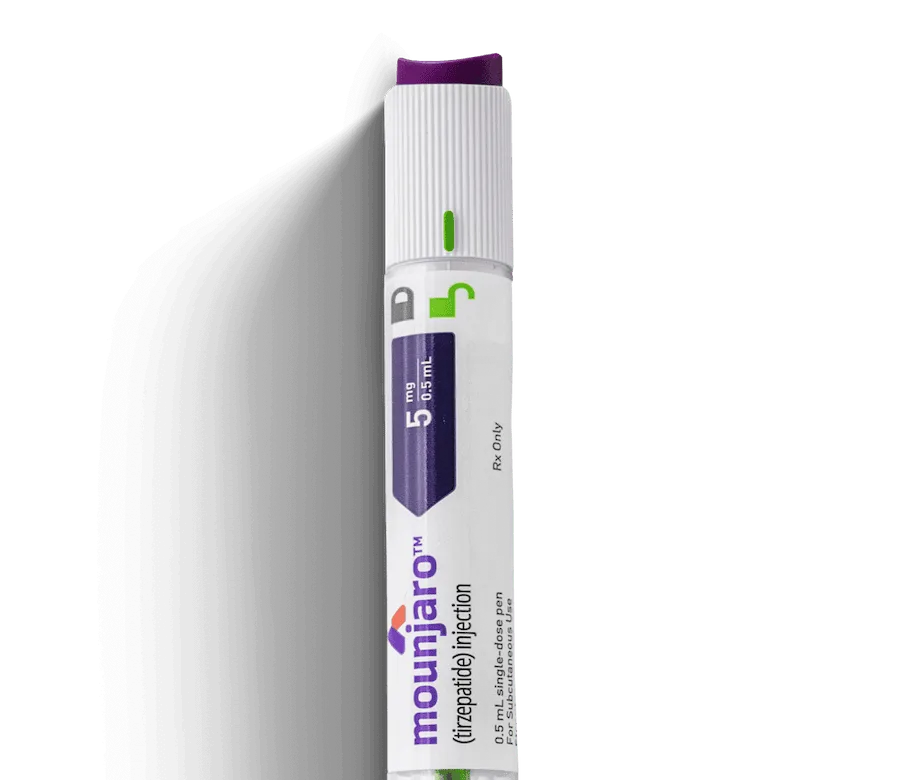
Mounjaro®
Liraglutide
Claim: Konjac jelly can lower cholesterol
This is one of the better-supported potential benefits of glucomannan.
Research has found that getting enough glucomannan can help lower total and LDL (“bad”) cholesterol. In fact, European health authorities allow a cholesterol-related claim for glucomannan when you get 4 grams per day.
The FDA has also reviewed the evidence and concluded that glucomannan can help reduce blood cholesterol, which supported the agency’s decision to recognize it as dietary fiber on U.S. nutrition labels.
The important number here is 4 grams. That’s the amount of glucomannan tied to the benefit—not simply any amount of konjac. A pouch of konjac jelly may contain considerably less fiber, so you can’t assume you’re getting the amount associated with those cholesterol benefits just because konjac appears on the ingredient list.
Is konjac jelly good for you?
Whether konjac jelly delivers all of the specific health benefits associated with glucomannan is still up in the air. But there’s a more basic question worth answering: What are you actually getting nutritionally when you eat it?
Konjac jelly isn’t especially nutrient-dense, but it is generally very low in calories. Exactly what’s in it varies by brand, so here’s what you’ll typically find:
- Very few calories: Depending on the sweetener and serving size, konjac jelly can range from nearly calorie-free to around 40–50 calories per serving. Versions made with sugar or fruit syrup tend to be higher, while those made with low- or no-calorie sweeteners can have as few as 0–15 calories. That makes konjac jelly an easy way to get a relatively large, sweet snack for fewer calories than many traditional desserts or snacks.
- Less fiber than you might expect: Despite konjac’s reputation as a fiber-rich food, some jellies provide surprisingly little. Dally, for example, lists 1 gram of fiber per 150-milliliter serving, or 4% of the Daily Value. One Orihiro variety lists just 0.4 grams per 130-gram pouch. The FDA considers 5% of the Daily Value or less to be low, so check the label rather than assuming konjac jelly is a high-fiber snack.
- Little protein or fat: Most varieties contain little to none of either, so konjac jelly isn’t a particularly balanced or substantial snack on its own.
- Sugar or a sugar substitute: Depending on the product, sweetness can come from added sugar, fruit juice, or low- and no-calorie sweeteners like sucralose or erythritol. Checking the label can help you find an option that fits what you’re looking for.
- Sometimes added nutrients: Some brands add vitamin C, prebiotics, collagen, or other ingredients. These aren’t inherent benefits of konjac jelly, though, so check the label to see what you’re actually getting.
Put it all together, and konjac jelly is best thought of as a low-calorie snack rather than a nutritional powerhouse. If you enjoy the flavor and texture, it can give you something sweet and relatively substantial to eat for very few calories. Just don’t assume that because it’s made with konjac, you’re automatically getting a significant amount of fiber—or all of the benefits associated with glucomannan supplements.
“It’s not that a snack like this is bad — it’s that a ‘health food’ label can end up doing more work in someone’s head than it does on their plate,” says [DRAFT QUOTE — pending review] Hudspeth. “If you like konjac jelly and it satisfies you for relatively few calories, that’s a perfectly good reason to eat it. You don’t need to give it extra credit for benefits it may not actually provide.”
Is konjac jelly safe?
For most healthy adults, konjac jelly sold in the U.S. is generally safe to eat as directed. But there are two things worth knowing before you try it: its history of choking concerns and the possibility of digestive side effects.
- Choking is the biggest safety concern: In the early 2000s, multiple small, firm konjac jelly cups were recalled after being linked to choking deaths, particularly among children and older adults. Unlike gelatin, konjac jelly doesn’t readily dissolve in the mouth, and the size, shape, and firm texture of these mini cups made it possible for them to become lodged in the throat. The FDA still restricts the import of certain small, firm gel candies that pose a choking risk. The European Union has also prohibited the use of konjac in jelly mini-cups because of the choking risk.
- It can cause digestive discomfort: Glucomannan is a fermentable soluble fiber, and getting a lot of it at once can cause gas, bloating, abdominal discomfort, or changes in bowel movements. This is more of a concern with concentrated glucomannan supplements than with many commercial jellies, which can contain relatively little fiber, but your tolerance can vary.
The important distinction is that the choking warnings are primarily about the size, shape, and texture of firm mini-cup jellies, not konjac itself. The soft, squeezable pouches and drinkable jellies commonly sold in the U.S. aren’t the same products involved in those original recalls. Still, follow the directions on the package, and take extra care with any firm jelly product, especially for children, older adults, or anyone who has difficulty swallowing.
How to eat konjac jelly safely
Konjac jelly doesn’t require any special preparation, but a few simple precautions can help you enjoy it safely:
- Follow the package directions: Konjac jellies come in different textures and formats, so eat the product the way the manufacturer recommends.
- Don’t swallow firm jelly pieces whole: Konjac doesn’t dissolve as readily in the mouth as traditional gelatin, which is part of what made firm mini-cup jellies a choking hazard. Take small bites and chew any firm pieces thoroughly before swallowing.
- Pay attention to how your stomach feels: Konjac contains glucomannan, a fermentable soluble fiber that can cause gas, bloating, or other digestive discomfort in some people. If you’re new to it, starting with a small serving can help you see how you tolerate it.
- Be extra cautious if choking is a concern: Firm konjac jelly products aren’t a good choice for young children or anyone who has difficulty chewing or swallowing.
Otherwise, konjac jelly can be eaten straight from the package as a snack or something sweet after a meal.
Frequently asked questions about konjac jelly
Is konjac jelly high in fiber?
Not necessarily. Konjac is naturally rich in the soluble fiber glucomannan, but that doesn’t mean every konjac jelly contains a lot of it. Some popular products provide only around 1 gram of fiber per serving—or even less. Check the nutrition label if fiber is one of the reasons you’re buying it.
What does konjac jelly taste like?
Konjac itself has a fairly neutral flavor, so the taste mostly comes from whatever is added to it. Most konjac jellies are sweet and fruity, with flavors like grape, peach, mango, or lychee. The texture can range from soft and squeezable to thicker and chewier depending on the product.
Where can you buy konjac jelly?
Konjac jelly has traditionally been easiest to find at Asian grocery stores like H Mart or online, but it’s becoming more widely available. Some brands are now sold at mainstream retailers like Target and other grocery stores.
Does konjac jelly make you poop?
It might, but it depends on how much glucomannan you’re actually getting. In one small study, adults who took 4.5 grams of glucomannan per day had more frequent bowel movements and greater stool bulk. But they were taking a concentrated glucomannan supplement—not konjac jelly. Since many jelly products contain relatively little fiber, you may not get enough glucomannan from a pouch to have the same effect.
How do you pronounce konjac?
Konjac is typically pronounced “KON-jak” in English, according to Cambridge Dictionary. You may also hear “KON-yak,” a pronunciation closer to the Japanese word konnyaku, which is where the English name comes from.
Noom’s Most Powerful Program
A dual-pathway GLP-1 and behavior change for lasting results.
The bottom line: Konjac jelly can fit into a healthy diet, but it isn’t a weight-loss shortcut
Konjac jelly has a lot going for it as a snack: It’s generally low in calories, comes in plenty of sweet, fruity flavors, and can give you something sweet to eat for relatively few calories. If you enjoy it, there’s no reason it can’t fit into a healthy eating pattern.
Where the hype gets ahead of the evidence is what konjac jelly can actually do. Glucomannan, the soluble fiber in konjac, has been studied for everything from weight loss to digestion and cholesterol. But most of that research used concentrated doses of glucomannan—not the relatively small amounts you may get in a jelly pouch. Some konjac jellies contain surprisingly little fiber at all.
So, think of konjac jelly as a snack, not a weight-loss strategy. It doesn’t need to suppress your appetite, boost your metabolism, or deliver a huge dose of fiber to be worth eating. If you like it and it helps satisfy a craving for something sweet for relatively few calories, that’s enough of a reason to keep it in the rotation.
“Trends can be great for introducing you to foods or habits you might not have tried otherwise,” says Hudspeth. “The key is asking whether it actually works for your life once the hype wears off. If it does, keep it. If it doesn’t, that’s okay too.”
If you want more support building healthy habits that can help with long-term weight loss and overall health, Download Noom on iOS or Android. You’ll get personalized guidance and tools designed to help you make changes that fit your life—and stick with them over time.
Editorial standards
At Noom, we’re committed to providing health information that’s grounded in reliable science and expert review. Our content is created with the support of qualified professionals and based on well-established research from trusted medical and scientific organizations. Learn more about the experts behind our content on our Health Expert Team page.