What you’ll learn:
- People are eating two kiwis a day, claiming they can help with weight loss, improve digestion, and even help you sleep better.
- The strongest evidence is for digestion: Eating two green kiwis a day might help keep you regular and ease constipation.
- Kiwi can fit well into a weight-loss plan, but eating two a day isn’t likely to make the scale move on its own, and the research on sleep is still limited.
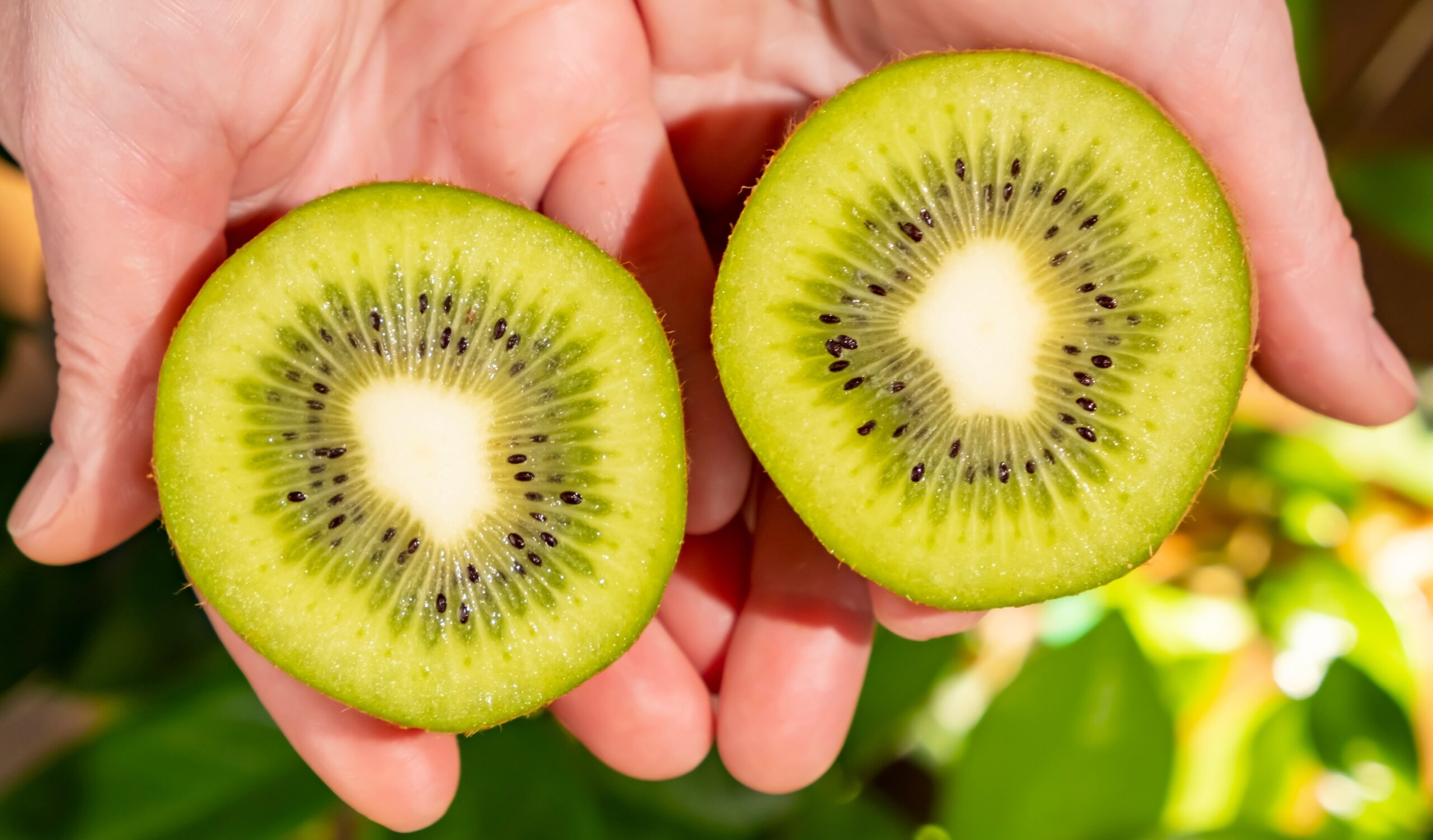
People are always searching for the right food—or combination of foods—to help them lose weight, improve digestion, or solve some other health issue. We’ve seen chia seeds, Himalayan pink salt, bone broth, and plenty more get their moment. Now, kiwis are popping up as a food with some potentially interesting benefits. Specifically, two kiwis a day.
Two kiwis sounds almost too specific to be random—and lately, the habit has been showing up all over social media, where it’s credited with everything from better digestion and less constipation to weight loss and even better sleep.
But the number isn’t entirely arbitrary. Researchers have actually given people two kiwis a day and studied what happens. The strongest evidence is for constipation, but studies have also explored kiwi’s potential effects on sleep, body fat, vitamin C levels, and even mood and energy. Some of those findings are more convincing than others.
So, what can eating two kiwis a day actually do? We’ll look at where the trend came from, which benefits have real evidence behind them, where the claims get ahead of the science, and whether eating two a day is a habit worth trying.
Plus, we’ll get Maggie Hudspeth, RDN, Noom’s Senior Manager of Coaching, to give us her take on the trend.
Noom’s Most Powerful Program
A dual-pathway GLP-1 and behavior change for lasting results.
Where the “2 kiwis a day” trend came from
The two-kiwis-a-day trend may seem like another random social media health hack, but the specific number has actually shown up in research for years.
Some of the strongest evidence comes from research on constipation. Researchers have looked at foods, drinks, and supplements people commonly use to help with constipation, and kiwi is one of the foods with evidence behind it. Other studies have gone a step further, having people eat two green kiwis every day and tracking how often they had bowel movements and how comfortable their digestion felt.
But researchers haven’t only studied kiwi for digestion. Two kiwis a day has also popped up in studies looking at body fat, vitamin C levels, mood and energy, and even sleep. That helps explain why the same oddly specific recommendation keeps appearing in wellness content—although the evidence isn’t equally strong for all of those benefits.
The weight-loss connection, for example, likely comes at least in part from a study where people ate two gold kiwis every day for six weeks, and researchers found that their body fat decreased over that time.
That sounds impressive, but there’s an important catch: The study was very small and didn’t have a comparison group that skipped the kiwi. That means we can’t say the kiwis themselves caused the change in body fat—or that eating two a day will help you lose weight.
Put it all together, and “two kiwis a day” isn’t quite as random as it sounds. It’s an amount researchers have repeatedly put to the test. Social media has simply turned those individual findings into a much bigger promise.
So, which of those promises actually hold up? Let’s take a look.
What happens if you eat 2 kiwis a day?
If you actually started eating two kiwis a day tomorrow, what would you notice?
Eating two kiwis a day gives you about 90 calories, 4 grams of fiber, plenty of water, and more than a day’s worth of vitamin C. But researchers have also looked at what eating two kiwis a day might do beyond basic nutrition—from helping you stay regular to potentially supporting sleep. Weight loss has been studied, too, although the evidence there isn’t nearly as convincing.
Here’s what we know so far.
Access GLP-1 Weight Loss with Noom
Explore a wide range of prescription medications supported by Noom’s program.
Microdose GLP-1rx
Noom GLP-1rx

Noom GLP-1rx Plus
Wegovy®

Ozempic®

Metformin

Zepbound®

Mounjaro®

Liraglutide

2 kiwis a day might help you become more regular
This is the benefit with the best evidence behind it. In a study conducted in New Zealand, Italy, and Japan, 184 adults—including people with constipation, constipation-related IBS, and people without digestive issues—tried two different approaches to staying regular. For four weeks, they ate either two green kiwis a day or 7.5 grams of psyllium, a type of fiber commonly used to treat constipation. After a break, they switched to the other option.
Here’s what makes the comparison particularly interesting: The researchers chose the amounts so that the kiwi and psyllium provided about the same amount of fiber—roughly 6 grams. Both helped, but people with constipation who ate kiwi had about 1.5 to 1.7 more complete bowel movements per week. They also reported improvements in digestive comfort, and kiwi performed better than psyllium on some measures, including stool consistency and straining.
Why might kiwi do more than its fiber content alone? Kiwi fiber holds onto water, which can help soften stool and make it easier to pass. Green kiwi also contains actinidin, an enzyme that helps break down protein during digestion. The researchers noted that other components of the fruit may play a role, too.
There were no significant safety concerns, either. So, if eating two kiwis a day makes you poop more regularly, that’s not just TikTok talking—the specific habit has actually been put to the test.
You probably won’t lose weight from kiwi alone
This is where the trend promises more than the research can deliver.
A small study found that 22 young adults with overweight or obesity who ate two gold kiwis a day for six weeks had a decrease in body fat. That’s interesting, but there was no comparison group that didn’t eat kiwi, so we can’t tell whether the fruit itself was responsible for the change.
When researchers looked at the larger body of evidence, the weight-loss case became much less convincing. A review of six controlled studies found that eating kiwi didn’t significantly change body weight, BMI, or waist size. Interestingly, it did significantly lower LDL (“bad”) cholesterol—another reminder that a food can have health benefits even if it doesn’t lead to weight loss.
That doesn’t mean kiwi isn’t a great choice if you’re trying to lose weight. Two kiwis have fewer than 100 calories and provide fiber and water, making them an easy way to add volume and sweetness to a meal or snack. If kiwi replaces something more calorie-dense, that swap could also help lower your overall calorie intake.
The takeaway? Kiwi can fit really well into a weight-loss plan. Simply adding two a day, though, isn’t likely to make the scale move.
You’ll get a serious dose of vitamin C—and there may be some other perks
Two kiwis also give you more than a day’s worth of vitamin C, and researchers have looked at whether eating that amount regularly might have benefits beyond digestion.
In one study, 155 young adults with low vitamin C levels were given either two gold kiwis a day, a vitamin C supplement, or a placebo. Both kiwi and the supplement raised vitamin C levels, while people eating kiwi also reported improvements in things like energy and mood.
That doesn’t mean two kiwis are a treatment for low mood or fatigue—the participants started with low vitamin C levels, and more research is needed. But it’s another reminder that kiwi brings more to the table than fiber alone.
Eating 2 kiwis before bed might help you sleep
There may be another reason to eat your two kiwis at night. In a small study of 24 adults with sleep problems, participants ate two kiwis one hour before bed every night for four weeks. By the end of the study, they reported falling asleep faster, waking less during the night, and sleeping longer.
A more recent study in elite athletes also found improvements in several measures of sleep after participants ate two green kiwis an hour before bed for four weeks.
Researchers aren’t sure why kiwi might have this effect. Its antioxidants, folate, and serotonin have all been suggested as possible explanations, but the research is still limited. The studies were small, and the earlier study didn’t include a comparison group.
Noom’s Most Powerful Program
A dual-pathway GLP-1 and behavior change for lasting results.
So, two kiwis before bed isn’t a proven sleep remedy. But if you’re already trying the two-kiwi-a-day trend, eating them in the evening could be worth a try.
Is eating 2 kiwis a day worth trying?
For most people who like kiwi, it’s safe to eat two a day. Two kiwis are an easy way to get more fruit, fiber, and vitamin C—and there’s good evidence behind eating them for regularity.
Just don’t get too hung up on the number. It’s an amount researchers have studied, not a magic threshold. Eating one kiwi is still good for you, and eating two won’t suddenly switch on your metabolism.
“What I like about this trend is that the digestion part actually holds up,” says Hudspeth. “Where I’d push back a little is the jump to weight loss—people hear ‘kiwi’ and ‘weight loss’ in the same headline and assume there’s a direct line between them. There isn’t, and that’s okay. A food doesn’t have to burn fat to be worth eating.”
And kiwi doesn’t have to be the only fruit on your plate. Eating a variety of fruits and vegetables gives you different types of fiber and nutrients. Raspberries and pears are particularly high in fiber, while oranges, berries, broccoli, and carrots all contribute fiber along with plenty of water and other nutrients. Beans, lentils, whole grains, nuts, and seeds can help you get even more.
If you’re trying to lose weight, the bigger goal is to build an eating pattern that gives you plenty of these filling, nutrient-dense foods—not to rely on one fruit to do something special. Kiwi can absolutely be part of that. Pair it with Greek yogurt for a more filling snack, add it to breakfast, or eat it when you want something sweet.
FAQs about eating 2 kiwis a day
Green or gold kiwi: Which is better?
Both are good choices, but they have slightly different nutritional strengths. Green kiwi tends to have more fiber and much more activity from actinidin, the enzyme that helps break down protein during digestion. It’s also the variety used in some of the strongest research on kiwi and constipation. Gold kiwi is sweeter, has less fiber, and typically provides more vitamin C.
If weight loss is your goal, there’s no evidence that one variety is better than the other. The small study that found a decrease in body fat happened to use gold kiwi, but it didn’t compare gold with green. Pick the type you enjoy—or switch between them.
Does kiwi make you poop?
It might.
Kiwi may help in several ways. Its fiber can hold onto water, helping keep stool softer and easier to pass, while other components of the fruit may help things move through your digestive system. That makes regularity one of the better-supported benefits behind the two-kiwi-a-day trend.
Is one kiwi a day enough?
You don’t need to eat two kiwis to get something out of them. One still gives you fiber, vitamin C, water, and other nutrients.
Two gets so much attention because that’s the amount researchers have used in several studies, particularly those looking at constipation. Think of two as a studied serving rather than a magic dose. If one kiwi fits your appetite or your day better, there’s no reason to force yourself to eat another.
Is kiwi good for weight loss?
Kiwi can be a good fruit to eat when you’re trying to lose weight, but it won’t cause weight loss on its own. Two kiwis have fewer than 100 calories and provide fiber and water, which can help make meals and snacks more filling without adding a lot of calories.
The research on kiwi itself causing weight loss is less convincing. A review of six controlled studies found no significant effect on body weight, BMI, or waist size. Instead, think of kiwi as one of many nutritious foods that can make it easier to build a satisfying eating pattern that supports your weight-loss goals.
When is the best time to eat kiwi?
For digestion or weight loss, there’s no established best time. You can eat kiwi whenever it fits naturally into your day.
If you’re interested in the possible sleep benefits discussed above, the studies had participants eat two kiwis about an hour before bed. That doesn’t mean nighttime is better overall—it was simply the timing researchers tested for sleep.
Can you eat kiwi skin?
Yes—the fuzzy skin on a green kiwi is completely edible. And if you can get past the texture, eating the whole fruit gives you even more fiber. Research comparing kiwi flesh with the whole fruit has found that eating the skin increases the amount of fiber, vitamin E, and folate you get.
Just wash the kiwi before eating it, as you would any fruit you’re eating with the skin on. And if the skin isn’t appealing, peel it. Kiwi is still nutritious without the skin.
Reviews from real Noom users
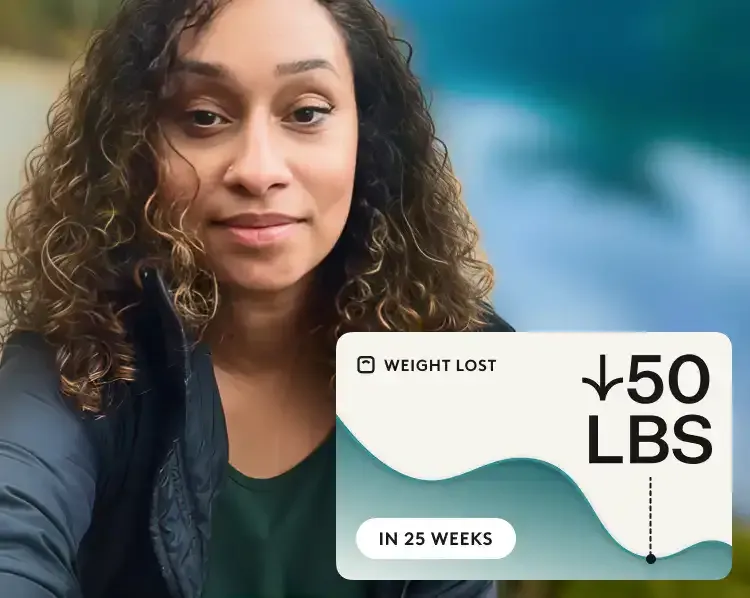
“My favorite parts of Noom are the care team and other Noomers. Sharing and getting help made me feel like I wasn’t doing it alone. That support made all the difference.”
Desirea N. — Real Noom user

“Noom has taught me that every day is a new chance to make better, healthier choices. It’s taught me how to stop overeating.”
Matthew M. — Real Noom user
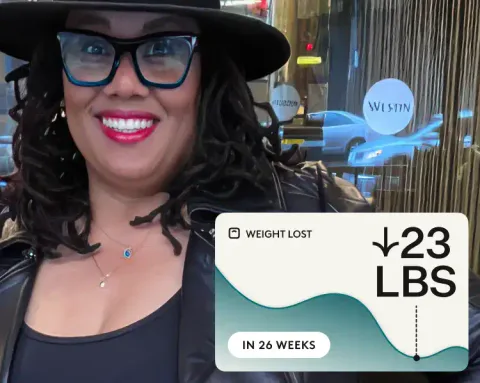
“Clinicians who understand how supportive medication can be is one of the best parts of Noom! I was convinced I wouldn’t have success but I’m down 11 pounds in two months.”
Lila M. — Real Noom user
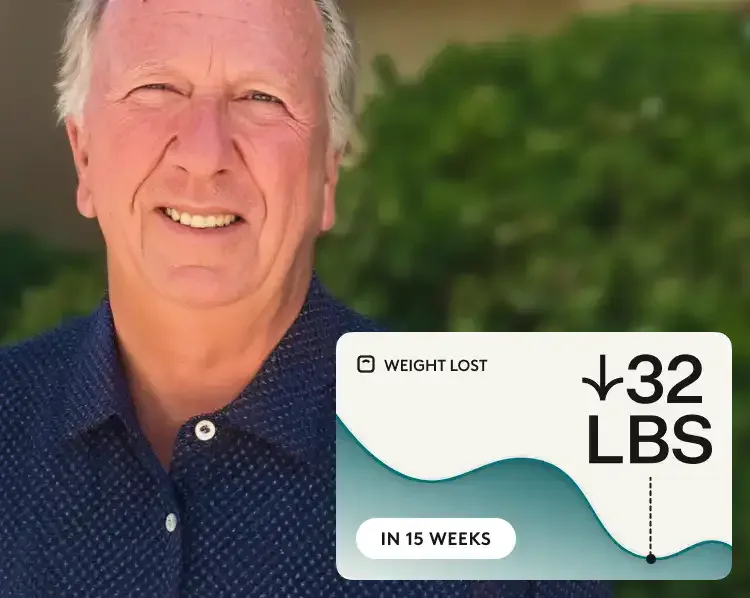
“Noom provided me with the medication which I could not get through Medicare. I have learned the tricks to better eating and life in general.”
Steve M. – Real Noom user
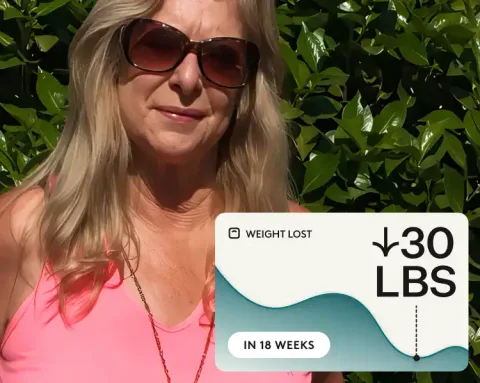
“Noom has changed my life and I’m so thankful, I feel great, have more energy and am no longer prediabetic.”
Daisy R. – Real Noom user
“All of the Noom providers that I’ve met with have been exceptional and prescribed medications that are appropriate for my situation and health.”
Sarah R. – Real Noom user
“Noom made the process so simple and now I feel full, free from diet obsession, and at ease in my body again.”
Madison S. – Real Noom user
“My doctor recommended Noom after I was frustrated trying to lose weight. The lessons helped change my relationship with food. My body feels lighter & energized.”
Sonday K. – Real Noom user
“I built healthy habits with coaching and lessons that make me confident I can maintain my weight loss long term.”
Cam K. – Real Noom user
“With the right medication through Noom, hunger and sugar cravings finally quieted and I have the tools to break the cycle.”
Laura TR. – Real Noom user
“Cravings and food noise are gone, I finally feel confident in the healthy habits I’ve built to last with Noom.”
Jessica S. – Real Noom user
The bottom line: The 2-kiwis-a-day trend gets some things right
The two-kiwi-a-day trend has more science behind it than you might expect. Eating two kiwis a day has been studied for everything from constipation to sleep, and there’s good evidence that making them a regular part of your diet can help keep you regular. What the research doesn’t show is that two kiwis are a shortcut to weight loss.
But that’s also not a reason to dismiss the trend. For fewer than 100 calories, two kiwis give you fiber, plenty of vitamin C, and a naturally sweet way to add more fruit to your day. And if eating them helps you replace a less nutritious snack, get more fiber, or simply eat more fruit, that’s a win.
“I think sometimes we get so focused on whether a food helps with weight loss that we miss the bigger picture,” says Hudspeth. “Kiwi is a nutritious fruit with fiber, vitamins, and some really interesting research behind it. If you enjoy it, eat it. Just remember that you don’t need one food to do everything. The goal is to build an eating pattern with lots of different fruits, vegetables, and other foods that support your health and your goals.”
So, should you eat two kiwis a day? If you like them, go for it. Just think of two as an amount researchers happened to put to the test—not a magic number you need to hit.
Download Noom on iOS or Android for tools and support that make healthy habits feel more realistic.
Editorial standards
At Noom, we’re committed to providing health information that’s grounded in reliable science and expert review. Our content is created with the support of qualified professionals and based on well-established research from trusted medical and scientific organizations. Learn more about the experts behind our content on our Health Expert Team page.